Organization of the Body: Serous Membrane Locations definitions Flashcards
Organization of the Body: Serous Membrane Locations definitions
You can tap to flip the card.
Control buttons has been changed to "navigation" mode.
1/15
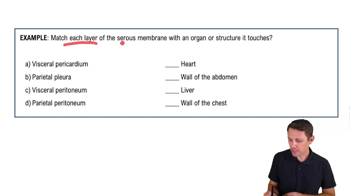
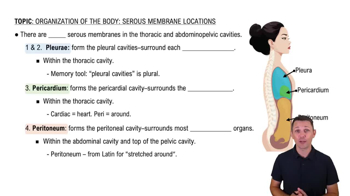
Serous MembranesThin tissues that line certain internal cavities, reducing friction between organs during movement.PleuraeMembranes forming pleural cavities, surrounding each lung, allowing lung movement without friction.PericardiumMembrane forming the pericardial cavity, surrounding the heart, facilitating its movement.PeritoneumMembrane forming the peritoneal cavity, surrounding most digestive organs, allowing complex organ movement.Visceral LayerThe part of a serous membrane that directly contacts and covers an organ.Parietal LayerThe part of a serous membrane that lines the body wall or cavity.Pleural CavitiesSpaces created by pleurae surrounding each lung, allowing lung expansion and contraction.Pericardial CavitySpace formed by the pericardium surrounding the heart, enabling its movement.Peritoneal CavityComplex space formed by the peritoneum, surrounding various digestive organs.Visceral PericardiumThe layer of the pericardium that directly touches the heart.Parietal PleuraThe layer of pleura that lines the chest wall, surrounding the lungs.Visceral PeritoneumThe layer of the peritoneum that directly contacts abdominal organs.Parietal PeritoneumThe layer of the peritoneum that lines the abdominal wall.Thoracic CavityThe body cavity housing the lungs and heart, enclosed by the rib cage.Abdominal CavityThe body cavity containing most digestive organs, part of the peritoneal cavity.