Back

Passive vs. Active Transport quiz

Control buttons has been changed to "navigation" mode.
1/10
  • What are three mechanisms of carrier-mediated transport?

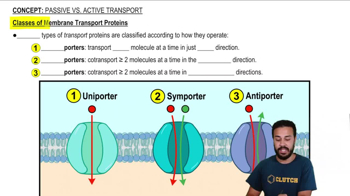
    The three mechanisms of carrier-mediated transport are uniporters, symporters, and antiporters.
  • What is the difference in energy source between primary and secondary active transport?

    Energy source is a difference; primary active transport uses ATP directly, while secondary active transport uses the energy from the electrochemical gradient.
  • What allows ions to flow down their electrochemical gradient across the membrane?

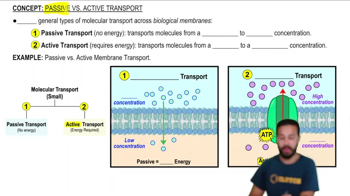
    Passive transport allows ions to flow down their electrochemical gradient without the use of energy.
  • Which membrane movement process is not passive?

    Active transport is not a passive process as it requires energy.
  • What is an example of a passive membrane transport process?

    Facilitated diffusion is an example of a passive job.
  • How do ions typically move across the plasma membrane during passive transport?

    Ions move from high to low concentration without energy.
  • Leak channels allow the movement of potassium and sodium ions by what type of membrane transport?

    Leak channels allow the movement of ions through passive transport, following their concentration gradient.
  • What is the primary energy source for active transport?

    The primary energy source for active transport is ATP.
  • How do symporters function in membrane transport?

    Symporters co-transport two or more molecules in the same direction across the membrane.
  • What distinguishes antiporters from symporters?

    Antiporters transport molecules in opposite directions, while symporters transport them in the same direction.