Skip to main content
Anatomy & Physiology
My Course
Learn
Exam Prep
AI Tutor
Study Guides
Textbook Solutions
Flashcards
Explore
Try the app
My Course
Learn
Exam Prep
AI Tutor
Study Guides
Textbook Solutions
Flashcards
Explore
Try the app
Back
Structural Class: Cartilaginous Joints definitions
You can tap to flip the card.
Cartilaginous Joints
You can tap to flip the card.
👆
Cartilaginous Joints
Joints where bones are bound by cartilage, providing stability with limited movement.
Track progress
Control buttons has been changed to "navigation" mode.
1/15
Related flashcards
Related practice
Recommended videos
Structural Class: Cartilaginous Joints quiz
Structural Class: Cartilaginous Joints
10 Terms
Structural Class: Cartilaginous Joints quiz #1
Structural Class: Cartilaginous Joints
10 Terms
Structural Class: Cartilaginous Joints
8. Joints
3 problems
Topic
Bruce
Structural Class: Synovial Joints
8. Joints
2 problems
Topic
8. Joints
6 topics
14 problems
Chapter
Bruce
Guided course
01:39
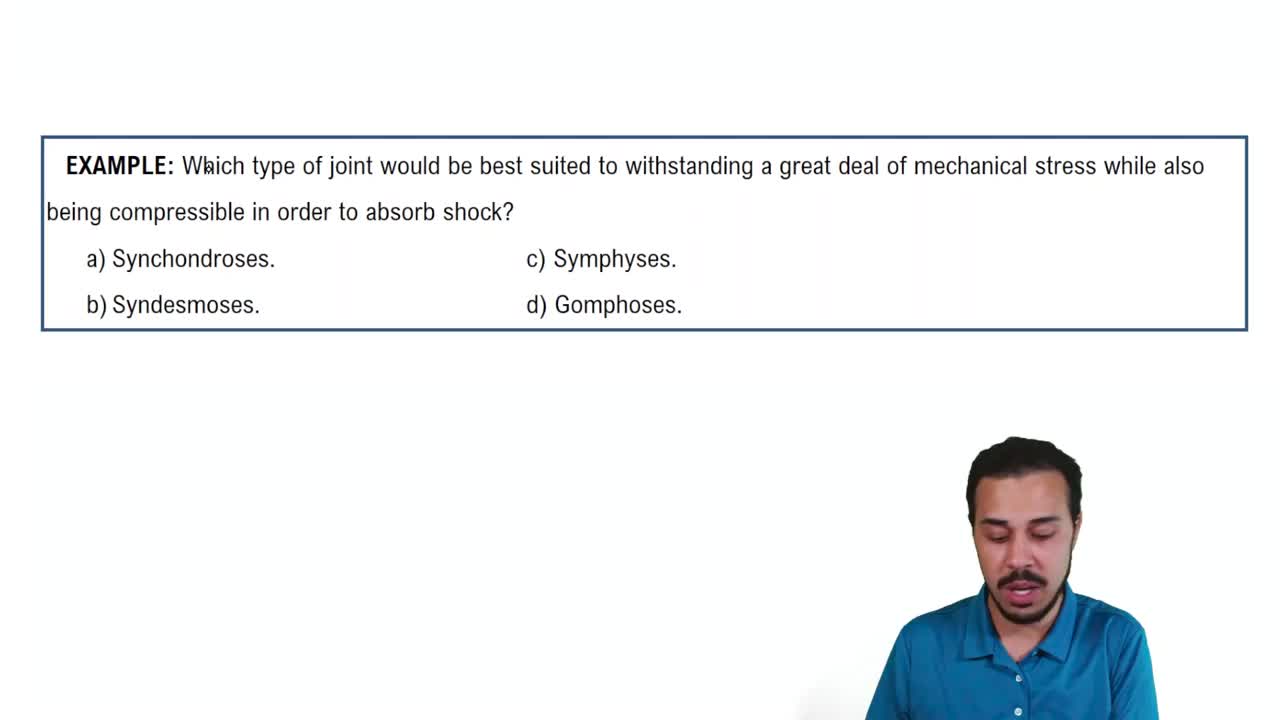
Structural Class: Cartilaginous Joints Example 2
5498
views
91
rank
Guided course
05:22
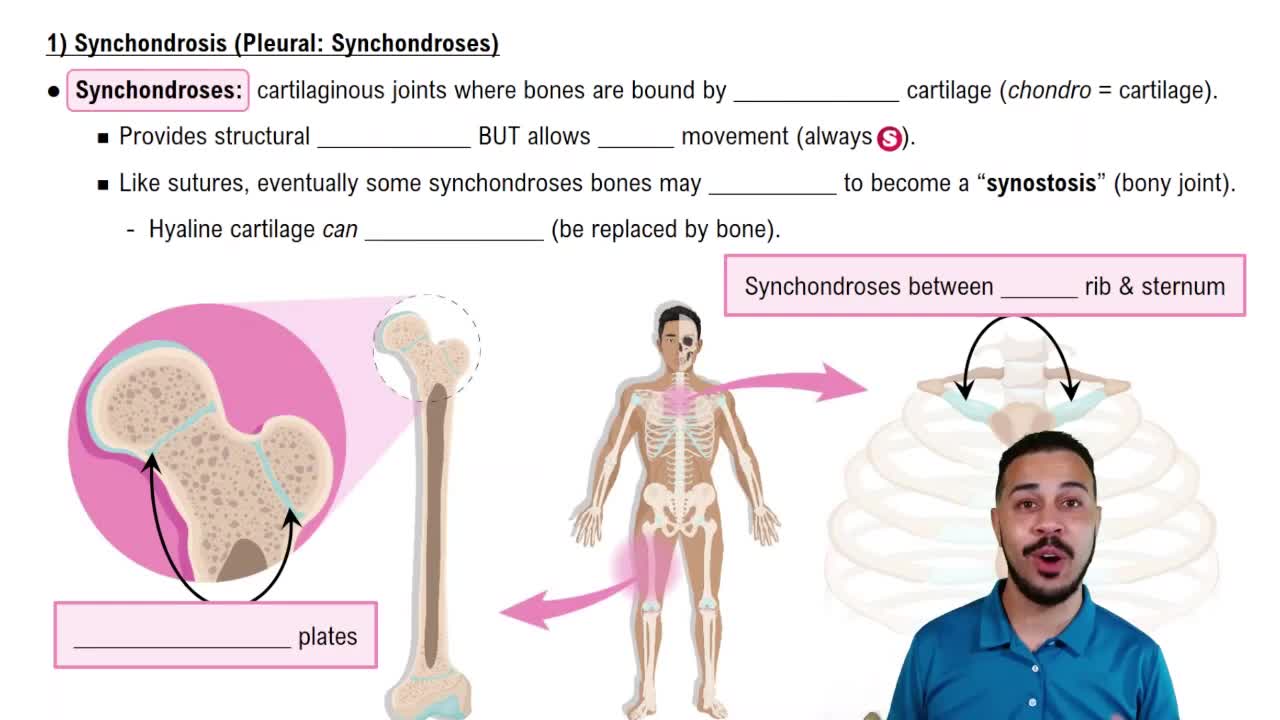
Synchondrosis (Plural: Synchondroses)
8069
views
149
rank
1
comments
Guided course
02:23
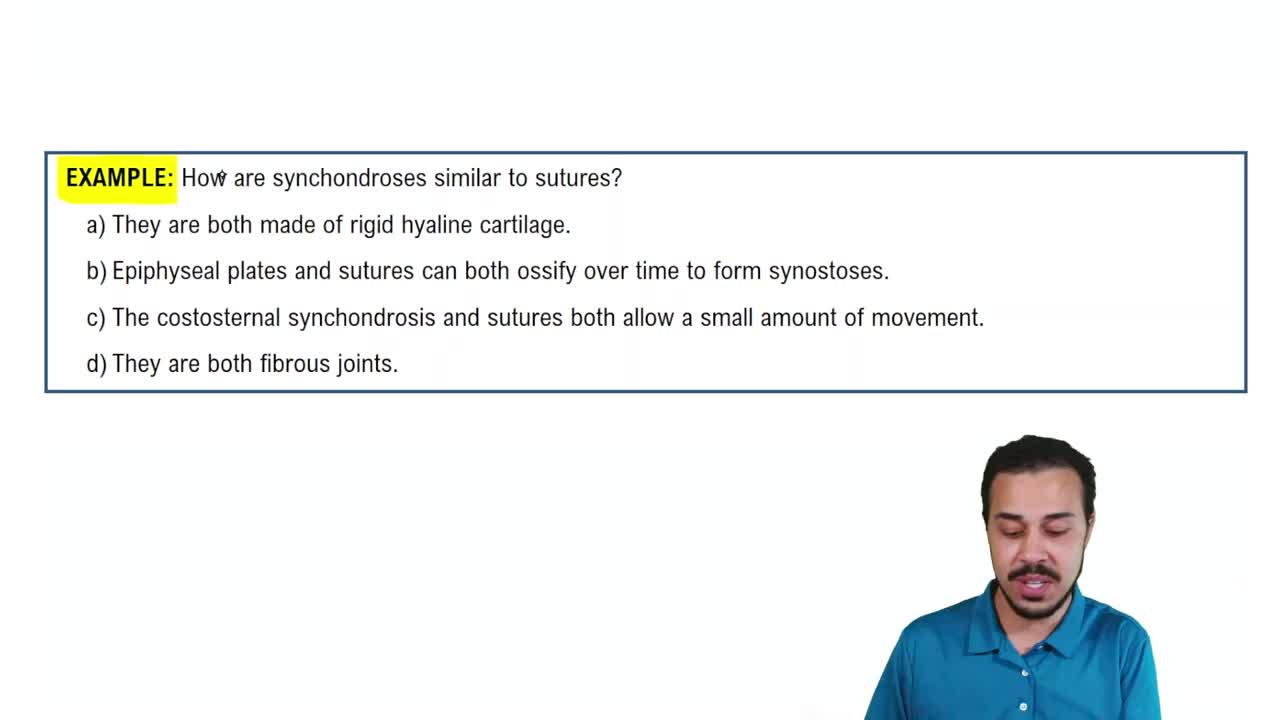
Structural Class: Cartilaginous Joints Example 1
6101
views
98
rank
Terms in this set (15)
Hide definitions
Cartilaginous Joints
Joints where bones are bound by cartilage, providing stability with limited movement.
Hyaline Cartilage
A tough yet flexible connective tissue that resists tension and compression forces.
Fibrocartilage
A compressible and resilient cartilage that acts as a shock absorber in joints.
Synarthroses
Immovable joints that allow no movement, providing structural stability.
Amphiarthroses
Joints allowing limited movement, providing a balance between stability and flexibility.
Synchondroses
Cartilaginous joints where bones are connected by hyaline cartilage, typically immovable.
Synostoses
Bony joints formed when bones fuse together, replacing cartilage with bone tissue.
Epiphyseal Plates
Growth plates in long bones that ossify and fuse bones together in adulthood.
Symphyses
Cartilaginous joints along the body's midline, bound by fibrocartilage, allowing slight movement.
Intervertebral Joints
Symphyses in the spine allowing for forward and backward movement, acting as shock absorbers.
Pubic Symphysis
A symphysis in the pelvis that facilitates movement and absorbs shock during motion.
Manubrium
The upper part of the sternum connecting to the first rib via hyaline cartilage.
Diaphysis
The shaft or central part of a long bone, connected to the epiphysis by cartilage.
Epiphysis
The end part of a long bone, initially growing separately from the shaft.
Synovial Joints
Joints with a synovial cavity allowing for free movement, unlike cartilaginous joints.
 BackBack
 01:39
01:39