 Back
Abdominopelvic Quadrants and Regions
 02:59

Terms in this set (19)
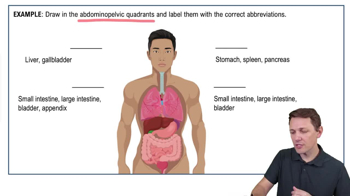
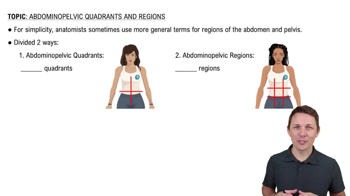
The Right Upper Quadrant (RUQ), Left Upper Quadrant (LUQ), Right Lower Quadrant (RLQ), and Left Lower Quadrant (LLQ).
By drawing one vertical and one horizontal line intersecting at the umbilicus, creating four equal sections.
To localize and describe the location of organs or pain within the abdomen.
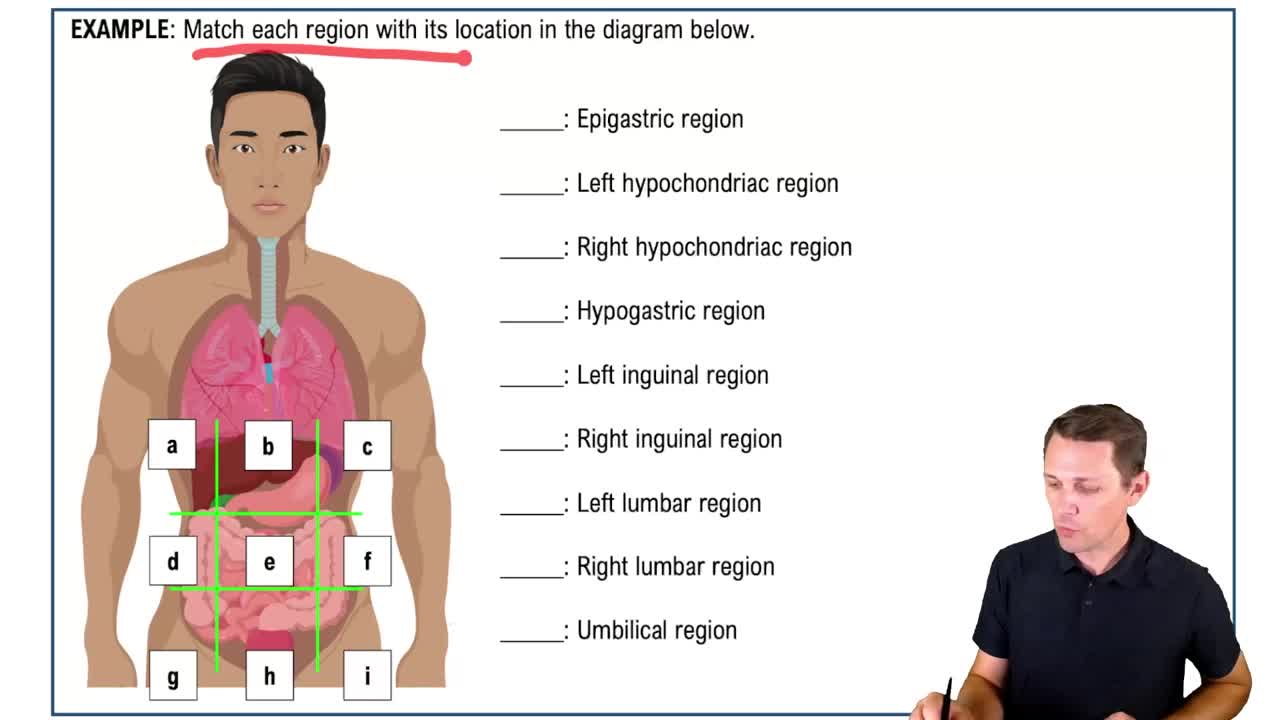
Right hypochondriac, epigastric, left hypochondriac, right lumbar, umbilical, left lumbar, right iliac (inguinal), hypogastric, and left iliac (inguinal) regions.
By two vertical midclavicular lines and two horizontal lines: the subcostal line and the intertubercular line.
Central upper region between the right and left hypochondriac regions, above the umbilical region.
Central middle region surrounding the navel, between the right and left lumbar regions.
Liver (right lobe), gallbladder, part of the pancreas, right kidney, and portions of the small and large intestines.
Stomach, spleen, left lobe of the liver, pancreas, left kidney, and portions of the intestines.
Cecum, appendix, right ovary and fallopian tube (in females), and part of the small intestine.
Most of the small intestine, part of the large intestine, left ovary and fallopian tube (in females).
The upper right region beneath the ribs, containing the liver and gallbladder.
The upper left region beneath the ribs, containing the spleen and part of the stomach.
The middle right region near the waist, containing parts of the large intestine and right kidney.
The middle left region near the waist, containing parts of the large intestine and left kidney.
The lower right region near the groin, containing the appendix and cecum.
The lower left region near the groin, containing parts of the descending colon.
The central lower region below the umbilical region, containing the bladder and reproductive organs.
They help healthcare professionals describe pain, locate organs, and diagnose conditions accurately.