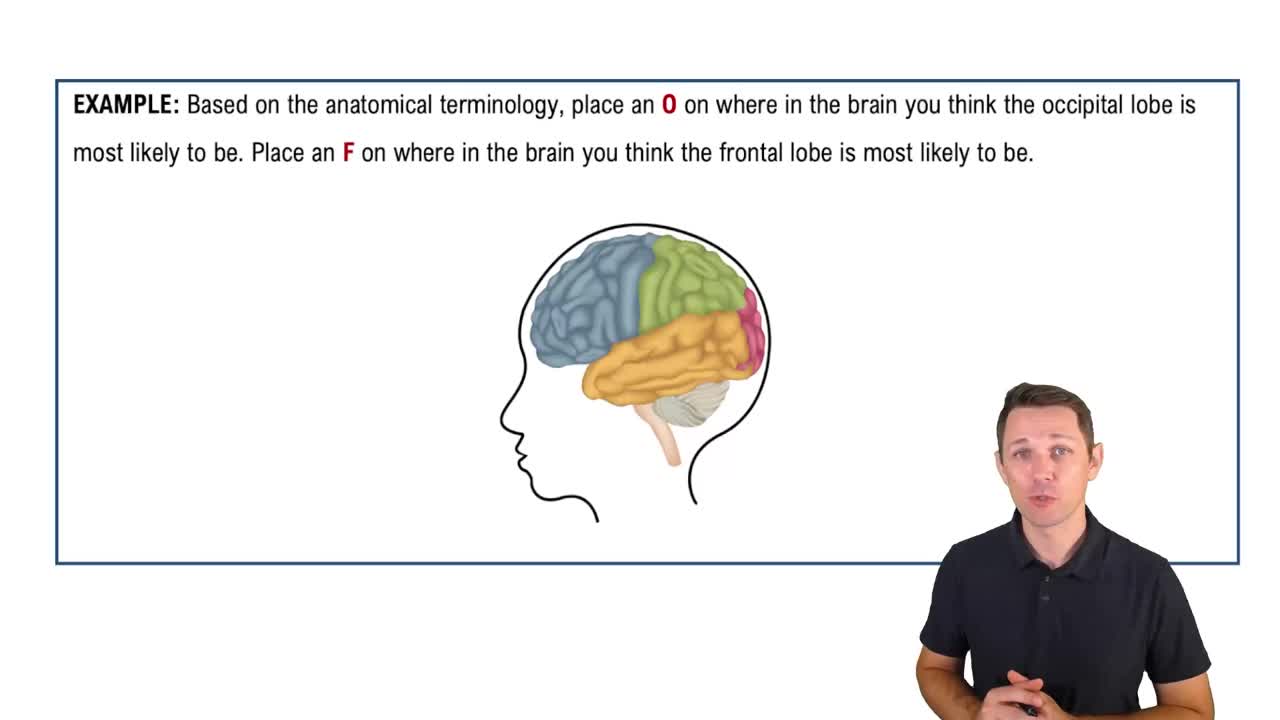
What are the two main categories of bones in the skull?
The skull consists of cranial bones (8) that protect the brain and facial bones (14) that form the structure of the face.
Which bones are included in the cranial bones?
Cranial bones include the frontal, parietal, occipital, temporal, sphenoid, and ethmoid bones.
Name some of the facial bones.
Facial bones include the maxilla, mandible, zygomatic, nasal, lacrimal, palatine, vomer, and inferior nasal concha bones.
What is the function of the sutures in the skull?
Sutures are immovable joints that join cranial bones. Examples include the coronal, squamous, lambdoid, and sagittal sutures.
What is the significance of the anterior fontanel in the fetal skull?
The anterior fontanel is a soft spot in the fetal skull that allows for brain growth and skull flexibility during birth.
What is the foramen magnum and its function?
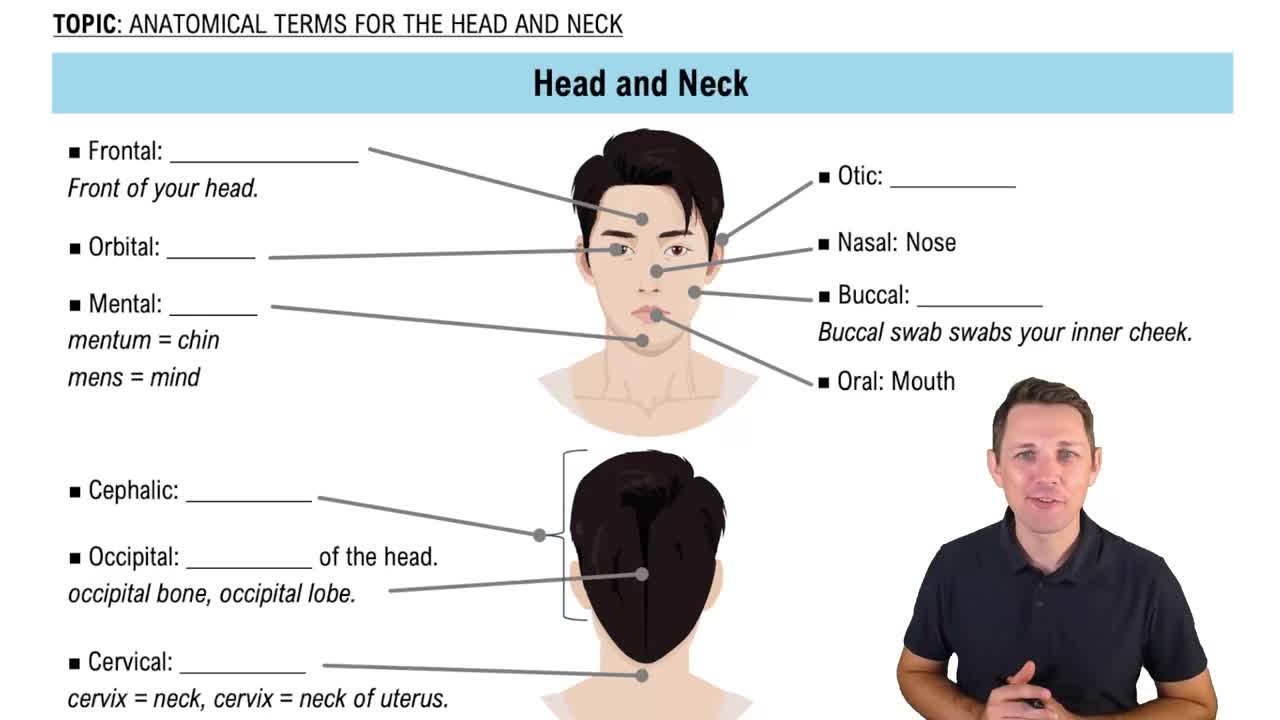
The foramen magnum is a large opening in the occipital bone through which the spinal cord passes to connect with the brain.
What is the role of the occipital condyles?
Occipital condyles articulate with the atlas (C1 vertebra), allowing for nodding movements of the head.
Which bone contains the sella turcica and what is its function?
The sphenoid bone contains the sella turcica, a depression that houses the pituitary gland.
What passes through the optic canal?
The optic nerve passes through the optic canal in the sphenoid bone.
What is the crista galli and its function?
The crista galli is a projection of the ethmoid bone where the falx cerebri (a brain membrane) attaches.
What forms the superior part of the nasal septum?
The perpendicular plate of the ethmoid bone forms the superior part of the nasal septum.
What are the paranasal sinuses and name the main ones?
Paranasal sinuses are air-filled cavities that lighten the skull and enhance voice resonance. Main sinuses include frontal, ethmoidal, sphenoidal, and maxillary sinuses.
What are the normal spinal curves and their characteristics?
Normal spinal curves include lordotic curves (concave posteriorly, convex anteriorly) and kyphotic curves (concave anteriorly, convex posteriorly).
Which spinal curves are primary and which are secondary?
Primary curves (thoracic and sacral) develop before birth; secondary curves (cervical and lumbar) develop after birth.
What are the main regions of the vertebral column and their vertebrae counts?
A vertebra consists of a body, vertebral arch (pedicles and laminae), spinous process, transverse processes, and articular processes.
What is unique about cervical vertebrae compared to others?
Cervical vertebrae have transverse foramina for vertebral arteries and generally smaller bodies.
What is the atlas (C1) and its function?
The atlas (C1) supports the skull and allows nodding motion; it lacks a body and has anterior and posterior arches.
What is the axis (C2) and its unique feature?
The axis (C2) has the dens (odontoid process) which acts as a pivot for head rotation.
How do thoracic vertebrae differ from lumbar vertebrae?
Thoracic vertebrae have costal facets for rib articulation and longer spinous processes; lumbar vertebrae have larger bodies and shorter spinous processes.
What is the structure and function of intervertebral discs?
Intervertebral discs have an outer anulus fibrosus and inner nucleus pulposus, providing cushioning and flexibility between vertebrae.
What are the main parts of the sacrum?
The sacrum has ala, sacral foramina, base, apex, median sacral crest, and auricular surface for pelvic articulation.
What are true, false, and floating ribs?
True ribs (1-7) attach directly to the sternum; false ribs (8-12) attach indirectly or not at all; floating ribs (11-12) do not attach to the sternum.
What are the key features of a typical rib?
A rib has a head, neck, tubercle, shaft, costal groove, and articulates with vertebrae and sternum via costal facets and cartilage.
 Back
 04:19