 Back
Anatomy & Physiology: Cell Organelles and Functions
 04:26

Terms in this set (29)
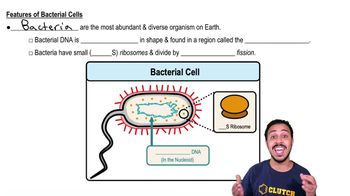
Ribosomes are nonmembranous structures that build proteins via translation.
The nucleus is the correct starting point in the protein secretion pathway.
Because ribosomes are attached to its surface.
Synthesizing lipids and detoxifying drugs/poisons.
The Golgi apparatus acts as the cell's processing center for protein modification and packaging.
The cis face receives vesicles; the trans face ships vesicles.
Lysosomes digest and recycle cellular material; peroxisomes break down toxic compounds like hydrogen peroxide and fatty acids.
The central vacuole.
They both have an outer membrane and an inner membrane.
Acts as a selective barrier, regulates entry/exit, enables cell signaling/recognition, and helps maintain membrane potential.
The cytosol is the fluid where many metabolic reactions occur and where organelles are suspended.
Stores DNA, controls gene expression, and is the site of transcription (DNA → RNA).
Makes rRNA and assembles ribosomal subunits.
Free ribosomes make cytosolic proteins; bound ribosomes make secreted, membrane, or lysosomal proteins.
Synthesizes, folds, and modifies proteins destined for secretion, membranes, or organelles; also makes membrane proteins and phospholipids.
Lipid and steroid synthesis, detoxification, carbohydrate metabolism, and Ca2+ storage (sarcoplasmic reticulum in muscle).
Modifies, sorts, and packages proteins/lipids; forms secretory vesicles; helps form lysosomes.
Move materials within the cell and perform exocytosis to secrete substances outside the cell.
Intracellular digestion of macromolecules, breaking down worn-out organelles (autophagy), and destroying pathogens in some cells.
Break down fatty acids, detoxify harmful substances, and convert H2O2 to H2O via catalase.
Produce ATP through aerobic respiration; also involved in apoptosis and heat production.
Includes microfilaments, intermediate filaments, and microtubules; provides structure and enables cell movement.
Maintain cell shape, enable muscle contraction with myosin, cell crawling, and cytokinesis.
Provide tensile strength and stabilize the cell and nucleus.
Serve as tracks for vesicle transport, form the mitotic spindle, and are the core of cilia and flagella.
Organize microtubules and help form the mitotic spindle during cell division.
Cilia move fluid across the cell surface; flagella enable cell movement (e.g., sperm).
Increase surface area for absorption, such as in intestines and kidney tubules.
Tight junctions seal cells; desmosomes anchor and strengthen; gap junctions allow cell-to-cell communication.