The cell is the functional unit of an organism, separated from its environment by the plasma membrane.
What are the three basic components of an animal cell?
The three basic components are the plasma membrane, cytoplasm, and nucleus.
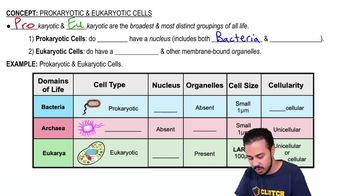
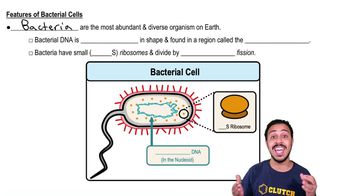
What is the difference between prokaryotic and eukaryotic cells?
Prokaryotic cells are small and lack a nucleus (e.g., bacteria), while eukaryotic cells are larger and have a well-defined nucleus.
What is the plasma membrane and its main functions?
The plasma membrane physically isolates the cell, provides structural support, regulates transport, communicates with other cells, and identifies the cell.
Describe the Fluid Mosaic Model of the plasma membrane.
The plasma membrane is a flexible bilayer of phospholipids with various proteins floating in it, allowing lateral movement and dynamic function.
What are the main components of the plasma membrane?
Phospholipids, proteins (integral and peripheral), cholesterol, and carbohydrates.
What is the structure and role of phospholipids in the membrane?
Phospholipids form a bilayer with hydrophilic (water-loving) heads facing outward and hydrophobic (water-fearing) tails facing inward, creating a barrier.
What are integral and peripheral membrane proteins?
Integral proteins span the membrane and are involved in transport and signaling; peripheral proteins attach loosely to the membrane surface and support cell shape and signaling.
Name the functions of membrane proteins.
Functions include acting as channels, carriers, receptors, enzymes, structural support, and linking adjacent cells.
What role does cholesterol play in the plasma membrane?
Cholesterol stabilizes membrane structure, maintaining fluidity by preventing it from becoming too rigid or too fluid with temperature changes.
What is the function of carbohydrates on the plasma membrane?
Carbohydrates (glycolipids and glycoproteins) are involved in cell recognition and help cells identify each other.
What are the three types of membrane junctions?
Tight junctions (seal cells), gap junctions (allow communication), and anchoring junctions or desmosomes (provide mechanical support).
What is the cytoplasm composed of?
Cytoplasm includes cytosol (fluid), organelles (specialized structures), and inclusions inside the plasma membrane but outside the nucleus.
What is the cytoskeleton and its functions?
The cytoskeleton is a protein filament network that provides cell shape, supports membranes and organelles, enables movement, and performs specialized functions.
Name the three types of cytoskeletal filaments.
Actin filaments (microfilaments), intermediate filaments, and microtubules.
What are microvilli, cilia, and flagella?
Extensions of the membrane: microvilli increase surface area; cilia move substances across cell surfaces; flagella propel cells through liquid.
What are organelles and their importance?
Organelles are specialized structures within the cytoplasm that perform specific metabolic functions essential for cellular efficiency.
What is the function of mitochondria?
Mitochondria produce most of the cell's ATP through oxidative catabolism and have their own DNA and ribosomes.
What is the role of peroxisomes?
Peroxisomes detoxify chemicals, metabolize fatty acids, and synthesize certain phospholipids using oxidation reactions.
What is the function of ribosomes?
Ribosomes synthesize proteins and can be free in the cytosol or bound to membranes.
Differentiate between rough and smooth endoplasmic reticulum (ER).
Rough ER has ribosomes and modifies proteins; smooth ER lacks ribosomes, stores calcium, synthesizes lipids, and detoxifies substances.
What is the function of the Golgi apparatus?
The Golgi apparatus sorts, modifies, packages proteins and other products from the ER for transport.
What are lysosomes and their functions?
Lysosomes contain digestive enzymes that break down damaged organelles, ingested particles, and non-useful tissues.
What is the nucleus and its main components?
The nucleus contains DNA, RNA, and proteins; components include the nuclear envelope, nucleoli, and chromatin.
Describe the nuclear envelope.
A double lipid bilayer membrane with pores, continuous with the rough ER, that separates the nucleus from the cytoplasm.
What is chromatin?
Chromatin is DNA wrapped around histone proteins forming nucleosomes, allowing DNA to be compacted inside the nucleus.
How does chromatin change during cell division?
Chromatin condenses into chromosomes, which are tightly packed DNA structures visible during cell division.
 Back
Back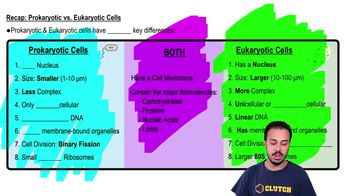
 04:26
04:26