 Back
Anatomy & Physiology: Chapter 4 - Epithelial Tissue, Hair, Nails, and Glands
 07:25

Terms in this set (20)
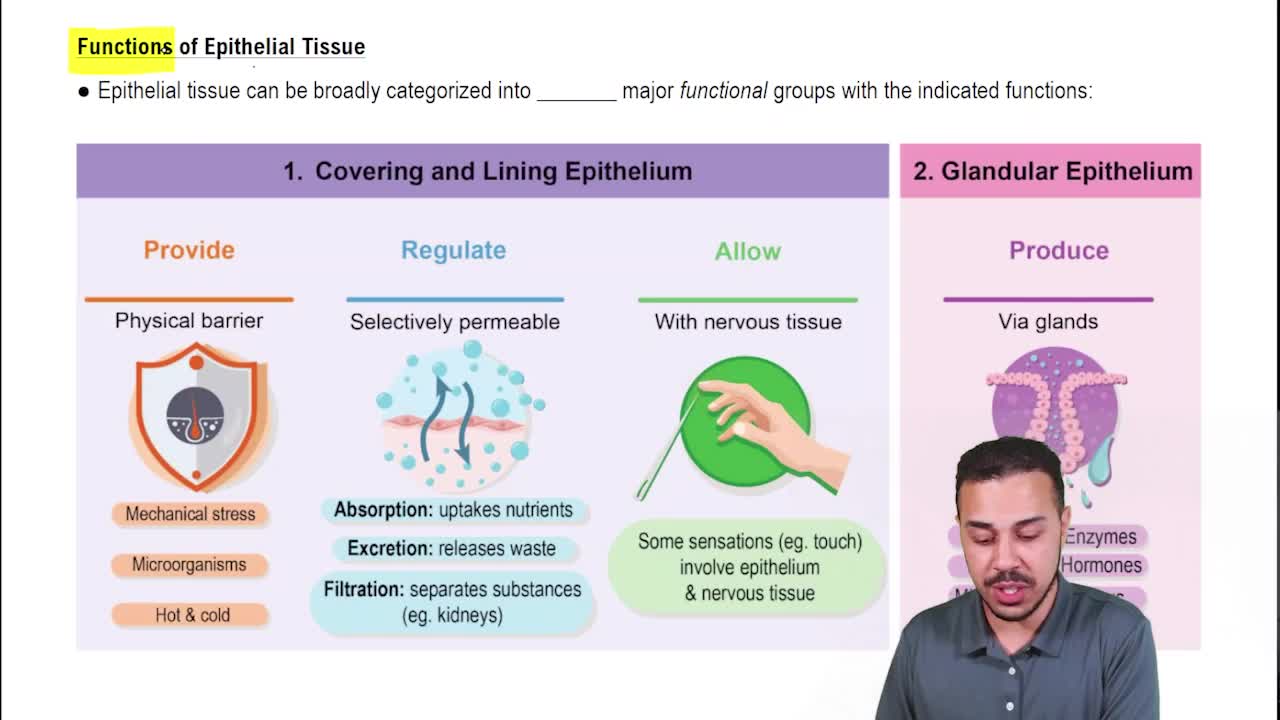
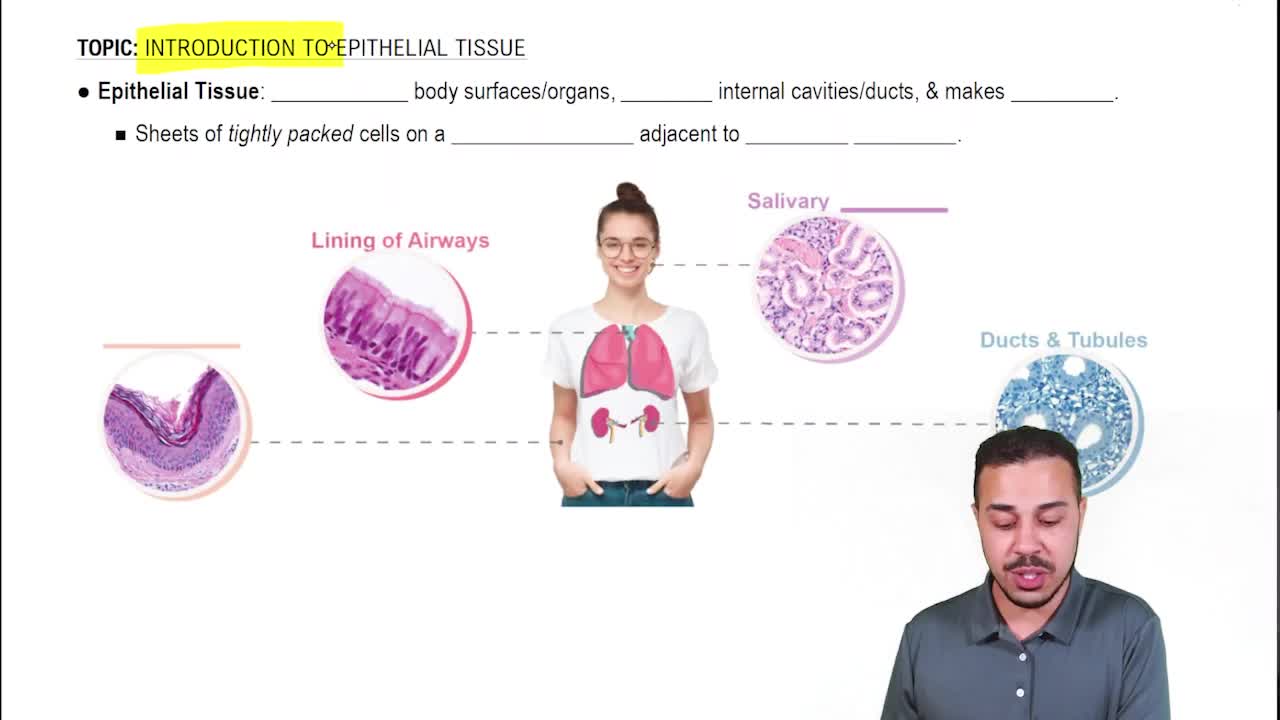
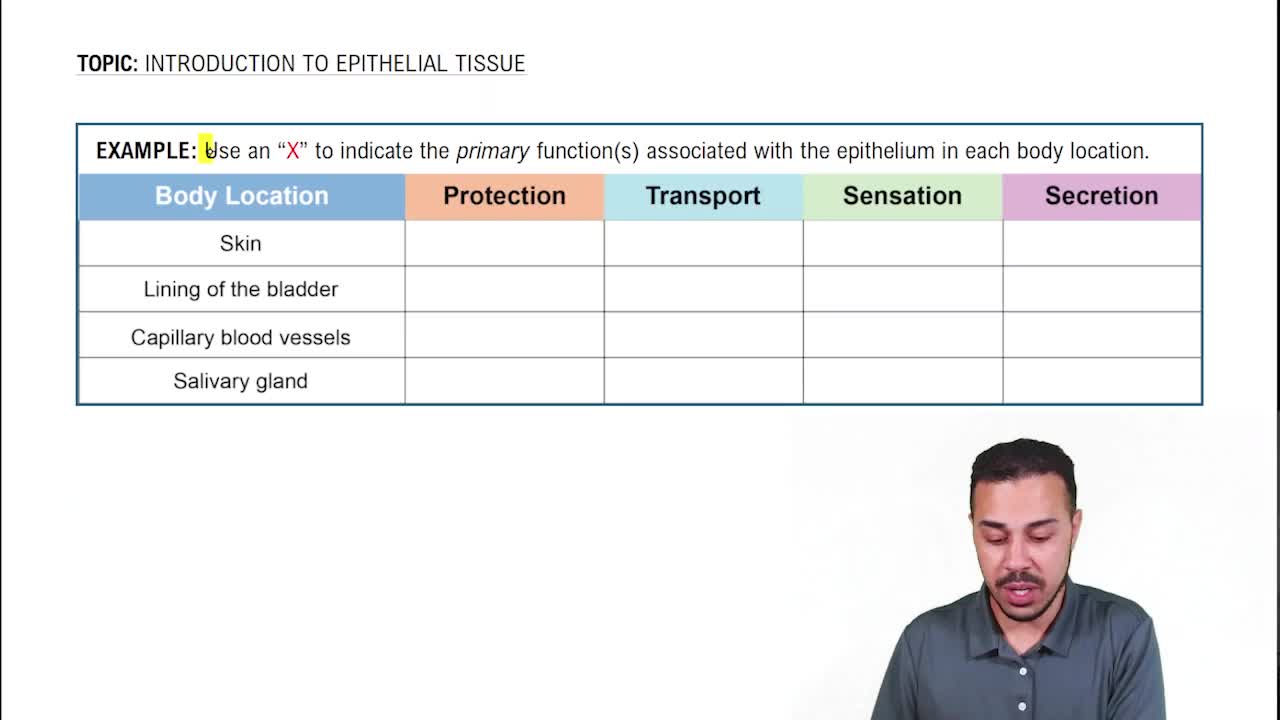
Epithelial tissue is a sheet of cells that covers body surfaces or lines body cavities, providing protection, absorption, secretion, and sensation.
Cellularity, polarity, attachment to a basement membrane, avascularity, and high regeneration capacity.
Hair protects the scalp, provides sensory input, and helps regulate body temperature.
The medulla (core), cortex (middle layer), and cuticle (outer layer).
Nails protect the distal tips of fingers and toes and assist in grasping objects.
Keratized epithelial cells form the hard structure of nails.
Glands are epithelial structures that produce and secrete substances like hormones, sweat, or oils.
Endocrine glands secrete hormones directly into the bloodstream; exocrine glands release secretions through ducts to body surfaces or cavities.
Sweat glands and sebaceous (oil) glands are examples of exocrine glands.
A thin, fibrous extracellular layer that anchors epithelial tissue to underlying connective tissue.
It receives nutrients by diffusion from blood vessels in the underlying connective tissue.
Pseudostratified ciliated columnar epithelium lines much of the respiratory tract.
The process where epithelial cells produce keratin, a tough protein that protects skin and hair.
They secrete sebum, an oily substance that lubricates and waterproofs skin and hair.
In the dermis layer of the skin, distributed widely over the body surface.
Eccrine glands produce watery sweat for cooling; apocrine glands produce thicker secretions, often in armpits and groin.
A tubular invagination of the epidermis that surrounds the hair root and anchors the hair into the skin.
Matrix cells in the hair bulb divide and differentiate to form hair.
The visible, crescent-shaped white area at the base of the nail plate.
From invaginations of epithelial tissue into underlying connective tissue.