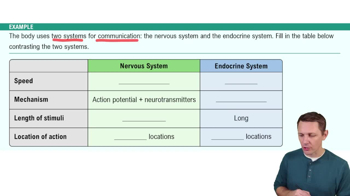
How are the nervous system and endocrine system similar and different?
Both systems regulate body functions. The nervous system uses electrical signals for fast, short-term responses; the endocrine system uses hormones for slower, long-term regulation.
What is a paracrine cell and its function?
A paracrine cell releases signaling molecules that affect nearby target cells without entering the bloodstream.
What is the overall function of the endocrine system?
To regulate body processes by secreting hormones that control growth, metabolism, reproduction, and homeostasis.
What are primary endocrine organs? Give an example.
Organs whose main function is hormone secretion, such as the thyroid gland.
What are hormones?
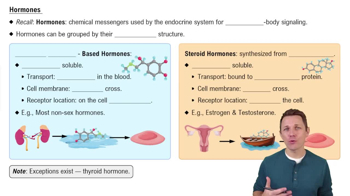
Chemical messengers secreted by endocrine glands that travel through the blood to target cells.
What are target cells?
Cells that have specific receptors for a hormone and respond to its signal.
What is a steroid hormone? Provide an example.
A hormone derived from cholesterol that can pass through cell membranes; example: cortisol.
What does an increase in hormone secretion represent?
An example of upregulation or a physiological response to maintain homeostasis.
What is insulin associated with? Where is it released? What is its effect?
Insulin lowers blood glucose; released by pancreatic beta cells; it promotes glucose uptake by cells.
What is glucagon associated with? Where is it released? What is its effect?
Glucagon raises blood glucose; released by pancreatic alpha cells; it stimulates glycogen breakdown in the liver.
Which endocrine gland is near the hypothalamus and what is their relationship?
The pituitary gland; the hypothalamus controls pituitary hormone release via releasing and inhibiting hormones.
What hormones are released by the anterior pituitary and their actions?
Includes growth hormone (stimulates growth), ACTH (stimulates adrenal cortex), TSH (stimulates thyroid), LH and FSH (stimulate gonads), prolactin (milk production).
What hormones are released by the posterior pituitary and their actions?
Oxytocin (stimulates uterine contractions and milk ejection) and ADH (antidiuretic hormone; promotes water retention).
What hormones does the hypothalamus release and their effects?
Releasing and inhibiting hormones that regulate anterior pituitary secretion, e.g., TRH, CRH, GnRH.
What hormones are associated with the thyroid gland?
 Back
Back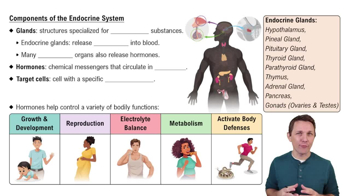
 7:06
7:06