 Back
Anatomy & Physiology Exam 1 Study Guide: Lymphatic, Digestive, and Metabolic Systems
 3:32

Terms in this set (28)
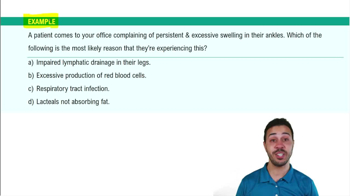
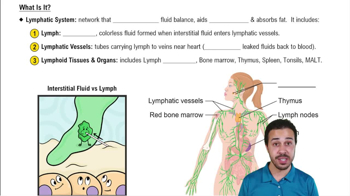
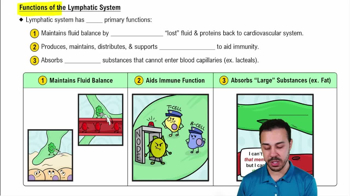
The lymphatic system returns excess tissue fluid to the bloodstream and plays a key role in immunity by filtering pathogens.
Small, blind-ended vessels that absorb tissue fluid and allow it to enter the lymphatic system as lymph.
Drains lymph from the right arm, right side of the head, and right thorax.
Include the lymph nodes, thymus, spleen, and tonsils, each with specific immune functions.
Filter lymph to trap pathogens and foreign particles and house lymphocytes for immune response.
Site of T cell maturation, essential for adaptive immunity.
Include physical barriers, inflammation, phagocytosis, and fever that provide immediate defense against pathogens.
T cells mediate cellular immunity; B cells produce antibodies for humoral immunity.
Y-shaped molecule with variable regions that bind specific antigens and constant regions that determine antibody class.
Initial response to an antigen with slow antibody production and memory cell formation.
Faster and stronger antibody production due to memory cells from prior exposure.
Include the mouth, pharynx, esophagus, stomach, small intestine, and large intestine.
From inside out: mucosa, submucosa, muscularis externa, and serosa.
Stores food, initiates protein digestion, and regulates release of chyme into the small intestine.
Secretes digestive enzymes and bicarbonate to neutralize stomach acid in the small intestine.
Includes bile production, metabolism of nutrients, detoxification, and storage of vitamins and minerals.
Has villi and microvilli to increase surface area for nutrient absorption.
Examples: amylase (carbohydrates), lipase (lipids), proteases (proteins).
Include catabolism (breaking down molecules for energy) and anabolism (building molecules).
Glycolysis, citric acid cycle, and oxidative phosphorylation produce ATP from glucose.
ATP is the primary energy currency used to power cellular processes.
Glucose is broken down via glycolysis and the citric acid cycle to produce ATP.
Includes breakdown, synthesis, and transport of lipids for energy and storage.
Proteins are broken down into amino acids, which can be used for energy or synthesis of new proteins.
Regulated by hormones like ghrelin (stimulates appetite) and leptin (suppresses appetite).
Include vitamins A, D, E, and K, which are stored in body fat and important for various functions.
Include B-complex and vitamin C, which must be regularly consumed as they are not stored extensively.
Include calcium, phosphorus, potassium, sodium, and magnesium, essential for body functions.