 Back
Anatomy & Physiology Exam 2 Review
 01:27

Terms in this set (23)
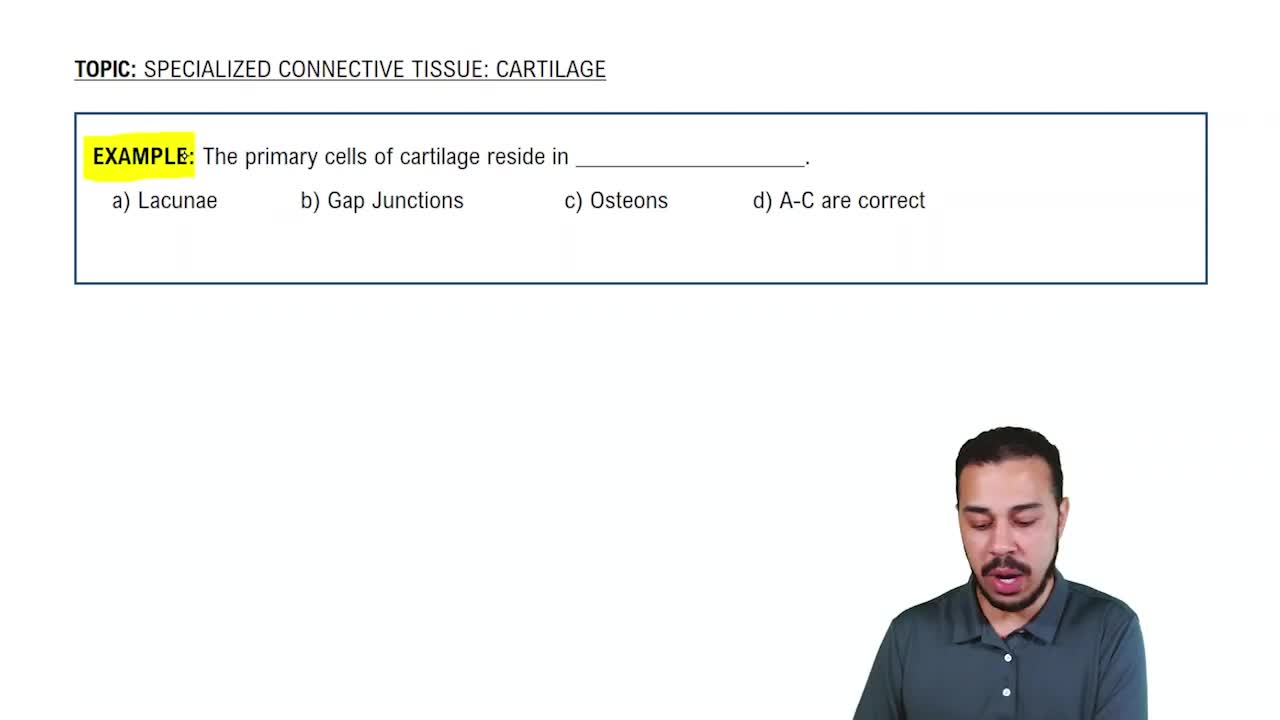
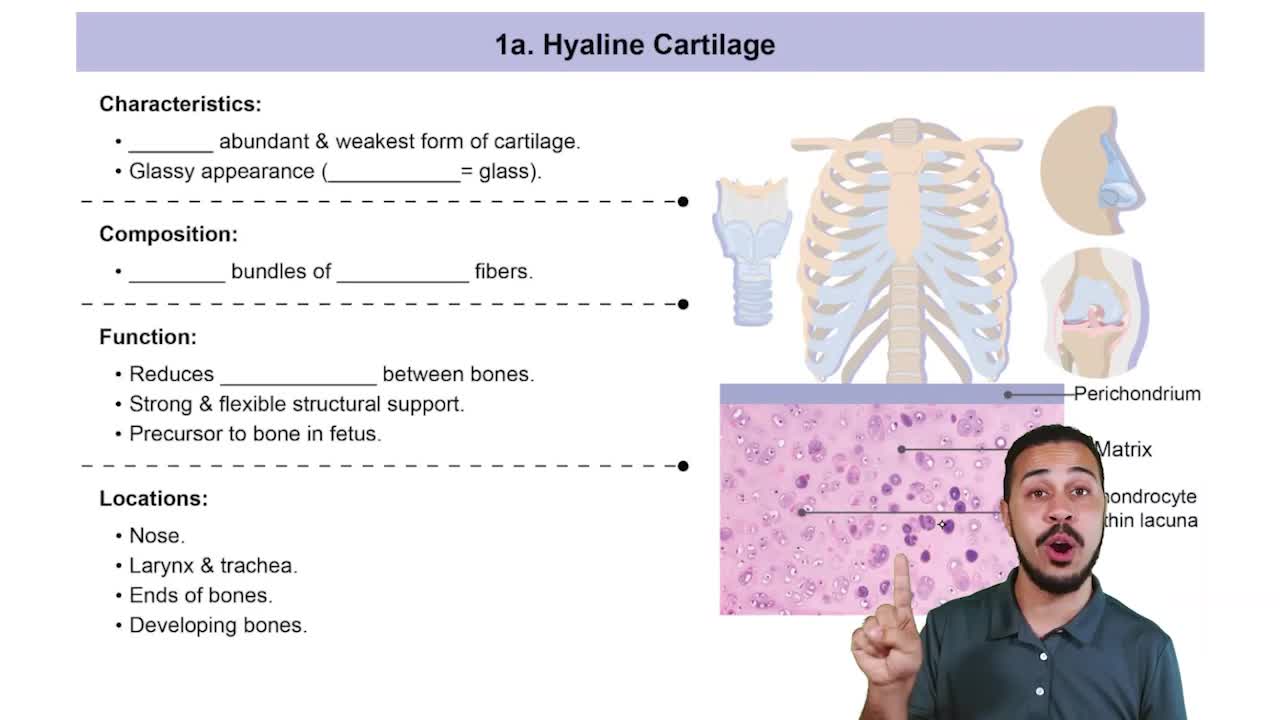
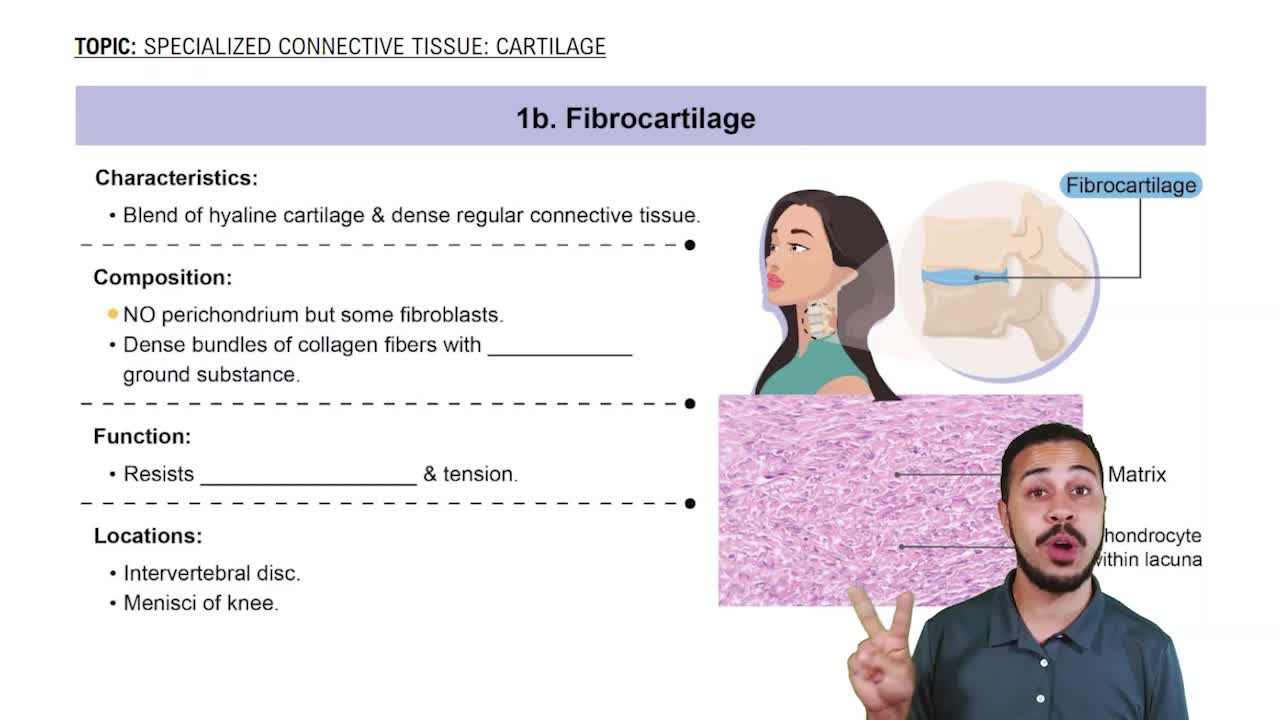
Hyaline cartilage is found in the nose, trachea, and at the ends of long bones. Elastic cartilage is in the ear and epiglottis. Fibrocartilage is found in intervertebral discs and pubic symphysis.
Simple squamous lines blood vessels; stratified squamous in skin; simple cuboidal in kidney tubules; simple columnar in digestive tract; pseudostratified columnar in respiratory tract.
White adipose tissue stores energy and insulates; brown adipose tissue generates heat through thermogenesis.
Both are composed mainly of dense regular connective tissue rich in collagen fibers, providing tensile strength.
Collagen fibers provide the greatest tensile strength in connective tissues like tendons and ligaments.
Sebaceous glands secrete oil; apocrine glands produce sweat in armpits/genital areas; exocrine glands secrete externally; sudoriferous glands are sweat glands; endocrine glands secrete hormones internally; ceruminous glands produce earwax.
Skeletal muscle is voluntary and striated; cardiac muscle is involuntary, striated, and found in the heart; smooth muscle is involuntary and non-striated, found in organs.
First-degree burns affect only the epidermis; second-degree burns affect epidermis and part of dermis; third-degree burns destroy epidermis, dermis, and underlying tissues.
Melanin protects skin from UV radiation by absorbing harmful rays and determining skin color.
From deep to superficial: stratum basale, stratum spinosum, stratum granulosum, stratum lucidum (only in thick skin), stratum corneum.
Dendritic cells are immune cells; melanocytes produce melanin; tactile cells detect touch; keratinocytes produce keratin for protection.
Papillary layer is loose connective tissue with capillaries; reticular layer is dense irregular connective tissue with collagen and elastin fibers.
Protection, temperature regulation, sensation, vitamin D synthesis, excretion, and immune defense.
The Rule of Nines estimates the percentage of body surface burned to guide fluid replacement therapy.
Long bones like femur; flat bones like sternum; short bones like carpals; irregular bones like vertebrae.
Osteoblasts build bone; osteocytes maintain bone; osteoclasts resorb bone; chondrocytes maintain cartilage.
Diaphysis is the shaft; epiphysis is the end; metaphysis is the growth plate area; medullary cavity contains marrow.
Supports body structure, protects organs, facilitates movement, stores minerals, and produces blood cells.
Axial skeleton includes skull, vertebrae, ribs; appendicular skeleton includes limbs and girdles.
Osteon is the structural unit; includes central canal, concentric lamellae, lacunae, and canaliculi.
Parathyroid hormone increases blood calcium; calcitonin lowers blood calcium; growth hormone stimulates bone growth.
Endochondral ossification forms bone from cartilage; intramembranous ossification forms bone directly from mesenchyme.
Osteoporosis is bone density loss leading to fragility. Prevention includes calcium/vitamin D intake, exercise, and avoiding smoking.