 Back
Anatomy & Physiology Exam 2 Study Guide
 2:47

Terms in this set (12)
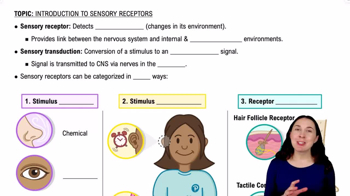
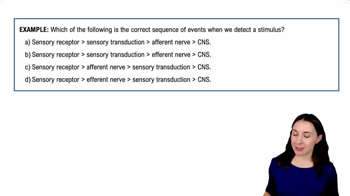
Sensory receptors are specialized cells or nerve endings that detect stimuli such as touch, temperature, pain, and pressure, and send signals to the nervous system.
Eccrine glands produce watery sweat for thermoregulation, while apocrine glands produce thicker sweat associated with hair follicles and body odor.
Hair consists of the shaft (visible part), root (below skin), and hair follicle (surrounding structure). It includes the medulla, cortex, and cuticle layers.
The epidermis has five layers: stratum basale, stratum spinosum, stratum granulosum, stratum lucidum (only in thick skin), and stratum corneum.
The dermis contains collagen and elastin fibers, blood vessels, nerves, hair follicles, sweat glands, and sebaceous glands.
Calcium metabolism is regulated by parathyroid hormone (PTH), calcitonin, and vitamin D, controlling absorption, storage, and excretion.
Endochondral ossification is the process where bone develops by replacing hyaline cartilage, mainly forming long bones.
Intramembranous ossification forms bone directly from mesenchymal tissue, primarily in flat bones like the skull.
Osteoblasts build bone, osteocytes maintain bone, osteoclasts resorb bone, and osteoprogenitor cells are precursors.
Intervertebral discs have a nucleus pulposus center and a tough annulus fibrosus outer ring, providing cushioning and flexibility to the spine.
Common arthritis types include osteoarthritis (degenerative), rheumatoid arthritis (autoimmune), and gouty arthritis (uric acid crystals).
A herniated disc occurs when the nucleus pulposus protrudes through a tear in the annulus fibrosus, potentially compressing spinal nerves.