 Back
Anatomy & Physiology Exam 2 Vocabulary and Concepts
 06:37

Terms in this set (20)
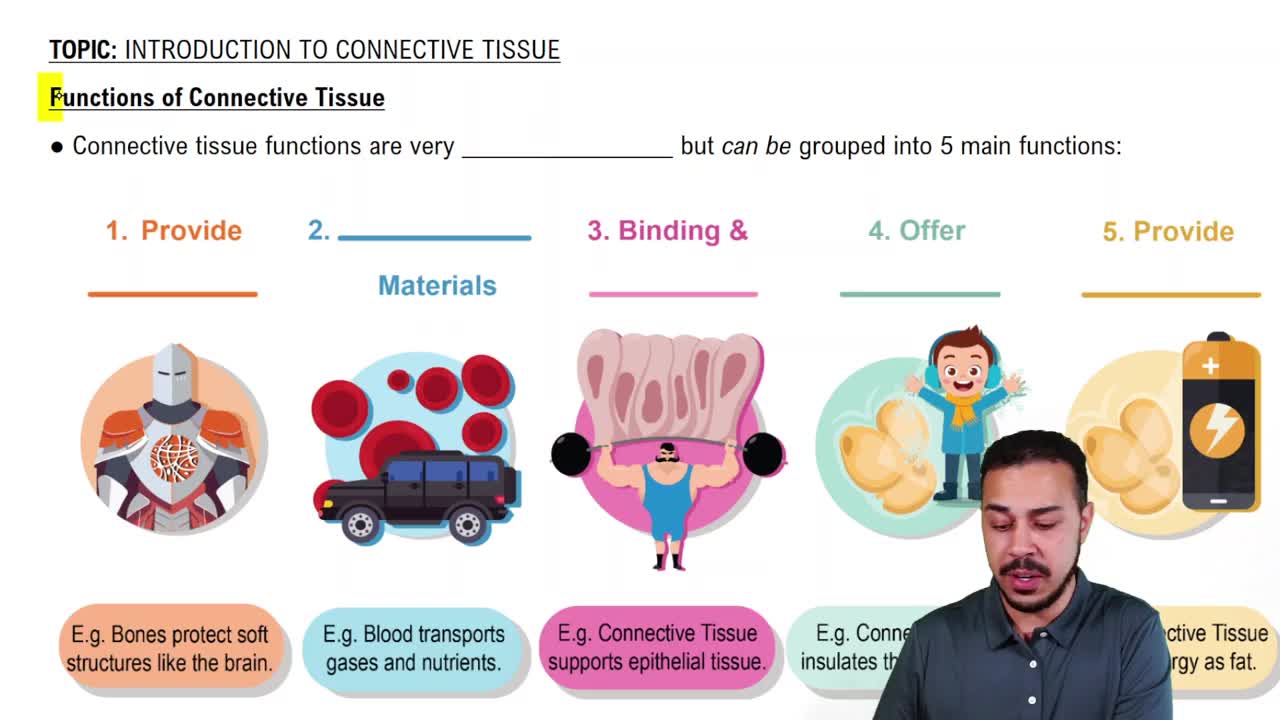
Protein fibers plus ground substance surrounding connective tissue cells.
Most abundant resident cell of connective tissue proper; produces collagen, elastic, and reticular fibers and ground substance.
Most abundant cartilage; found in joints, costal cartilage, larynx, trachea, and fetal skeleton.
Junction joining cardiac muscle cells, allowing synchronized contraction.
Membrane lining tracts that open to the outside, such as digestive, respiratory, urinary, and reproductive tracts.
Deepest epidermal layer; single row of mitotically active cells that continuously divide.
Spider-shaped cell in stratum basale that produces melanin, a brown-black UV-blocking pigment.
Superficial dermis layer made of areolar connective tissue; contains dermal papillae that form fingerprints and house Meissner corpuscles.
Most numerous sweat gland producing watery sweat (~99% water) for thermoregulation.
Dense outer bone layer composed of osteons; provides strength and structure.
Bone-forming cell that secretes osteoid, the unmineralized organic bone matrix.
Large multinucleate cell that resorbs bone matrix; derived from hematopoietic stem cells.
Bone formation process where bone replaces a hyaline cartilage model, forming most bones below the skull.
Bone grows or remodels in response to the mechanical stresses placed on it.
Includes skull, hyoid, vertebral column, and rib cage; provides protection and support.
Includes limbs and girdles; primarily responsible for movement.
Immovable joint between skull bones.
First cervical vertebra; has no body or spinous process; supports the skull allowing nodding ('yes').
Ribs 1–7 that attach directly to the sternum via their own costal cartilages.
Composed of ilium, ischium, and pubis fused into the os coxae; provides stability and supports body weight.