Skip to main content
Anatomy & Physiology
My Course
Learn
Exam Prep
AI Tutor
Study Guides
Textbook Solutions
Flashcards
Explore
Try the app
My Course
Learn
Exam Prep
AI Tutor
Study Guides
Textbook Solutions
Flashcards
Explore
Try the app
Back
Anatomy & Physiology Exam Study Guide Flashcards
You can tap to flip the card.
Organs of the cardiovascular system
You can tap to flip the card.
👆
Organs of the cardiovascular system
Arteries, veins, and heart
are the main organs of the cardiovascular system.
Track progress
Control buttons has been changed to "navigation" mode.
1/30
Recommended videos
Guided course
02:29
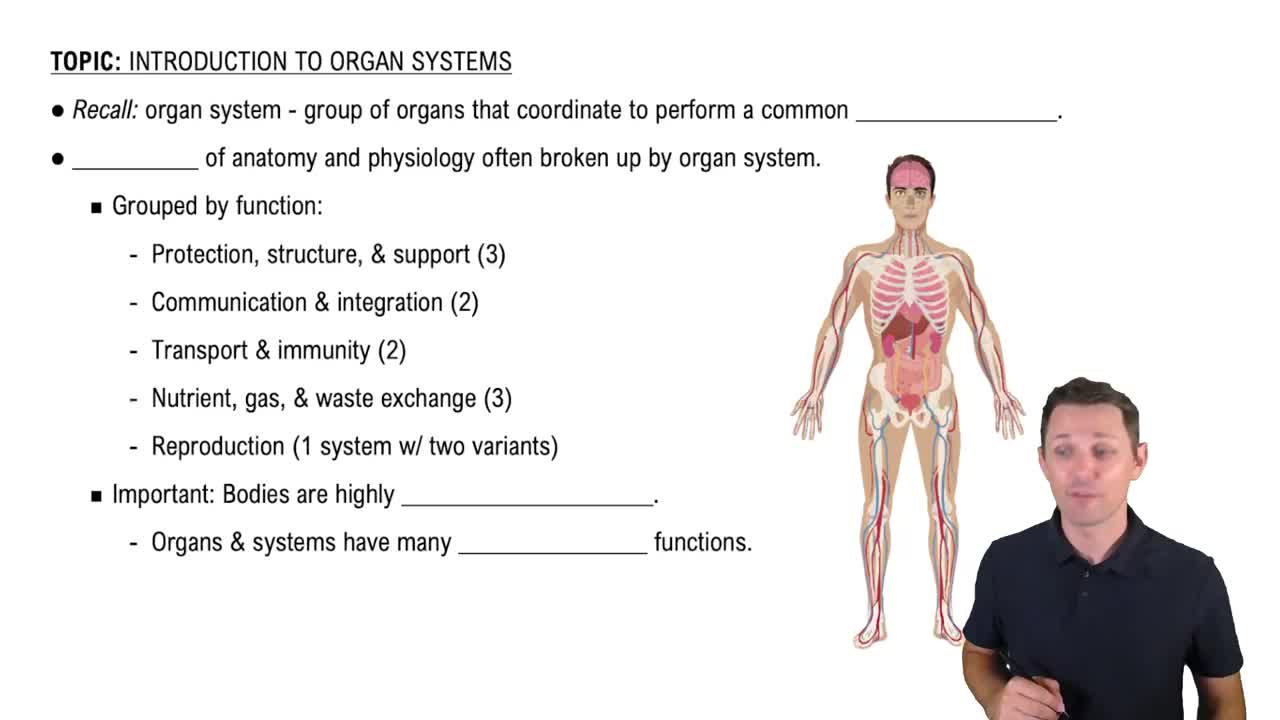
Introduction to Organ Systems
30141
views
762
rank
Guided course
02:18
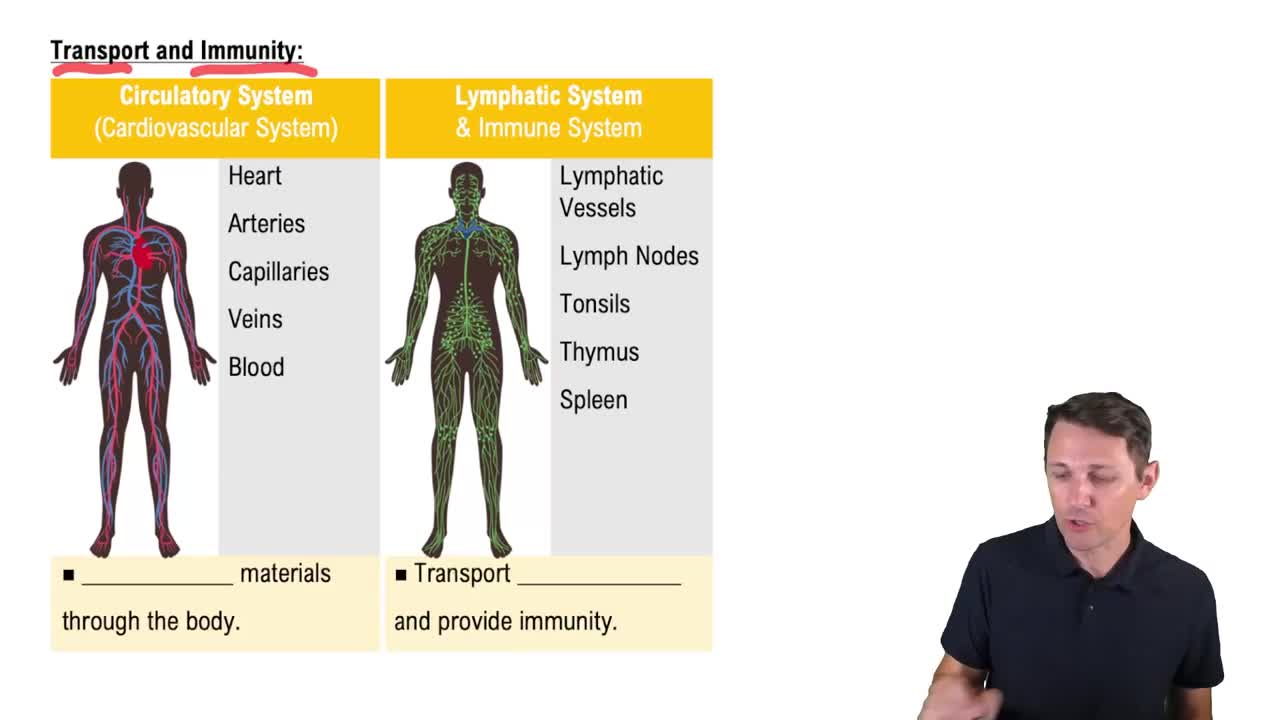
Transport and Immunity
17248
views
467
rank
1
comments
Guided course
02:12
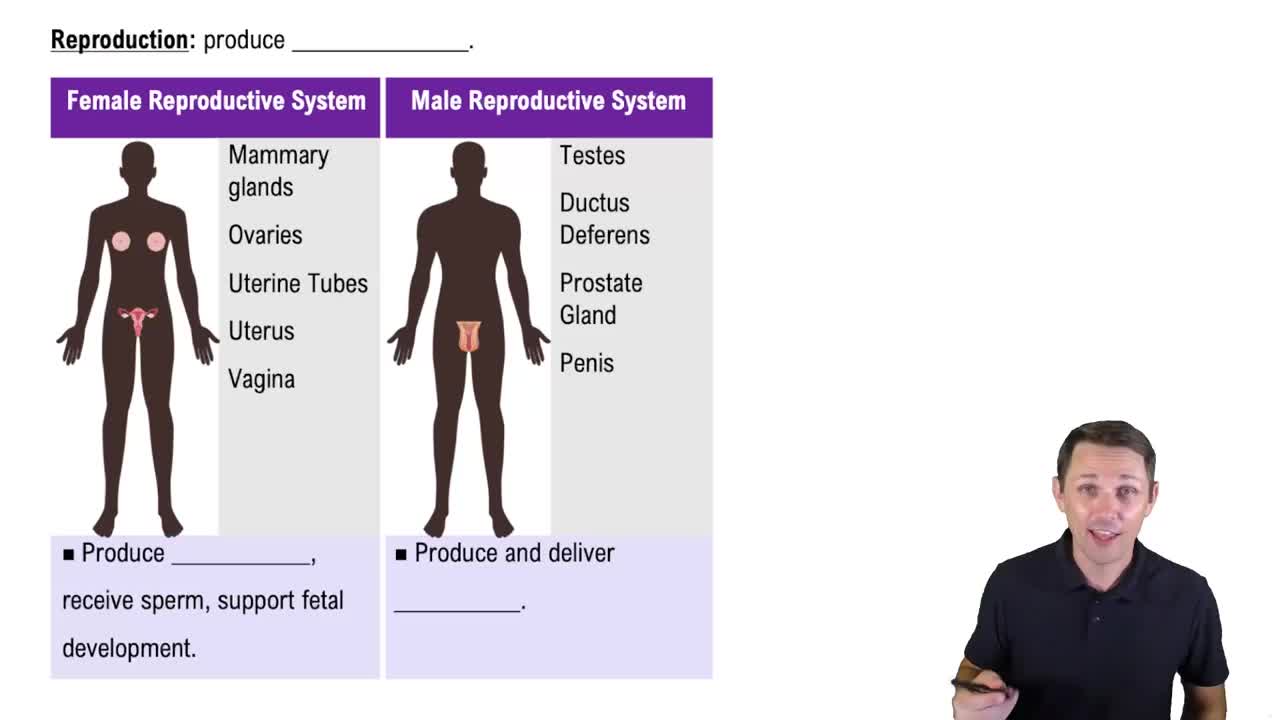
Reproduction
14450
views
386
rank
2
comments
Terms in this set (30)
Hide definitions
Organs of the cardiovascular system
Arteries, veins, and heart
are the main organs of the cardiovascular system.
Organs of the respiratory system
Trachea, bronchi, and alveoli
are key organs in the respiratory system.
Organs of the endocrine system
Adrenal glands, pancreas, and pituitary gland
are part of the endocrine system.
Organs of the digestive system
Esophagus, large intestine, and rectum
belong to the digestive system.
Organs of the urinary system
Kidneys, bladder, and ureters
are organs of the urinary system.
Expiration as a life function
Expiration (breathing out) removes excessive carbon dioxide from the blood, an example of
excretion
.
Sensing and responding to environmental changes
This is an example of the life function called
responsiveness
.
Prevention of water loss
Prevention of water loss is a necessary life function related to
maintaining homeostasis
.
Effect of faster anabolic than catabolic reactions
If anabolic reactions exceed catabolic, the body accomplishes
growth and repair
.
Imaging device best for localizing brain tumors
An
MRI (Magnetic Resonance Imaging)
is best for localizing tumors in the brain.
Result of negative feedback
Negative feedback generally
maintains homeostasis by reversing a change
.
Location of popliteal pulse
The popliteal pulse is found
behind the knee
.
Location for axillary temperature
Axillary temperature is taken
in the armpit
.
Location of median cubital vein
The median cubital vein is located
in the anterior elbow region
.
Definition of an element
An element is a substance made of
only one type of atom
.
Subatomic particles of an atom
Protons
are positive,
electrons
are negative, and
neutrons
are neutral particles.
Difference between ionic and covalent bonds
Ionic bonds involve
transfer of electrons
, covalent bonds involve
sharing of electrons
.
Definition of pH and buffer
pH measures acidity; a buffer
resists changes in pH
to maintain stability.
Functions of carbohydrates
Carbohydrates provide
energy
and
structural support
in cells.
Functions of lipids
Lipids store
energy
, form
cell membranes
, and act as
hormones
.
Functions of proteins
Proteins serve as
enzymes, structural components, and hormones
.
Functions of nucleic acids
Nucleic acids store and transmit
genetic information
.
Properties of water
Water is
polar, solvent, high heat capacity, and participates in chemical reactions
.
Definition of diffusion
Diffusion is the
movement of molecules from high to low concentration
.
Definition of osmosis
Osmosis is the diffusion of
water across a semipermeable membrane
.
Function of mitochondria
Mitochondria produce
ATP aerobically
for cellular energy.
Function of lysosomes
Lysosomes contain enzymes for
breaking down phagocytized material
.
Function of Golgi apparatus
Golgi apparatus
packages proteins
for secretion or membrane insertion.
Effect of colchicine on cell division
Colchicine
arrests mitosis
by preventing spindle microtubule formation.
Stage of mitosis where chromosomes line up at equator
Chromosomes align at the cell equator during
metaphase
.
 BackBack
 02:29