Skip to main content
Anatomy & Physiology
My Course
Learn
Exam Prep
AI Tutor
Study Guides
Textbook Solutions
Flashcards
Explore
Try the app
My Course
Learn
Exam Prep
AI Tutor
Study Guides
Textbook Solutions
Flashcards
Explore
Try the app
Back
Anatomy & Physiology Final Exam Review
You can tap to flip the card.
What are the main components of the nervous system?
You can tap to flip the card.
👆
What are the main components of the nervous system?
The nervous system includes the Central Nervous System (CNS) and Peripheral Nervous System (PNS).
Track progress
Control buttons has been changed to "navigation" mode.
1/24
Recommended videos
0:50
Introduction to the Central Nervous System Example 1
11929
views
233
rank
2
comments
2:41
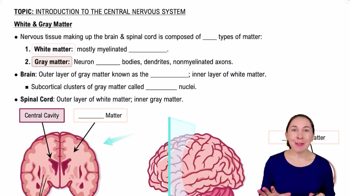
White & Gray Matter
12215
views
221
rank
3:34
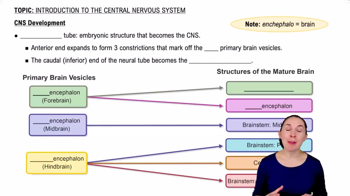
CNS Development
12851
views
255
rank
2
comments
Terms in this set (24)
Hide definitions
What are the main components of the nervous system?
The nervous system includes the Central Nervous System (CNS) and Peripheral Nervous System (PNS).
What is the function of the autonomic nervous system (ANS)?
The ANS controls involuntary functions and is divided into the sympathetic (fight or flight) and parasympathetic (rest and digest) systems.
What is an action potential?
An action potential is a rapid electrical signal that travels along neurons to transmit information.
Name the three types of CNS tracts.
Ascending tracts (sensory), descending tracts (motor), and commissural tracts (connect hemispheres).
What is the pathway and function of cerebrospinal fluid (CSF)?
CSF circulates through the ventricles and subarachnoid space, providing cushioning and nutrient transport for the brain and spinal cord.
What are the main functions of the endocrine system?
The endocrine system regulates body functions through hormone secretion affecting growth, metabolism, and homeostasis.
How do protein and steroid hormones differ in action?
Protein hormones bind to cell surface receptors; steroid hormones pass through membranes and bind intracellular receptors.
What is the role of the hypothalamus in endocrine regulation?
The hypothalamus controls the pituitary gland, regulating hormone release from the adenohypophysis and neurohypophysis.
What is the renin-angiotensin system?
A hormone system that regulates blood pressure and fluid balance by constricting blood vessels and stimulating aldosterone release.
What hormones regulate blood sugar homeostasis?
Insulin lowers blood sugar; glucagon raises blood sugar through glycogenolysis and gluconeogenesis.
What is cardiac output (CO) and how is it calculated?
CO is the volume of blood the heart pumps per minute, calculated as heart rate (HR) × stroke volume (SV).
Define end-diastolic volume (EDV) and end-systolic volume (ESV).
EDV is the volume of blood in ventricles before contraction; ESV is the volume remaining after contraction.
What is Starling's law of the heart?
The heart pumps more forcefully when it is filled with more blood during diastole, increasing stroke volume.
Describe the path of blood through the heart and body.
Blood flows from body → right atrium → right ventricle → lungs → left atrium → left ventricle → body.
What are the main types of blood cells and their functions?
Red blood cells carry oxygen; white blood cells fight infection; platelets aid in clotting.
What is hemopoiesis?
The process of blood cell formation from stem cells in the bone marrow.
What is the difference between specific and general immunity?
Specific immunity targets particular pathogens; general immunity provides broad, nonspecific defense.
What is the function of memory cells in immunity?
Memory cells remember past infections to provide faster, stronger immune responses upon re-exposure.
What is tidal volume in respiratory physiology?
Tidal volume is the amount of air inhaled or exhaled during normal breathing.
What is the pathway of air through the respiratory system?
Air passes through the nose/mouth → pharynx → larynx → trachea → bronchi → lungs → alveoli.
What is the role of the juxtaglomerular apparatus in the urinary system?
It regulates blood pressure and filtration rate by releasing renin in response to low blood pressure.
What are the main phases of the menstrual cycle?
The menstrual cycle includes the follicular phase, ovulation, luteal phase, and menstruation.
What is the acrosome reaction in fertilization?
The acrosome reaction releases enzymes from the sperm to penetrate the egg's zona pellucida.
What is the difference between oogenesis and spermatogenesis?
Oogenesis produces one mature egg per cycle; spermatogenesis produces millions of sperm continuously.
 BackBack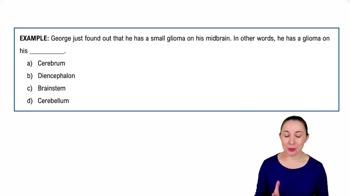
 0:50
0:50