 Back
BackAnatomy & Physiology Final Exam Review
 7:06
7:06
Terms in this set (31)
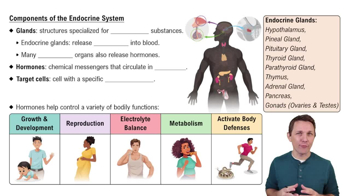
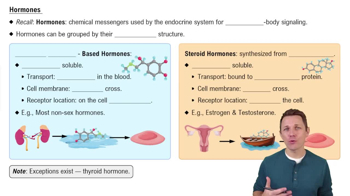
Hormones
By sending hormones that either stimulate or inhibit hormone release from the pituitary.
TSH, ACTH, Gonadotropins (FSH, LH), GH, Prolactin, and MSH.
Antidiuretic hormone (ADH) and Oxytocin.
Insulin, which lowers blood glucose and increases glycogen production in the liver.
Permissive effects
Hemoglobin
Stacks of red blood cells.
Because they lack a nucleus.
Primarily to the spleen, then liver and bone marrow; eventually excreted in urine.
In blocked bile ducts or liver dysfunction such as hepatitis, gallstones, or cirrhosis.
Backward from the right ventricle into the right atrium.
Systole: heart contraction (blood leaves). Diastole: heart relaxation (blood fills).
First sound (lubb): AV valves close. Second sound (dupp): semilunar valves close.
Superior vena cava, inferior vena cava, and coronary sinus.
Right atrium → Right ventricle → Lungs → Left atrium → Left ventricle → Aorta → Body.
Regulates water absorption by increasing permeability and aquaporins in collecting ducts.
Glomerulus
Substance that temporarily neutralizes acids by storing H+ to minimize pH changes.
Ureters
Incontinence: inability to control urination. Urinary retention: inability to urinate.
RAAS increases sodium and water reabsorption, raising blood volume and pressure.
Adjust blood volume/pressure, regulate plasma ions, stabilize pH, conserve nutrients, remove toxins, produce calcitriol and EPO.
FAD and NAD
Intracellular: cytosol inside cells (~2/3 body fluid). Extracellular: interstitial fluid, plasma, lymph, CSF, synovial, serous, aqueous humor.
Small intestine
Renal papilla → Minor calyx → Major calyx → Renal pelvis → Ureter.
Reabsorption of nutrients
Urea
Sum of anabolism and catabolism.
Menarche: onset of first uterine cycle. Menopause: end of menstruation.