Skip to main content
Anatomy & Physiology
My Course
Learn
Exam Prep
AI Tutor
Study Guides
Textbook Solutions
Flashcards
Explore
Try the app
My Course
Learn
Exam Prep
AI Tutor
Study Guides
Textbook Solutions
Flashcards
Explore
Try the app
Back
Anatomy & Physiology Final Exam Review
You can tap to flip the card.
Which glands secrete major hormones?
You can tap to flip the card.
👆
Which glands secrete major hormones?
Major hormone-secreting glands include the pituitary, thyroid, adrenal, pancreas, and gonads.
Track progress
Control buttons has been changed to "navigation" mode.
1/28
Recommended videos
Guided course
7:06
Components of the Endocrine System
12526
views
382
rank
Guided course
6:20
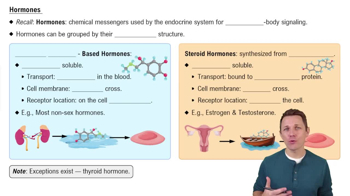
Hormones
9605
views
237
rank
Guided course
3:33
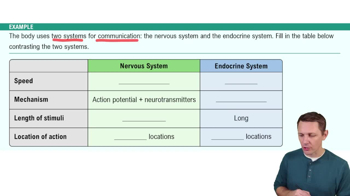
Introduction to the Endocrine System Example 1
13729
views
386
rank
1
comments
Terms in this set (28)
Hide definitions
Which glands secrete major hormones?
Major hormone-secreting glands include the pituitary, thyroid, adrenal, pancreas, and gonads.
Which hormones increase blood sugar?
Hormones that increase blood sugar include glucagon, cortisol, epinephrine, and growth hormone.
Which hormones lower blood sugar?
Insulin is the primary hormone that lowers blood sugar.
What are the different formed elements in blood?
Formed elements include red blood cells (RBCs), white blood cells (WBCs), and platelets.
What are the different types of white blood cells (WBCs)?
Types of WBCs include neutrophils, lymphocytes, monocytes, eosinophils, and basophils.
What connective tissue controls the heart valves?
The heart valves are controlled by dense connective tissue called the fibrous skeleton.
Where are the major heart valves located?
The valves are the tricuspid (right atrioventricular), mitral (left atrioventricular), pulmonary, and aortic valves.
What causes the three deflection waves of an EKG?
P wave: atrial depolarization; QRS complex: ventricular depolarization; T wave: ventricular repolarization.
What factors affect blood flow and blood pressure?
Factors include vessel diameter, blood viscosity, vessel length, cardiac output, and peripheral resistance.
Name some major arteries of the body.
Major arteries include the aorta, carotid, subclavian, renal, femoral, and coronary arteries.
What is the major function of the lymphatic system?
The lymphatic system returns interstitial fluid to the bloodstream and participates in immune defense.
What are the major organs of the lymphatic system?
Major organs include lymph nodes, spleen, thymus, tonsils, and lymphatic vessels.
What are the body’s three lines of defense?
1st line: physical and chemical barriers; 2nd line: innate immune responses; 3rd line: adaptive immunity.
What are the major anatomical features of the lungs?
Features include lobes, bronchi, alveoli, pleura (visceral and parietal), and pulmonary vessels.
How are respiratory gases transported by blood?
Oxygen is carried bound to hemoglobin; carbon dioxide is transported dissolved, as bicarbonate, or bound to hemoglobin.
Distinguish between organs of the alimentary canal and accessory digestive organs.
Alimentary canal organs include mouth, esophagus, stomach, intestines; accessory organs include liver, pancreas, gallbladder.
Where are most nutrients absorbed?
Most nutrient absorption occurs in the small intestine, especially the jejunum.
What are the structural and functional units of the kidney?
The nephron is the structural and functional unit of the kidney.
How do water, ions, and electrolytes move in the nephron?
They move by filtration, reabsorption, and secretion along different nephron segments.
What are the major routes by which water and electrolytes enter and leave the body?
Water and electrolytes enter via ingestion and metabolism; leave via urine, sweat, feces, and respiration.
What are the outcomes of spermatogenesis and oogenesis?
Spermatogenesis produces four viable sperm; oogenesis produces one ovum and polar bodies.
What is the Graafian follicle?
The Graafian follicle is the mature ovarian follicle ready to release an egg during ovulation.
How does the nervous system control ejaculation and orgasm?
Ejaculation is controlled by sympathetic and somatic nerves; orgasm involves complex neural pathways.
What are the ovarian and uterine cycles?
The ovarian cycle involves follicle development; the uterine cycle involves endometrial changes for implantation.
What is a conceptus?
A conceptus is the developing embryo/fetus from fertilization through gestation.
What are the embryonic germ layers?
The three germ layers are ectoderm, mesoderm, and endoderm, which form all tissues and organs.
What is polygenic inheritance?
Polygenic inheritance involves multiple genes contributing to a single trait.
What are autosomal recessive, autosomal dominant, and sex-linked inheritance?
Autosomal recessive requires two copies of a gene; autosomal dominant requires one; sex-linked involves genes on the X chromosome.
 BackBack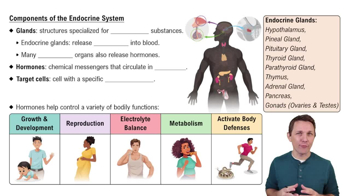
 7:06
7:06