 Back
BackAnatomy & Physiology Final Exam Study Guide
 7:06
7:06
Terms in this set (29)
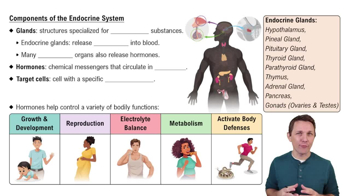
Pineal gland, hypothalamus, pituitary gland, thyroid gland, parathyroid glands, thymus, adrenal glands, pancreas, gonads (ovaries and testes)
Transport oxygen from the lungs to body tissues and carry carbon dioxide back to the lungs.
Thrombocytes (platelets) are cell fragments involved in blood clotting to prevent bleeding.
A classification of blood based on the presence or absence of A and B antigens on red blood cells, important for blood transfusions.
The closure of the atrioventricular (AV) valves at the start of ventricular systole (lub sound).
Arteries have thicker tunica media for high pressure; veins have valves and thinner walls.
Filter lymph to remove pathogens and debris; contain lymphocytes for immune response.
1st line: physical barriers; 2nd line: innate immunity; 3rd line: adaptive immunity.
Humoral immunity involves B cells and antibodies; cell-mediated immunity involves T cells attacking infected cells.
By diffusion of oxygen and carbon dioxide across the alveolar and capillary walls driven by partial pressure gradients.
Pressure and volume of gas are inversely related; lung volume changes cause pressure changes that drive air flow.
Mouth, esophagus, stomach, small intestine, large intestine, liver, pancreas, gallbladder.
Amylase from saliva and pancreas breaks down starches in the mouth and small intestine.
Pepsin, active in the stomach, breaks proteins into smaller peptides.
Emulsified by bile, then broken down by pancreatic lipase into monoglycerides and fatty acids in the small intestine.
Functional units of the kidney that filter blood and form urine.
Return interstitial fluid to blood, absorb fats, and provide immune defense.
B cells produce antibodies; T cells destroy infected or abnormal cells.
Menstrual, proliferative, and secretory phases involving changes in the endometrium.
The formation of organs during embryonic development.
Drains lymph from most of the body into the left subclavian vein.
Illustrates the cardiac cycle phases including pressure changes, valve movements, and heart sounds.
Produce hormones like adrenaline and cortisol to regulate stress response and metabolism.
Secretes digestive enzymes and bicarbonate to neutralize stomach acid in the small intestine.
Site of T cell maturation important for adaptive immunity.
Filters blood, recycles red blood cells, and supports immune responses.
Collect excess interstitial fluid and transport it as lymph.
Controls the pituitary gland and regulates homeostasis via hormone release.
Secretes fluid that nourishes and protects sperm.