Skip to main content
Anatomy & Physiology
My Course
Learn
Exam Prep
AI Tutor
Study Guides
Textbook Solutions
Flashcards
Explore
Try the app
My Course
Learn
Exam Prep
AI Tutor
Study Guides
Textbook Solutions
Flashcards
Explore
Try the app
Back
Anatomy & Physiology Final Exam Study Guide
You can tap to flip the card.
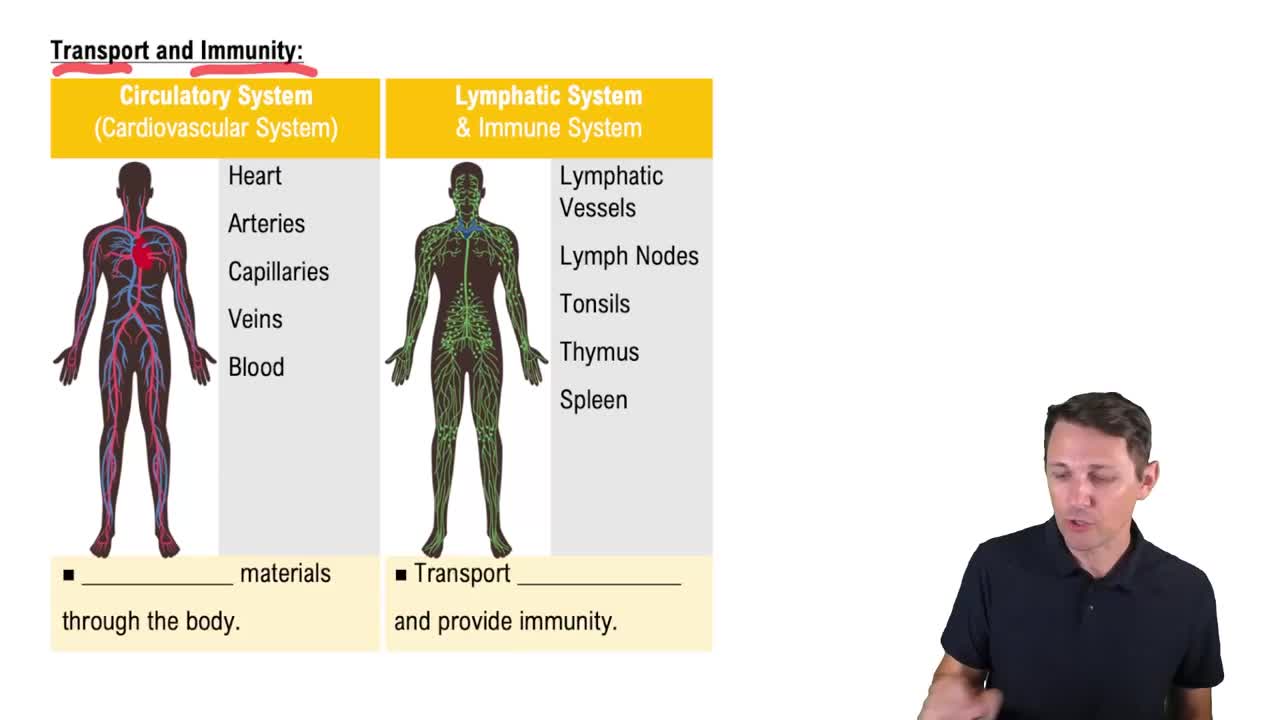
Organ system involved in transporting nutrients and gases in blood
You can tap to flip the card.
👆
Organ system involved in transporting nutrients and gases in blood
The
cardiovascular system
transports nutrients, gases, and wastes in the blood throughout the body.
Track progress
Control buttons has been changed to "navigation" mode.
1/29
Recommended videos
02:29
Introduction to Organ Systems
29859
views
756
rank
02:18
Transport and Immunity
17083
views
464
rank
1
comments
02:12
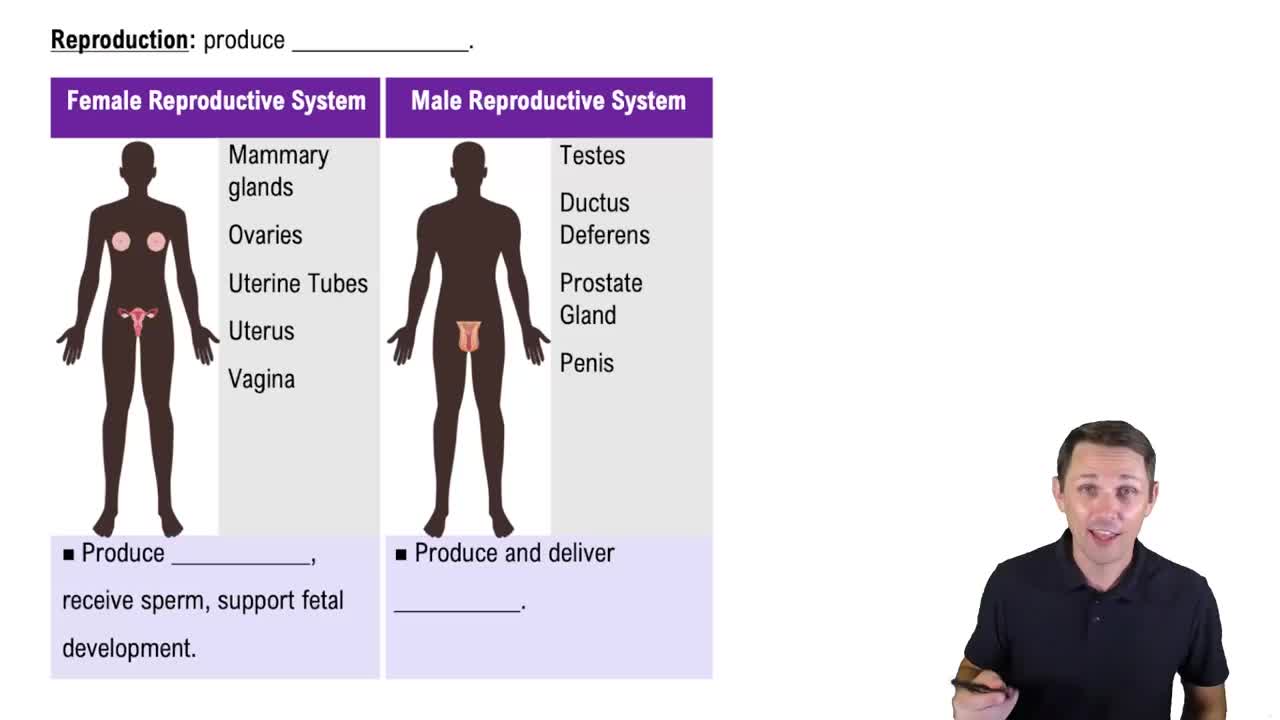
Reproduction
14305
views
384
rank
2
comments
Terms in this set (29)
Hide definitions
Organ system involved in transporting nutrients and gases in blood
The
cardiovascular system
transports nutrients, gases, and wastes in the blood throughout the body.
Levels of structural organization in the human body
The levels include
chemical, cellular, tissue, organ, organ system,
and
organism
levels.
Body region terms
Specific body areas are designated by terms such as
cephalic (head), thoracic (chest), abdominal, pelvic,
and
limb regions
.
Body planes
The main planes are
sagittal (divides left and right), frontal (divides front and back),
and
transverse (divides top and bottom)
.
Negative vs positive feedback mechanisms
Negative feedback
reverses a change to maintain homeostasis;
positive feedback
amplifies a response to drive a process to completion.
Building blocks of nucleic acids and proteins
Nucleic acids are made of
nucleotides
; proteins are made of
amino acids
.
Types of chemical bonds and electron interactions
Ionic bonds
transfer electrons;
covalent bonds
share electrons;
hydrogen bonds
are weak attractions between polar molecules.
Types and functions of RNA molecules
mRNA
carries genetic code,
tRNA
brings amino acids, and
rRNA
forms ribosomes for protein synthesis.
Glycogen
Glycogen
is a polysaccharide that stores glucose in the liver and muscles for energy.
Role of rough endoplasmic reticulum in protein production
The
rough ER
has ribosomes that synthesize proteins destined for secretion or membranes.
Four main tissue types
The four types are
epithelial, connective, muscle,
and
nervous tissue
.
Tissues making up muscle, tendons, ligaments, and neurons
Muscle tissue
forms muscles;
dense connective tissue
forms tendons and ligaments;
nervous tissue
forms neurons.
Cell types in the skin
Skin contains
keratinocytes, melanocytes, Langerhans cells,
and
Merkel cells
.
Skin cells that protect from sun radiation
Melanocytes
produce melanin, which protects skin from UV radiation.
Functions of the integumentary system
Protection, temperature regulation, sensation, vitamin D synthesis, and excretion.
Functions of bones
Support, protection, movement, mineral storage, blood cell production, and energy storage.
Bone cells: osteocytes, osteoblasts, osteoclasts
Osteoblasts
build bone,
osteocytes
maintain bone, and
osteoclasts
break down bone.
Stages of simple fracture repair
Hematoma formation, fibrocartilaginous callus formation, bony callus formation, and bone remodeling.
Three muscle types and their control
Skeletal muscle
is voluntary,
cardiac muscle
is involuntary, and
smooth muscle
is involuntary.
Functional characteristics of the muscular system
Excitability, contractility, extensibility, and elasticity.
Muscle fascicles
Bundles of muscle fibers surrounded by connective tissue.
Role of calcium and terminal cisternae in muscle contraction
Calcium released from the
terminal cisternae
triggers muscle contraction by binding to regulatory proteins.
Steps of muscle contraction starting at neuromuscular junction
1. Nerve impulse releases acetylcholine, 2. Muscle fiber depolarizes, 3. Calcium released, 4. Cross-bridge cycling, 5. Muscle contracts.
Isotonic vs isometric contractions
Isotonic
contractions change muscle length;
isometric
contractions generate force without changing length.
Energy sources during exercise
ATP stored, creatine phosphate, anaerobic glycolysis, and aerobic respiration.
Differences between bipolar and multipolar neurons
Bipolar neurons
have two processes;
multipolar neurons
have many processes.
Absolute refractory period
Time during which a neuron cannot fire another action potential regardless of stimulus strength.
Depolarization voltage range in neurons
From
-70mV
(resting) to
+30mV
during depolarization.
Parts of a neuron and their functions
Dendrites
receive signals,
cell body
processes information,
axon
transmits impulses.
 BackBack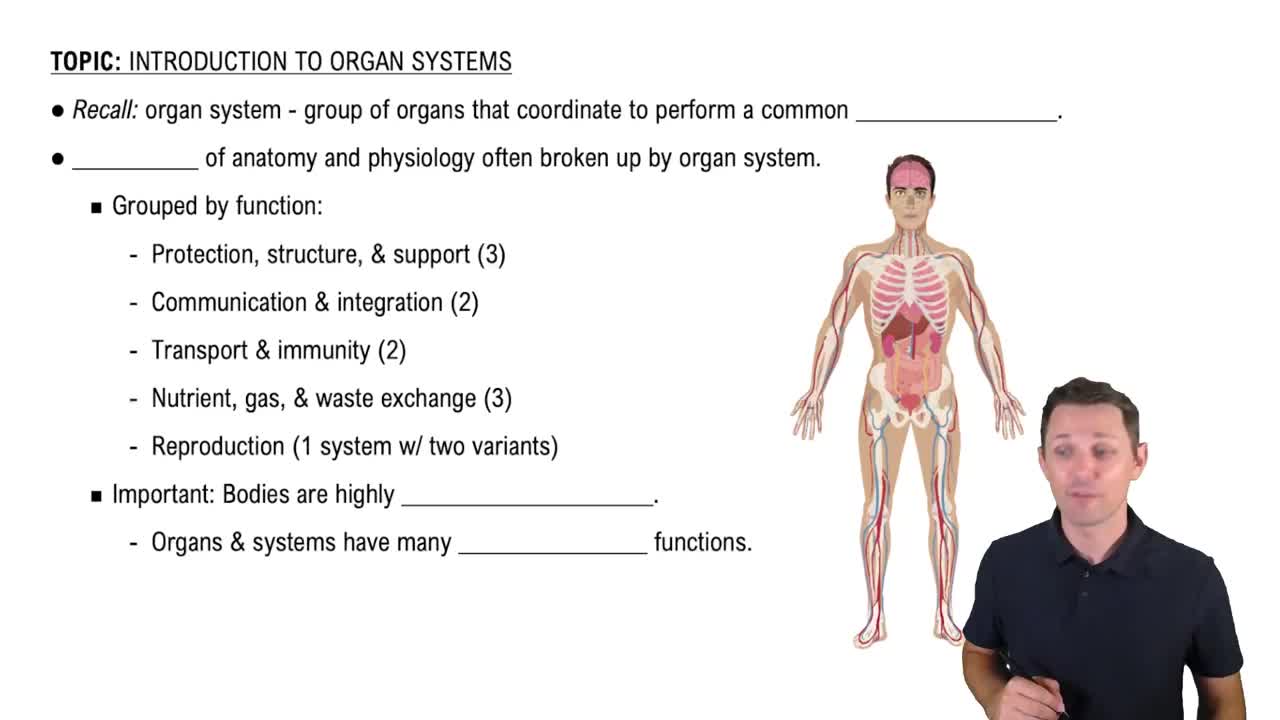
 02:29
02:29