 Back
Anatomy & Physiology High-Yield Flashcards
 4:09

Terms in this set (42)
Study of the form and structure of the body.
Study of how the body functions.
Anatomy studies structure; physiology studies function.
Upright stance; feet flat and parallel; arms at sides; palms facing forward; head level; eyes forward.
Superior: above; Inferior: below.
Anterior: toward the front; Posterior: toward the back.
Medial: toward the midline; Lateral: away from the midline.
Proximal: closer to point of attachment; Distal: farther from point of attachment.
Sagittal (right/left), Midsagittal (equal halves), Frontal (anterior/posterior), Transverse (superior/inferior).
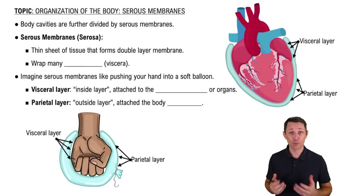
A continuous two-layer membrane lining a body cavity and covering organs within it.
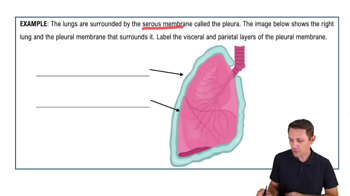
Parietal: lines cavity wall; Visceral: covers organ.
Two-layered serous membrane around the heart.
The external surface of the heart.
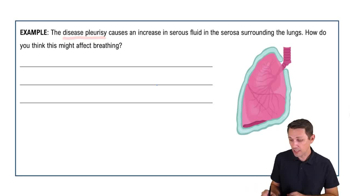
Two-layered serous membrane associated with the lungs.
The external surface of the lungs.
Two-layered serous membrane lining the abdominopelvic cavity and covering most organs there.
They secrete serous fluid that lubricates and reduces friction as organs move.
Cell's control center; contains hereditary material (genes/chromosomes).
Perform aerobic cellular respiration to synthesize ATP.
Protein synthesis.
Fatty acids and steroids.
Modifies, packages, and sorts proteins; forms secretory vesicles and lysosomes.
Break down organic substances using oxygen; detoxify; produce hydrogen peroxide.
Selective cell boundary separating intracellular fluid (ICF) and extracellular fluid (ECF); maintains ion differences.
Plasma membrane is a fluid lipid bilayer containing phospholipids, proteins, and cholesterol.
Polar hydrophilic head and nonpolar hydrophobic tails.
Heads face watery ICF/ECF; tails face inward away from water.
G1: growth and normal function; S: DNA replication; G2: growth and preparation for mitosis.
Prophase, Metaphase, Anaphase, Telophase.
Chromosomes align at the cell center.
Sister chromatids separate and move to opposite poles.
Cytoplasm splits; cleavage furrow forms.
Epithelial, connective, muscle, nervous.
By number of layers and shape of apical cells.
Simple = one cell layer; stratified = two or more layers.
One layer with all cells touching basement membrane but nuclei at different heights, appearing layered.
Stratum basale, spinosum, granulosum, lucidum, corneum.
Deepest layer; cell division produces new keratinocytes.
Merocrine, apocrine, holocrine.
Secretion by exocytosis; cell remains intact.
Product released from apical surface; part of cell is lost.
Whole cell becomes secretory product and is destroyed.