 Back
BackAnatomy & Physiology: Histology and Tissue Types
 03:32
03:32
Terms in this set (28)
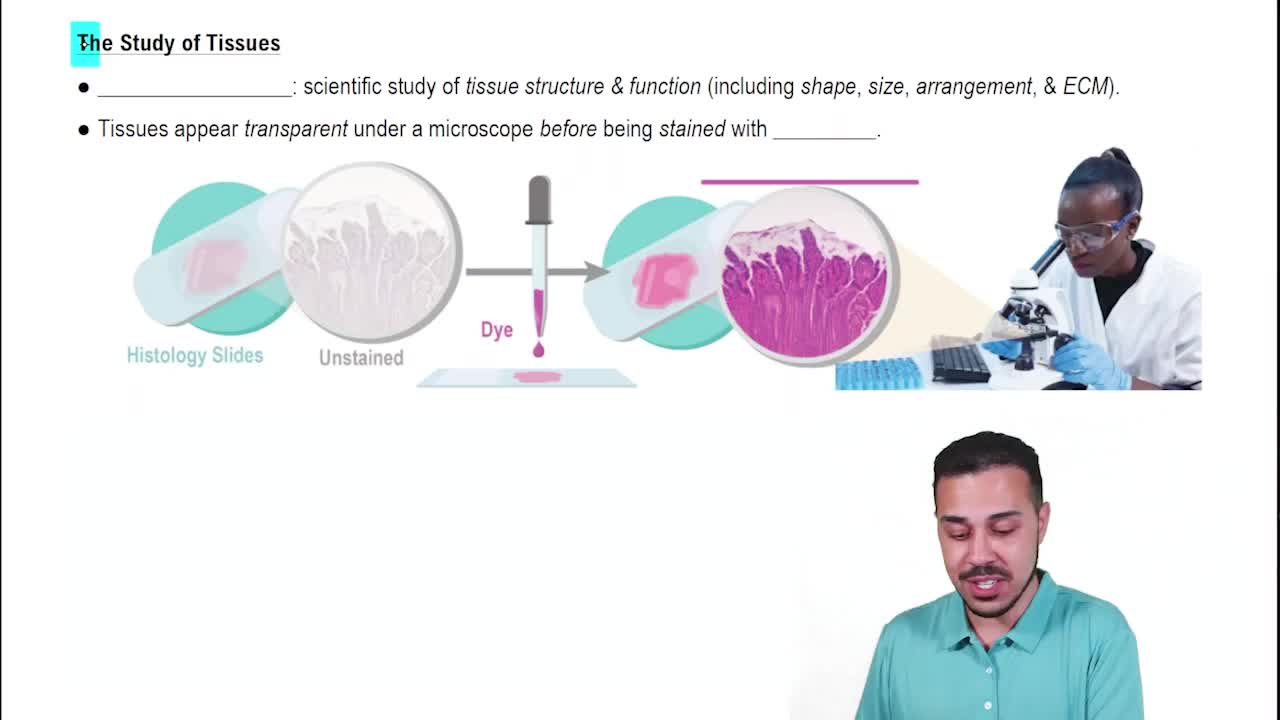
Histology is the study of the structure and function of tissues.
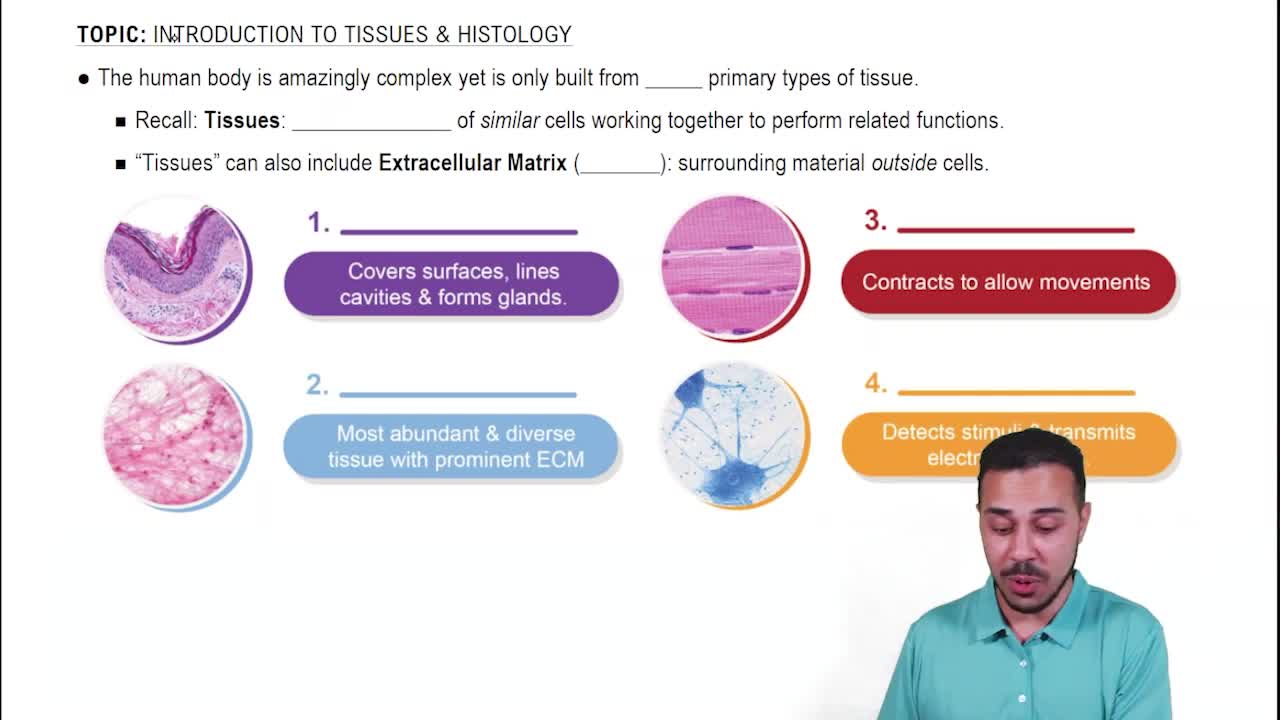
A tissue is a group of similar cells working together to perform a specific, specialized function.
Exfoliative cytology studies cells shed or scraped from epithelial surfaces. Example: The Pap Test screens cervical cells for abnormal growth or cancer.
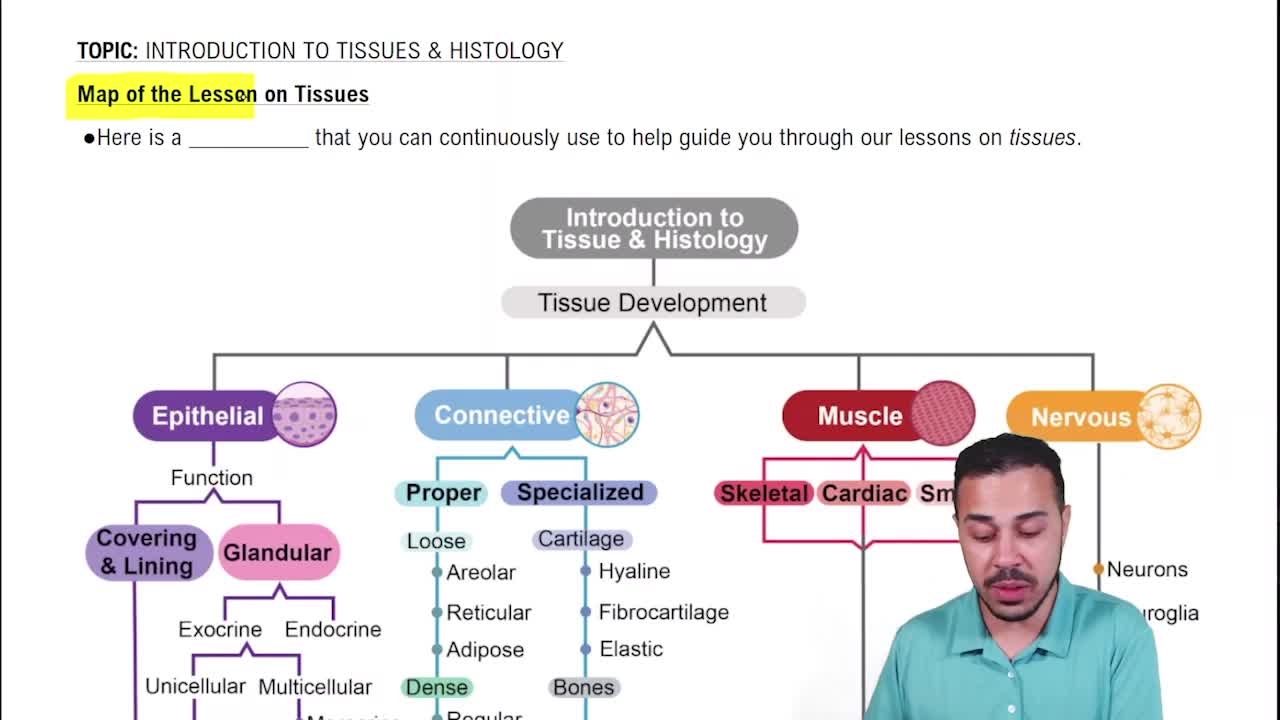
1. Epithelial Tissue
2. Connective Tissue
3. Muscle Tissue
4. Nervous Tissue
High cellularity, polarity (apical and basal surfaces), avascularity, and high regeneration capacity.
The basement membrane anchors the basal surface of epithelial cells to underlying connective tissue.
Microvilli increase surface area for absorption; cilia move mucus and particles, e.g., in respiratory tract.
Mesothelium lines closed ventral body cavities; endothelium lines heart and blood vessels.
Tight junctions prevent leakage; desmosomes provide mechanical strength; gap junctions allow ion and molecule passage.
By layers: Simple (single layer), Stratified (multiple layers). By shape: Squamous (flat), Cuboidal (cube-shaped), Columnar (tall).
A single layer of cells with nuclei at different levels, appearing layered; usually ciliated.
Found in urinary bladder and ureters; allows stretching and recoiling without tearing.
Endocrine glands secrete hormones into blood; exocrine glands secrete through ducts onto surfaces.
Unicellular exocrine glands that secrete mucus directly onto epithelial surfaces.
Mero-crine: exocytosis without cell damage.
Apocrine: apical cytoplasm shed.
Holocrine: entire cell bursts to release contents.
Cells scattered in an extensive extracellular matrix made of protein fibers and ground substance.
Collagen: strongest
Elastic: stretchy
Reticular: forms branching stroma
Fibroblasts are abundant cells that produce protein fibers and ground substance in connective tissue.
Macrophages, microphages (neutrophils), mast cells, and lymphocytes.
Connective Tissue Proper (loose/dense), Fluid Connective Tissue (blood/lymph), Supporting Connective Tissue (cartilage/bone).
Tendons connect muscle to bone; ligaments connect bone to bone; aponeuroses connect muscle to muscle or muscle to bone.
Cartilage is avascular with chondrocytes; bone is highly vascular with osteocytes.
Hyaline (smooth, glassy), elastic (flexible), fibrocartilage (tough, shock-absorbing).
Mucous (lines cavities open to exterior), serous (lines closed cavities), cutaneous (skin), synovial (lines joint cavities).
Large, elongated, multinucleated cells with striations; under voluntary control.
Striated, branched cells interconnected by specialized junctions; involuntary control; found only in the heart.
Short, spindle-shaped, non-striated cells; found in walls of hollow organs; involuntary control.
Neurons transmit electrical signals; neuroglia support, protect, and nourish neurons.