 Back
BackAnatomy & Physiology: Histology and Tissue Types
 03:32
03:32
Terms in this set (21)
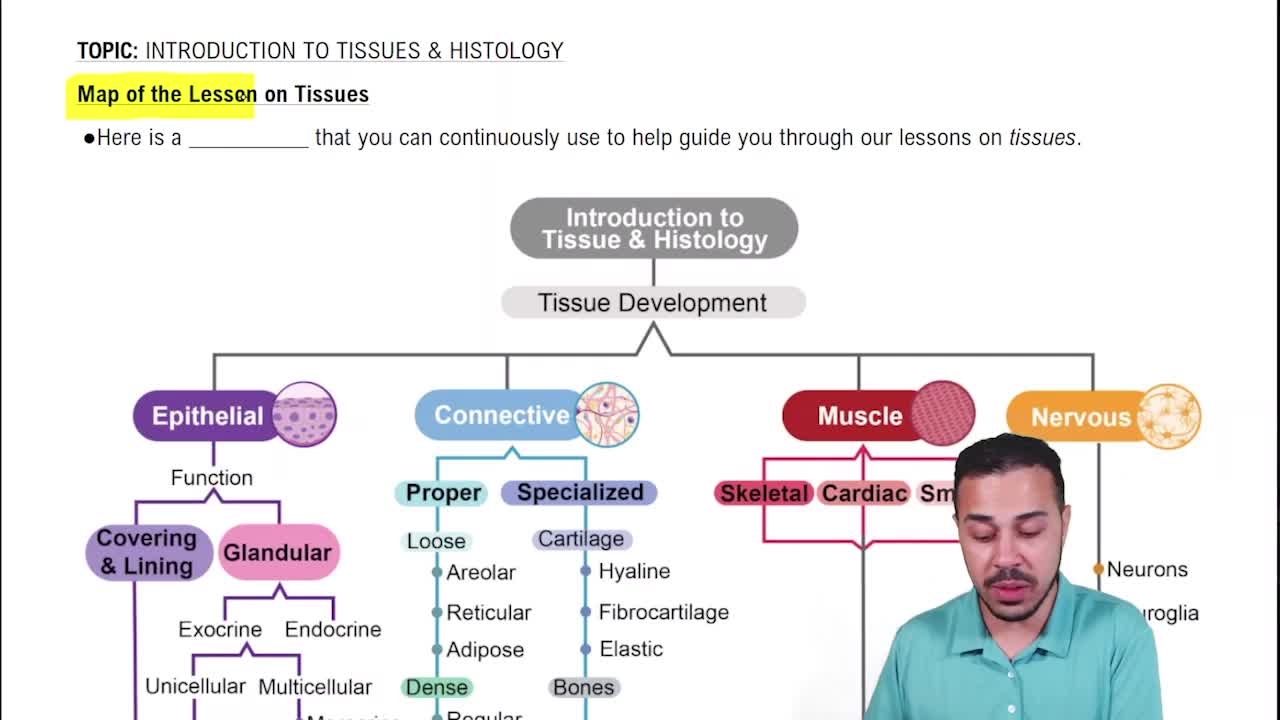
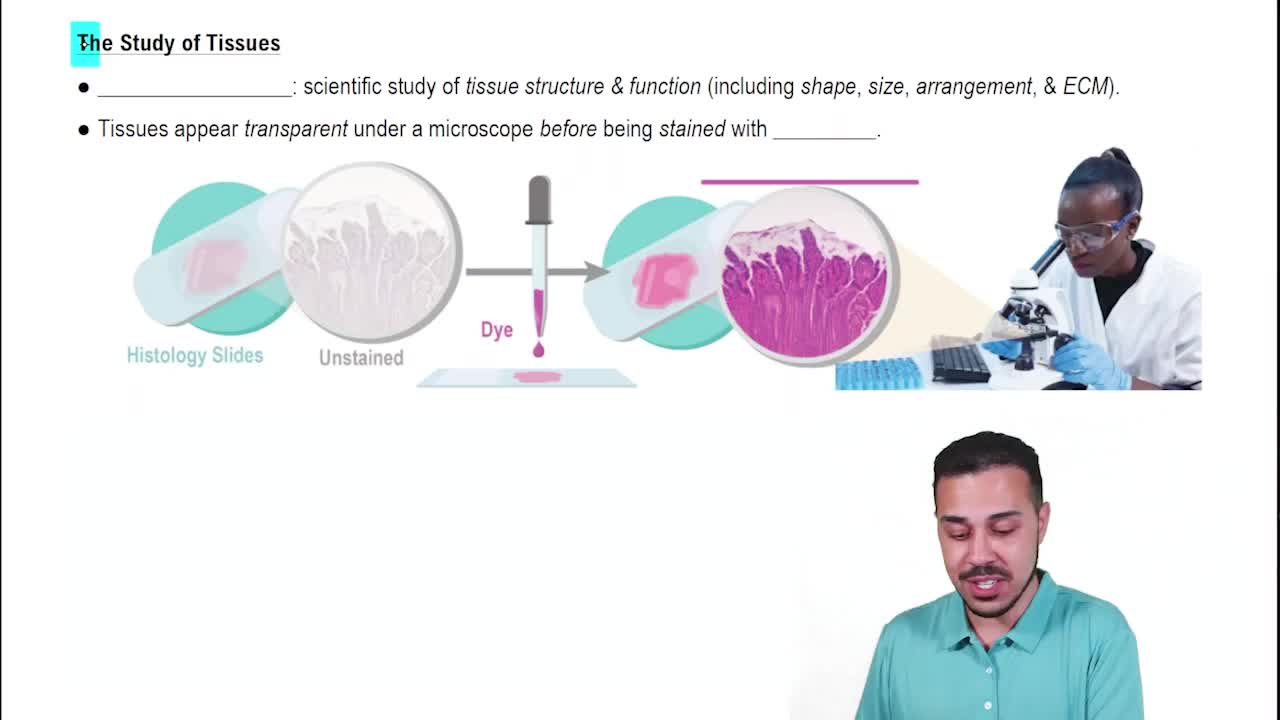
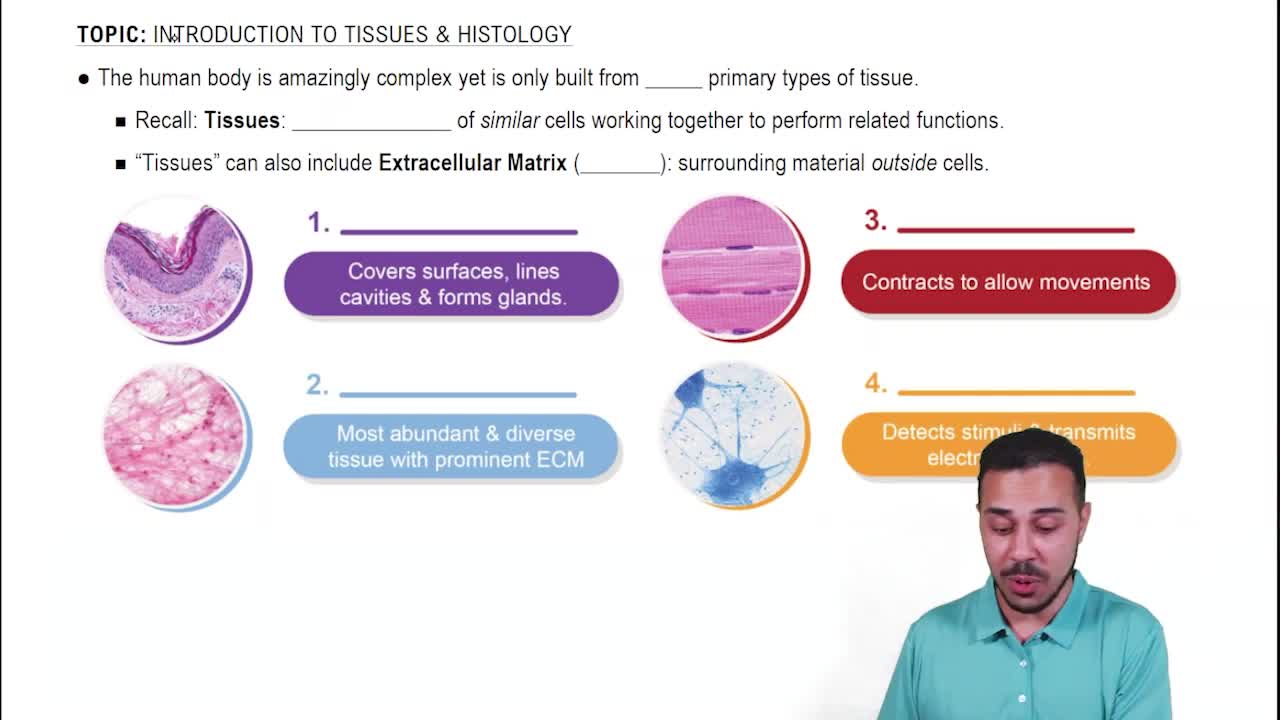
Histology is the study of the normal structures of tissues, which are groups of structurally and functionally related cells and their extracellular matrix performing common functions.
1. Epithelial tissues: tightly packed sheets covering body surfaces.
2. Connective tissues: connect and support other tissues.
3. Muscle tissues: generate force by contracting.
4. Nervous tissues: generate and transmit messages.
The ECM consists of ground substance (fluid, nutrients, ions) and protein fibers (collagen, elastic, reticular fibers).
Collagen fibers provide tensile strength, resisting pulling and stretching forces.
Elastic fibers allow tissues to stretch up to 1.5 times their length and return to resting length, providing elasticity.
Tight junctions hold cells closely together, making the space between impermeable to macromolecules.
By number of cell layers (simple or stratified) and cell shape (squamous, cuboidal, columnar).
Adapted for rapid diffusion; found in lung air sacs, kidney tubules, and lining blood vessels.
Apical layers are dead, filled with keratin, making it tough and resistant to friction; found in outer skin layers.
Endocrine glands secrete hormones into the bloodstream; exocrine glands release products onto body surfaces or into ducts.
Secretory cells package products in vesicles and release them by exocytosis without cell damage.
Fibroblasts are resident cells that produce protein fibers and ground substance of the ECM, especially collagen.
Found beneath epithelium and in membranes; supports blood vessels and houses immune cells.
Disorganized collagen bundles that resist tension in multiple directions; found in dermis and organ capsules.
1. Hyaline: glossy, fine collagen; found on bone ends.
2. Fibrocartilage: dense collagen bundles; found in joints.
3. Elastic: elastic fibers; found in ear and larynx.
Osteoblasts build bone ECM; osteocytes maintain bone; osteoclasts resorb bone by breaking down ECM.
Erythrocytes transport oxygen; leukocytes provide immunity; platelets aid in blood clotting.
Voluntary, striated, multinucleated cells attached to skeleton for body movement.
Specialized connections containing gap junctions and tight junctions that allow coordinated heart contractions.
Cell body (soma), axon (transmits impulses), and dendrites (receive signals).
Tissue repair replaces damaged cells; involves regeneration (same cell type replacement) or fibrosis (scar tissue formation).