 Back
BackAnatomy & Physiology: Histology, Integumentary, and Skeletal Systems
 03:32
03:32
Terms in this set (20)
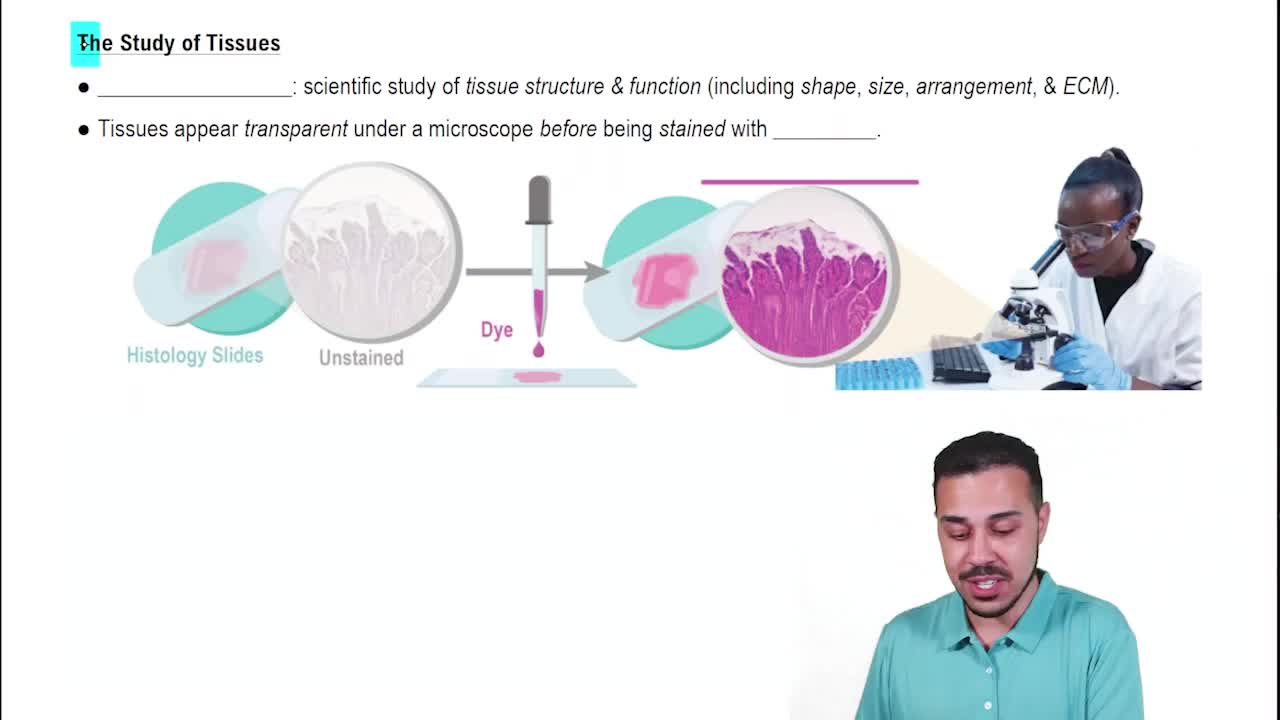
Histology is the study of the microscopic structure of tissues.
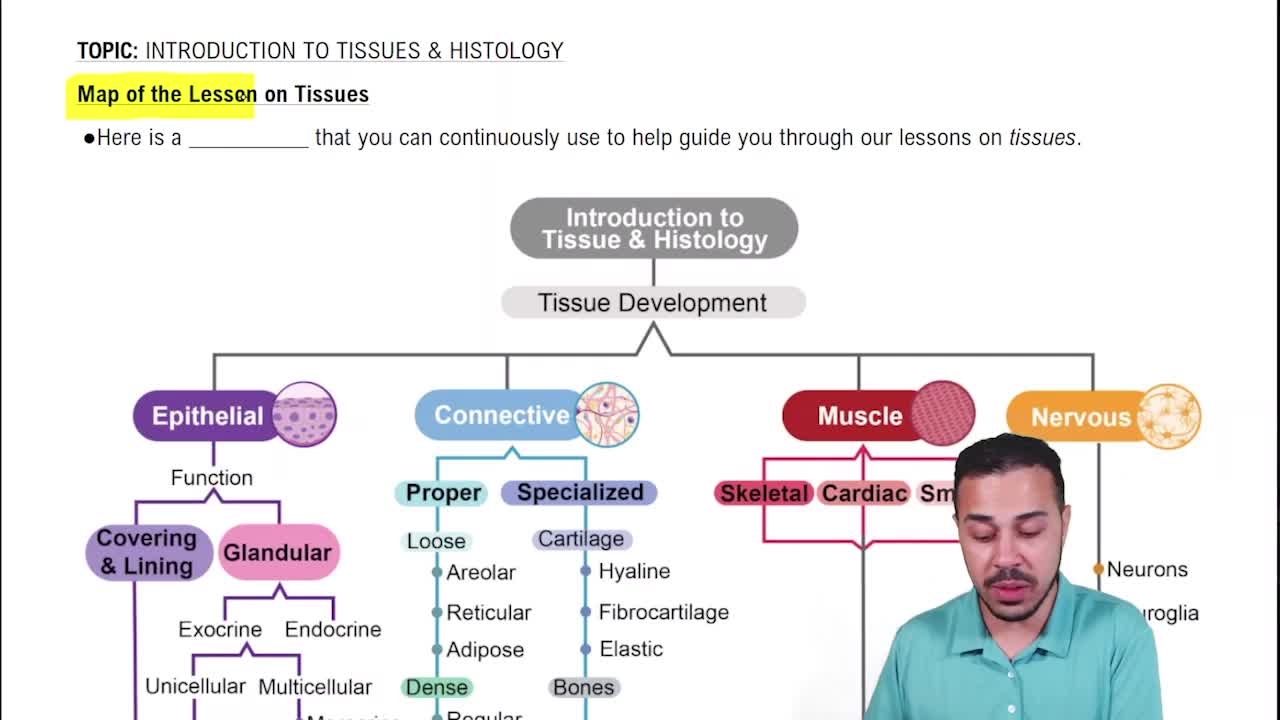
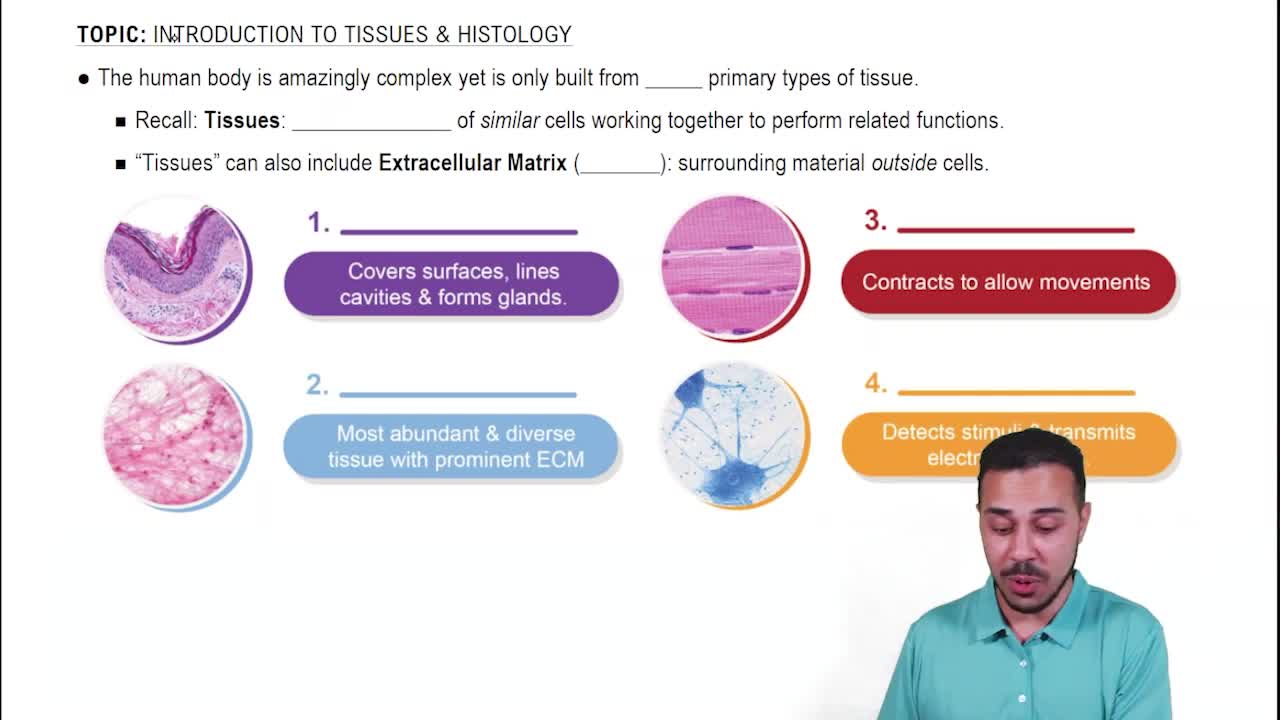
Epithelial, connective, muscle, and nervous tissues.
To cover body surfaces and line cavities, providing protection and selective permeability.
The epidermis, dermis, and hypodermis (subcutaneous layer).
Keratinized stratified squamous epithelium.
Protection against environmental damage and regulation of body temperature.
Melanin, produced by melanocytes in the epidermis.
It provides strength and elasticity through connective tissue and houses blood vessels, nerves, and glands.
Loose connective tissue and adipose tissue.
The axial skeleton and the appendicular skeleton.
The skull, vertebral column, and rib cage.
Support, protection of organs, movement, mineral storage, and blood cell production.
Compact bone.
Spongy (cancellous) bone, which contains red bone marrow.
Production of red blood cells, white blood cells, and platelets.
Osteoblasts.
Osteoclasts.
The osteon or Haversian system.
Synovial joints.
The knee, shoulder, or hip joint.