 Back
Anatomy & Physiology I - Exam 1 Key Concepts
 02:29

Terms in this set (30)
A structure composed of two or more tissue types that work together to perform specific functions.
A group of similar cells and their extracellular matrix that perform a common function.
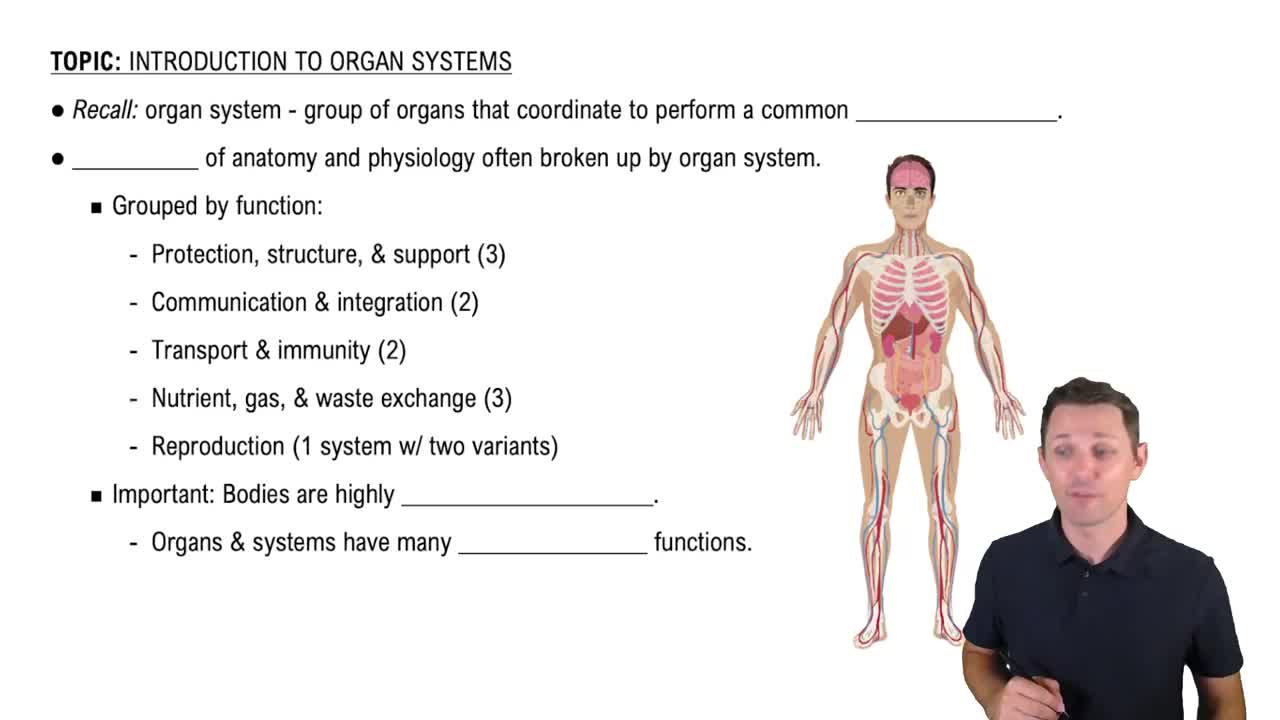
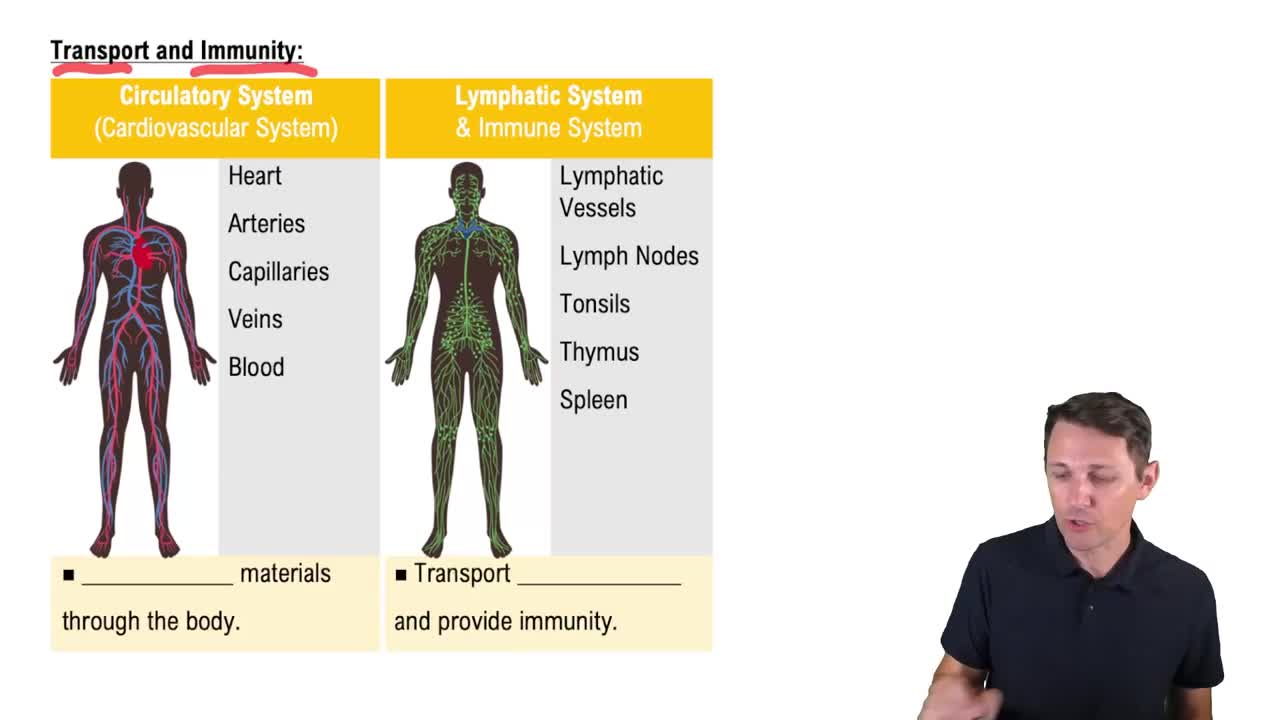
A group of organs that work together to perform complex body functions.
Endocrine glands secrete hormones directly into the bloodstream; Exocrine glands secrete substances through ducts to an epithelial surface.
A vertical plane dividing the body into left and right parts.
A horizontal plane dividing the body into superior (upper) and inferior (lower) parts.
A vertical plane dividing the body into anterior (front) and posterior (back) parts.
A cut made at an angle between the horizontal and vertical planes.
Examples: Distal means farther from the point of attachment; Anterior means toward the front of the body.
Hypertonic: solution causes cells to shrink; Hypotonic: causes cells to swell; Isotonic: no net change in cell volume.
The study of tissues and their structure under the microscope.
The body's ability to maintain a stable internal environment despite external changes.
To trap and move particles out of the respiratory tract using cilia.
Examples: Loose connective supports organs; Dense connective provides strength; Cartilage cushions joints; Bone supports and protects; Blood transports substances.
Skeletal: voluntary, striated; Cardiac: involuntary, striated, heart; Smooth: involuntary, non-striated, walls of organs.
Controls cell activities and contains DNA.
Modifies, sorts, and packages proteins and lipids for transport.
Produces ATP through cellular respiration, the cell's energy source.
Cilia: move substances across cell surface; Microvilli: increase surface area for absorption; Flagella: propel the cell.
Positive feedback amplifies a response (e.g., childbirth contractions); Negative feedback reverses a change to maintain homeostasis (e.g., body temperature regulation).
Water is the primary chemical, essential for life processes.
Serous: line body cavities and reduce friction; Mucous: line cavities open to outside; Cutaneous: skin, protects body surface.
Cells lose water and shrink due to higher solute concentration outside.
Cells gain water and swell due to lower solute concentration outside.
No net water movement; cells maintain normal size.
Commonly found lining the respiratory tract.
Collagen provides tensile strength and structural support.
Process of copying DNA before cell division.
Process of making mRNA from DNA template.
Process of synthesizing proteins from mRNA instructions.