 Back
Anatomy & Physiology I Lab Exam 1 Review
 3:20

Terms in this set (26)
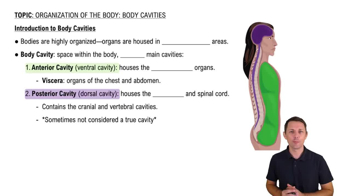
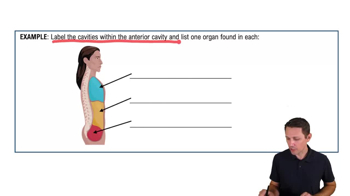
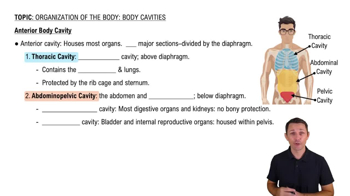
Body cavities include the cranial, thoracic, and abdominopelvic cavities.
Right hypochondriac, epigastric, left hypochondriac, right lumbar, umbilical, left lumbar, right iliac, hypogastric, left iliac.
The skin has the epidermis and dermis. Associated structures include sebaceous glands and sudoriferous glands.
Nail parts include the eponychium, hyponychium, free edge, and lunula.
Hair parts include the shaft, bulb, root, and follicle.
Simple squamous, simple cuboidal, simple columnar, stratified squamous, transitional, pseudostratified ciliated columnar.
Areolar, adipose, dense regular, dense irregular, hyaline cartilage, osseous (bone), blood.
Skeletal, cardiac, and smooth muscle tissues.
A neuron consists of the cell body, dendrites, and axon.
Parietal bone sutures include the sagittal, coronal, and lambdoid sutures.
Features include the squamous suture, external auditory meatus, styloid process, zygomatic process, mastoid process, mandibular fossa, and jugular foramen.
Includes the lambdoid suture, foramen magnum, occipital condyles, and external occipital protuberance.
Greater and lesser wings, sella turcica, optic canal, and foramen ovale.
Body, mandibular condyle, coronoid process, mental foramina, alveoli, and angle.
7 cervical, 12 thoracic, and 5 lumbar vertebrae.
Vertebral body, spinous process, transverse process, vertebral foramen, and intervertebral foramen (IVF).
7 pairs of true ribs, 5 pairs of false ribs, of which 2 pairs are floating ribs.
Manubrium, body, and xiphoid process.
Acromion process, coracoid process, glenoid fossa, spine, supraspinous fossa, infraspinous fossa, subscapular fossa.
Head, greater and lesser tubercles, capitulum, trochlea, coronoid fossa, olecranon fossa.
Ilium (ASIS, PSIS, iliac crest, greater sciatic notch), ischium (ischial spine, ischial tuberosity, lesser sciatic notch), pubis (pubic symphysis), obturator foramen, acetabulum.
Head, neck, greater and lesser trochanters, medial and lateral condyles, medial and lateral epicondyles.
Tibial tuberosity, lateral and medial condyles, medial malleolus.
Head and lateral malleolus.
8 carpals in the wrist and 7 tarsals in the ankle.
Finger and toe bones, divided into distal, middle, and proximal phalanges.