Skip to main content
Anatomy & Physiology
My Course
Learn
Exam Prep
AI Tutor
Study Guides
Textbook Solutions
Flashcards
Explore
Try the app
My Course
Learn
Exam Prep
AI Tutor
Study Guides
Textbook Solutions
Flashcards
Explore
Try the app
Back
Anatomy & Physiology I - Skeletal System
You can tap to flip the card.
What are the four basic tissue types in the human body?
You can tap to flip the card.
👆
What are the four basic tissue types in the human body?
Epithelial, connective, muscle, and nervous tissue
.
Track progress
Control buttons has been changed to "navigation" mode.
1/20
Recommended videos
Guided course
4:50
Skeletal System
13512
views
450
rank
Terms in this set (20)
Hide definitions
What are the four basic tissue types in the human body?
Epithelial, connective, muscle, and nervous tissue
.
Define homeostasis in human physiology.
Homeostasis
is the body's ability to maintain a stable internal environment despite external changes.
What are the major organic molecules found in living cells?
Carbohydrates, proteins, lipids, and nucleic acids
.
What is the difference between mitosis and meiosis?
Mitosis
produces two identical daughter cells for growth/repair;
meiosis
produces four genetically unique gametes for reproduction.
Name the major systems covered in this Anatomy & Physiology course.
Skeletal, integumentary, urinary (renal), endocrine, and reproductive systems.
What are the main functions of the integumentary system?
Protection, temperature regulation, sensation, and defense mechanisms like the inflammatory response.
What is the primary function of the skeletal system?
Support, protection of organs, movement facilitation, blood cell production, and mineral storage.
Describe the levels of organization in the human body.
Chemical, cellular, tissue, organ, organ system, and organism levels.
What are synarthroses, amphiarthroses, and diarthroses?
Types of joints:
synarthroses
(immovable),
amphiarthroses
(slightly movable),
diarthroses
(freely movable).
What is the role of the endocrine system?
To produce hormones that regulate metabolism, growth, reproduction, and homeostasis.
Name the major glands of the endocrine system.
Pituitary, thyroid, parathyroid, adrenal, pancreas, pineal, and gonads (ovaries/testes).
What processes are involved in cell membrane transport?
Diffusion, osmosis, active transport, endocytosis, and exocytosis.
What is the function of the renal system?
To filter blood, form urine, and maintain fluid and electrolyte balance.
Explain the difference between acidosis and alkalosis.
Acidosis is a condition where blood pH is too low; alkalosis is when blood pH is too high.
What are the main components of the integumentary system?
Skin, hair, glands, and nails.
What is spermatogenesis?
The process of sperm cell development in males.
What is oogenesis?
The process of egg cell (ovum) development in females.
What is the function of connective tissue?
To support, bind, and protect tissues and organs.
Name the basic structures of a human cell.
Nucleus, cytoplasm, cell membrane, mitochondria, endoplasmic reticulum, Golgi apparatus, lysosomes.
What is the role of buffers in the body?
To maintain stable pH by neutralizing excess acids or bases.
 BackBack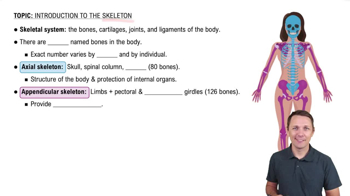
 4:50
4:50