 Back
Anatomy & Physiology I Unit 1 Exam Review
 04:34

Terms in this set (31)
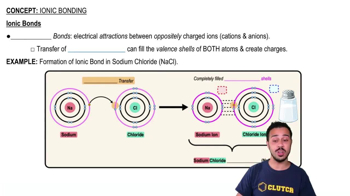
Electrons are transferred from one atom to another, creating oppositely charged ions that attract each other.
Electrons are shared between atoms to fill their valence shells; can be polar or nonpolar.
Unequal sharing of electrons causes partial charges on atoms, creating polarity.
Equal sharing of electrons results in no partial charges and nonpolar molecules.
Weak attraction between a partially positive hydrogen and a electronegative atom like oxygen or nitrogen.
Active transport protein that uses ATP hydrolysis to move Na⁺ out and K⁺ into the cell against their gradients.
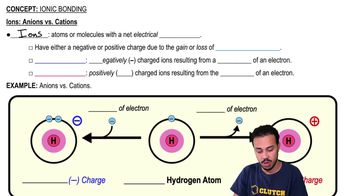
Atoms lose electrons to form cations (+) or gain electrons to form anions (−), changing their charge.
Ligand → receptor → G protein → intracellular enzyme → second messenger → intracellular response.
The shape and organization of molecules and cells directly affect their physiological roles and functions.
Chemical → Cellular → Tissue → Organ → Organ System → Organism.
Nonpolar molecules cross membranes more easily due to the hydrophobic lipid bilayer; polar molecules cross less readily.
K⁺ concentration gradient and membrane permeability contribute most to the resting membrane potential.
Breaking down ATP releases energy used to power active transport and other cellular processes.
Passive movement of water across a selectively permeable membrane from low to high solute concentration; no ATP required.
Plasma membrane is fluid due to phospholipid movement; proteins and cholesterol contribute to membrane structure and function.
Response reduces or reverses original stimulus to maintain homeostasis, moving variables toward set point.
Response amplifies original stimulus until a specific event terminates the loop.
Movement of molecules down their concentration gradient without protein or ATP; typically small nonpolar molecules.
Substrate binds carrier protein, which changes shape to transport molecule down its gradient; no ATP required; can saturate.
Extracellular solute concentration equals intracellular; no net water movement; cell volume remains stable.
Resists pH changes by neutralizing added H⁺ or OH⁻ ions, maintaining pH homeostasis within limits.
Polar or charged molecules that interact well with water and dissolve easily.
Nonpolar molecules that do not dissolve well in water but dissolve in lipids.
Channels allow passive flow; carriers bind and transport substrates; pumps use ATP for active transport.
Regulates membrane fluidity, stiffness, permeability, and stability.
Nonpolar molecules cross easily; polar molecules face resistance due to hydrophobic interior.
pH depends on H⁺ concentration: increase in H⁺ lowers pH (acidic), decrease raises pH (basic).
Located on membrane surface; interacts with aqueous environments inside and outside the cell.
Effect of extracellular solute concentration on cell volume and water movement.
Fluid inside cells, distinct from extracellular fluid outside cells.
Molecules move down concentration gradients due to random thermal motion without ATP.