 Back
BackAnatomy & Physiology II Final Exam Study Guide
 3:32
3:32
Terms in this set (44)
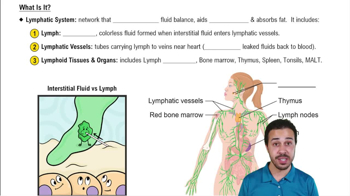
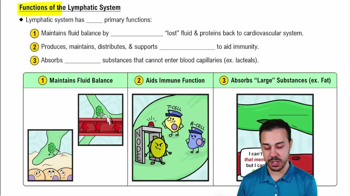
Lymph fluid is 15% of fluid not reabsorbed into the bloodstream, carried through lymphatic vessels, and transports pathogens and toxins through lymph nodes.
Neutrophils are made in the bone marrow and function as microphage phagocytes.
B cells control antibody-mediated immunity and are made in the bone marrow.
MALT consists of lymphoid nodules in tubular structures of respiratory, digestive, and reproductive systems that sample substances to detect pathogens or antigens.
Innate immunity is the immune response you are born with, providing immediate defense without prior exposure.
Cell-mediated adaptive immunity involves T cells destroying pathogens and cancer cells via direct cell-to-cell interactions without antibodies.
Neutrophils: microphage phagocytes; Monocytes: macrophages; Lymphocytes: immune surveillance, antibody-mediated, and cell-mediated immunity.
The study guide lists seven types but does not specify them; generally includes physical barriers, phagocytes, inflammation, fever, natural killer cells, complement system, and interferons.
Passive adaptive immunity is the transfer of antibodies from another source, such as maternal antibodies passed to a fetus.
Artificially acquired adaptive immunity occurs through vaccination, where antigens stimulate an immune response.
Includes the nose, pharynx, and larynx.
Includes the trachea, bronchi, bronchioles, alveolar ducts, and alveoli.
The larynx cartilages include the thyroid, cricoid, and arytenoid cartilages.
The opening is called the glottis.
The epiglottis covers the glottis to prevent food from entering the trachea.
Alveoli are small sacs at the end of the bronchial tree where gas exchange occurs between air and pulmonary capillaries.
1) Alveolar epithelium, 2) Epithelial basement membrane, 3) Capillary basement membrane, 4) Capillary endothelium.
Type II alveolar cells produce surfactant, which reduces surface tension in alveoli.
Parietal pleura attaches to thoracic cavity structures; visceral pleura attaches to lung tissue and surrounds each lobe.
If thoracic cavity volume increases, pressure decreases; if volume decreases, pressure increases.
During inspiration, the diaphragm contracts and moves downward; during expiration, it relaxes and moves upward.
The phrenic nerve innervates the diaphragm.
An autoregulatory mechanism ensuring blood flow matches air flow in the lungs for efficient gas exchange.
Mucosa → Submucosa → Muscularis externa → Serosa.
Peristalsis is waves of smooth muscle contraction that move food along the digestive tract.
Serosa is not part of the mucosa layer.
The myenteric plexus stimulates motility of digestive tract organs and is located between muscularis externa layers.
Saliva lubricates food, begins starch digestion, cleanses the mouth, dissolves food chemicals, and aids taste.
It is stimulated by sight, smell, or thought of food and increases saliva and gastric secretions to prepare digestion.
1) Oral preparatory, 2) Oral, 3) Pharyngeal, 4) Esophageal phases, coordinating food movement from mouth to stomach.
Lower esophageal sphincter separates esophagus and stomach; pyloric sphincter separates stomach and duodenum.
G cells secrete gastrin, which stimulates acid secretion and gastric motility.
The small intestine is responsible for 90% of absorption and digestion.
Villi, microvilli, and circular folds maximize surface area for absorption.
Duodenum: digestion; jejunum: nutrient absorption; ileum: transports chyme and prevents bacterial infection.
Protein → amino acids (proteases); Lipid → fatty acids (lipases); Nucleic acid → nucleotides (nucleases); Carbohydrate → monosaccharides (amylases).
Cellular respiration is the metabolic process breaking down glucose to produce ATP for cellular functions.
Glycolysis in cytoplasm; Krebs cycle in mitochondrial matrix; Electron transport chain in mitochondrial membrane.
Glycolysis is anaerobic and does not require oxygen.
Glycogenesis is the formation of glycogen from excess glucose for storage in liver and muscle.
Gluconeogenesis is the creation of new glucose molecules from non-carbohydrate sources like proteins and lipids.
Glycogenolysis is the breakdown of glycogen to release glucose for energy use.
Insulin regulates the absorptive state by increasing glucose uptake, glycogen synthesis, and lipid storage.
Glucagon regulates the postabsorptive state by stimulating glycogenolysis, gluconeogenesis, and lipolysis to increase blood glucose.