Skip to main content
Anatomy & Physiology
My Course
Learn
Exam Prep
AI Tutor
Study Guides
Textbook Solutions
Flashcards
Explore
Try the app
My Course
Learn
Exam Prep
AI Tutor
Study Guides
Textbook Solutions
Flashcards
Explore
Try the app
Back
Anatomy & Physiology II Key Concepts
You can tap to flip the card.
Endocrine system
You can tap to flip the card.
👆
Endocrine system
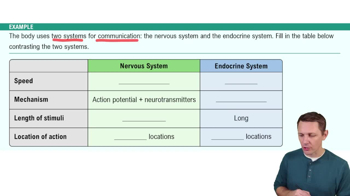
A system of glands that secrete hormones directly into the bloodstream to regulate body functions.
Track progress
Control buttons has been changed to "navigation" mode.
1/28
Recommended videos
Guided course
7:06
Components of the Endocrine System
12530
views
384
rank
Guided course
6:20
Hormones
9612
views
237
rank
Guided course
3:33
Introduction to the Endocrine System Example 1
13734
views
387
rank
1
comments
Terms in this set (28)
Hide definitions
Endocrine system
A system of glands that secrete hormones directly into the bloodstream to regulate body functions.
Hormone
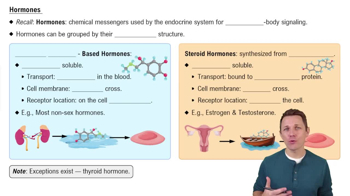
A chemical messenger secreted by endocrine glands that affects target cells.
Tropic hormone
A hormone that stimulates another endocrine gland to release its hormones.
Pituitary gland anatomy
Consists of anterior and posterior lobes; the anterior uses the hypophyseal portal system for hormone transport.
Functions of blood
Transport of gases, nutrients, wastes; regulation of pH and temperature; protection via clotting and immune responses.
Composition of plasma
Mostly water with dissolved proteins (albumins, globulins, fibrinogen), nutrients, hormones, and waste products.
Erythrocytes
Red blood cells that transport oxygen via hemoglobin and lack nuclei.
Leukocytes
White blood cells involved in immune defense; include neutrophils, lymphocytes, monocytes, eosinophils, basophils.
Platelets
Cell fragments that aid in blood clotting and hemostasis.
Hemostasis
The process of blood clot formation to stop bleeding, involving vascular spasm, platelet plug, and coagulation.
Heart location
Located in the thoracic cavity between the lungs, behind the sternum.
Cardiac conduction system
Includes SA node, AV node, bundle of His, bundle branches, and Purkinje fibers to coordinate heartbeats.
Cardiac output formula
Cardiac output = heart rate × stroke volume.
Blood vessel types
Arteries (elastic, muscular, arterioles), veins (venules, veins), and capillaries (continuous, fenestrated, sinusoids).
Lymphatic system function
Returns interstitial fluid to blood, absorbs fats, and provides immune defense.
Innate immunity
Nonspecific defense mechanisms like barriers, phagocytes, inflammation, and fever.
Adaptive immunity
Specific immune response involving lymphocytes and antibodies.
Respiratory system major function
Gas exchange between air and blood, regulation of blood pH, and vocalization.
Digestive system layers
Four layers: mucosa, submucosa, muscularis externa, and serosa/adventitia.
Nephron function
Filters blood to form urine, reabsorbs needed substances, and secretes wastes.
Micturition reflex
The process of urine elimination controlled by the nervous system and bladder muscles.
Acid-base balance
Maintaining blood pH via respiratory and renal mechanisms to prevent acidosis or alkalosis.
Oogenesis
The process of egg cell development in females, producing haploid ova.
Spermatogenesis
The process of sperm cell development in males, producing haploid spermatozoa.
Hormones in male reproduction
Testosterone regulates sperm production and secondary sex characteristics.
Hormones in female reproduction
Estrogen and progesterone regulate the ovarian and uterine cycles and secondary sex characteristics.
Electrocardiogram (EKG) waves
P wave: atrial depolarization; QRS complex: ventricular depolarization; T wave: ventricular repolarization.
Minute ventilation calculation
Minute ventilation = tidal volume × breathing rate.
 BackBack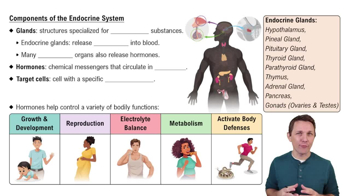
 7:06
7:06