Skip to main content
Anatomy & Physiology
My Course
Learn
Exam Prep
AI Tutor
Study Guides
Textbook Solutions
Flashcards
Explore
Try the app
My Course
Learn
Exam Prep
AI Tutor
Study Guides
Textbook Solutions
Flashcards
Explore
Try the app
Back
Anatomy & Physiology Lab Practical Terms
You can tap to flip the card.
Ocular lens
You can tap to flip the card.
👆
Ocular lens
The lens of a microscope that is closest to the eye; it magnifies the image formed by the objective lens.
Track progress
Control buttons has been changed to "navigation" mode.
1/29
Recommended videos
07:25
Functions of Epithelial Tissue
16655
views
358
rank
03:40
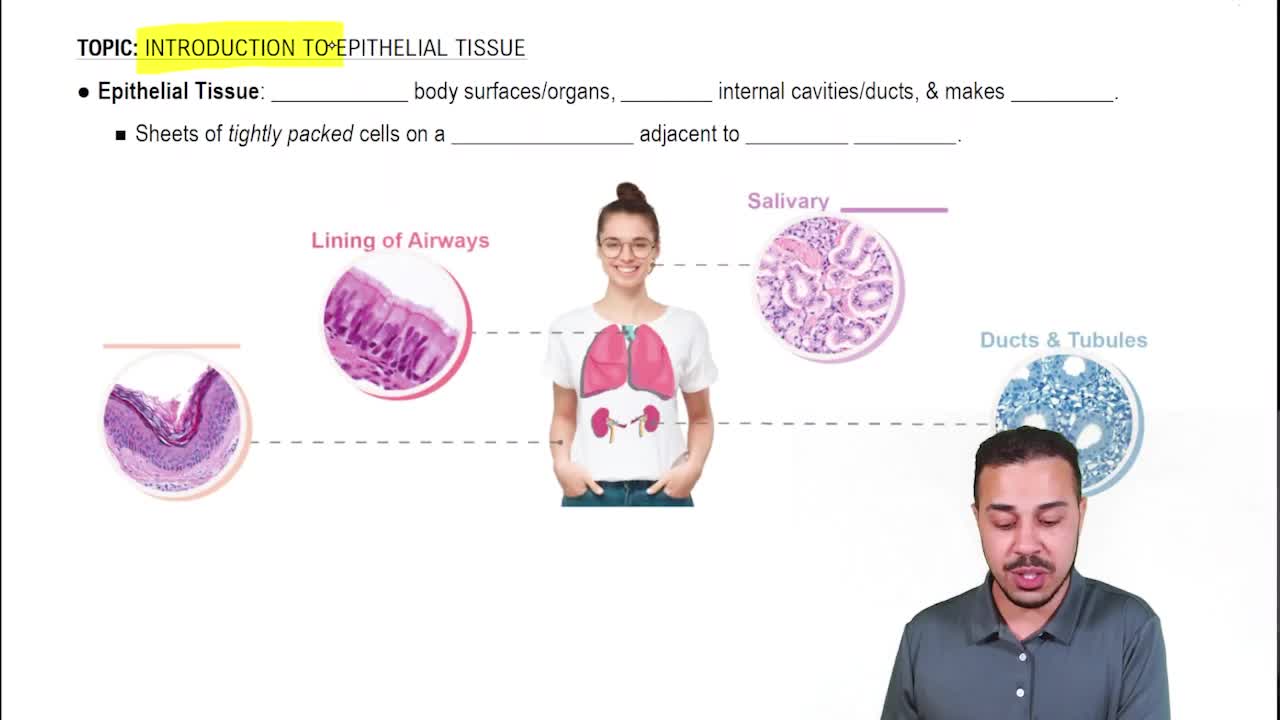
Intro to Epithelia
19719
views
473
rank
05:24
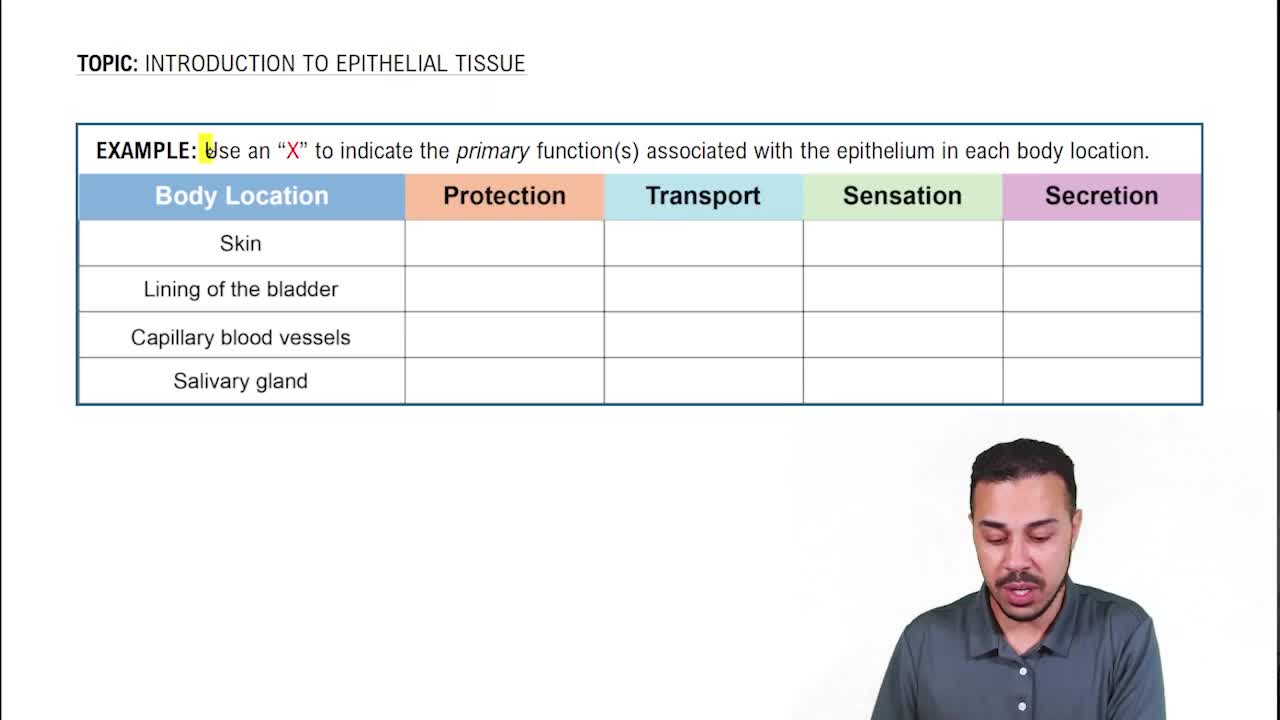
Introduction to Epithelial Tissue Example 1
12892
views
265
rank
1
comments
Terms in this set (29)
Hide definitions
Ocular lens
The lens of a microscope that is closest to the eye; it magnifies the image formed by the objective lens.
Revolving nosepiece
The part of the microscope that holds the objective lenses and can be rotated to change magnification.
Objective lens
The lens closest to the specimen that provides primary magnification in a compound microscope.
Mechanical stage
The platform on a microscope where the slide is placed and can be moved precisely using adjustment knobs.
Coarse focus knob
The larger knob on a microscope used for rough focusing by moving the stage or objective lens quickly.
Fine focus knob
The smaller knob on a microscope used for precise focusing after using the coarse focus.
Nucleus
A cell structure containing DNA and controlling cell activities.
Cytoplasm
The gel-like substance inside the cell membrane that contains organelles.
Plasma membrane
The outer boundary of the cell that controls what enters and leaves the cell.
Simple squamous epithelium
A single layer of flat cells that allows for diffusion and filtration.
Simple cuboidal epithelium
A single layer of cube-shaped cells involved in secretion and absorption.
Simple columnar epithelium
A single layer of tall cells often with microvilli and goblet cells, specialized for absorption and secretion.
Goblet cell
A cell that secretes mucus, found in some epithelial tissues.
Pseudostratified columnar epithelium
A single layer of cells with varying heights that appears stratified; often has cilia and goblet cells.
Stratified squamous epithelium
Multiple layers of flat cells that protect underlying tissues in areas subject to abrasion.
Areolar connective tissue
A loose connective tissue containing fibroblasts, collagen, and elastic fibers that supports and binds other tissues.
Adipose tissue
Connective tissue composed mainly of adipocytes that store fat.
Hyaline cartilage
A type of cartilage with a glassy matrix containing chondrocytes in lacunae, providing support and flexibility.
Osteon
The structural unit of compact bone, consisting of concentric lamellae surrounding a central canal.
Erythrocyte
A red blood cell responsible for oxygen transport.
Neuron
A nerve cell that transmits electrical signals; consists of a cell body, axon, and dendrites.
Skeletal muscle
Muscle tissue characterized by striations and voluntary control.
Cardiac muscle
Striated muscle tissue with intercalated discs found only in the heart.
Stratum basale
The deepest layer of the epidermis where new skin cells are generated.
Papillary layer
The upper layer of the dermis made of areolar connective tissue containing dermal papillae.
Trachea
The windpipe; a tube that connects the larynx to the lungs.
Heart
The muscular organ that pumps blood through the cardiovascular system.
Kidney
An organ that filters blood to produce urine.
Liver
A large organ involved in metabolism, detoxification, and bile production.
 BackBack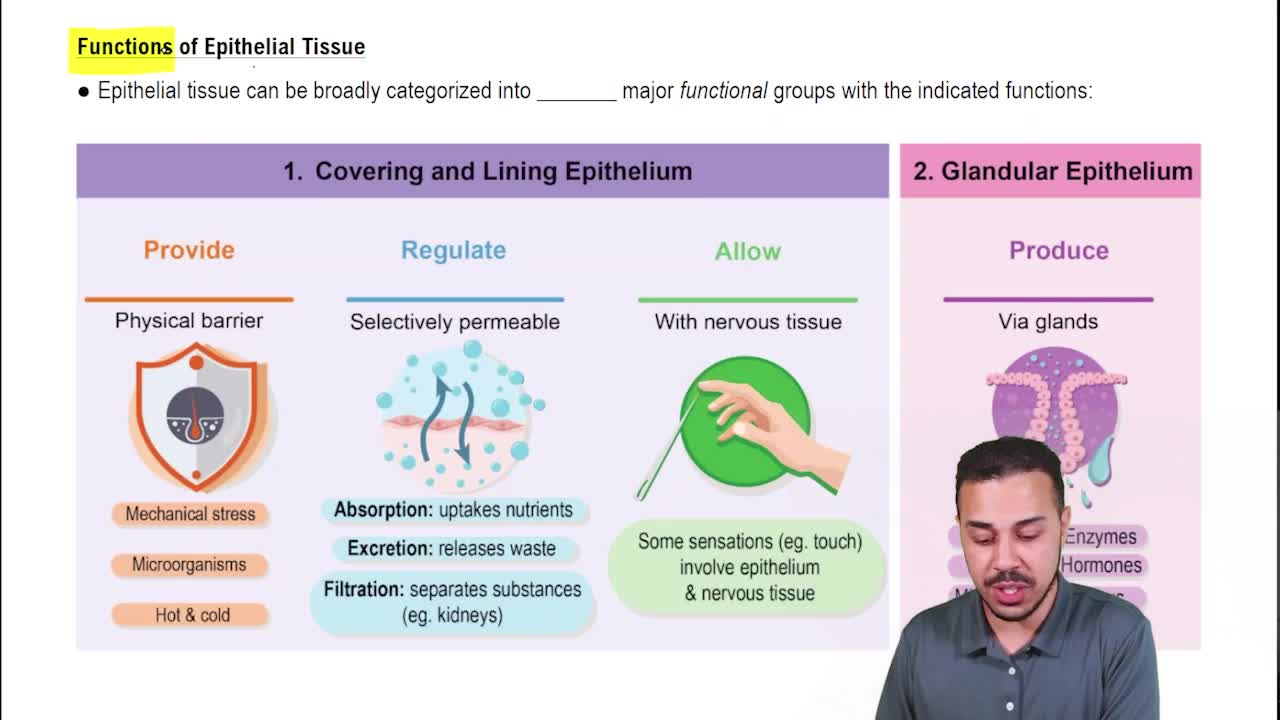
 07:25
07:25