 Back
Anatomy & Physiology Lecture Test 2 Review
 00:36

Terms in this set (29)
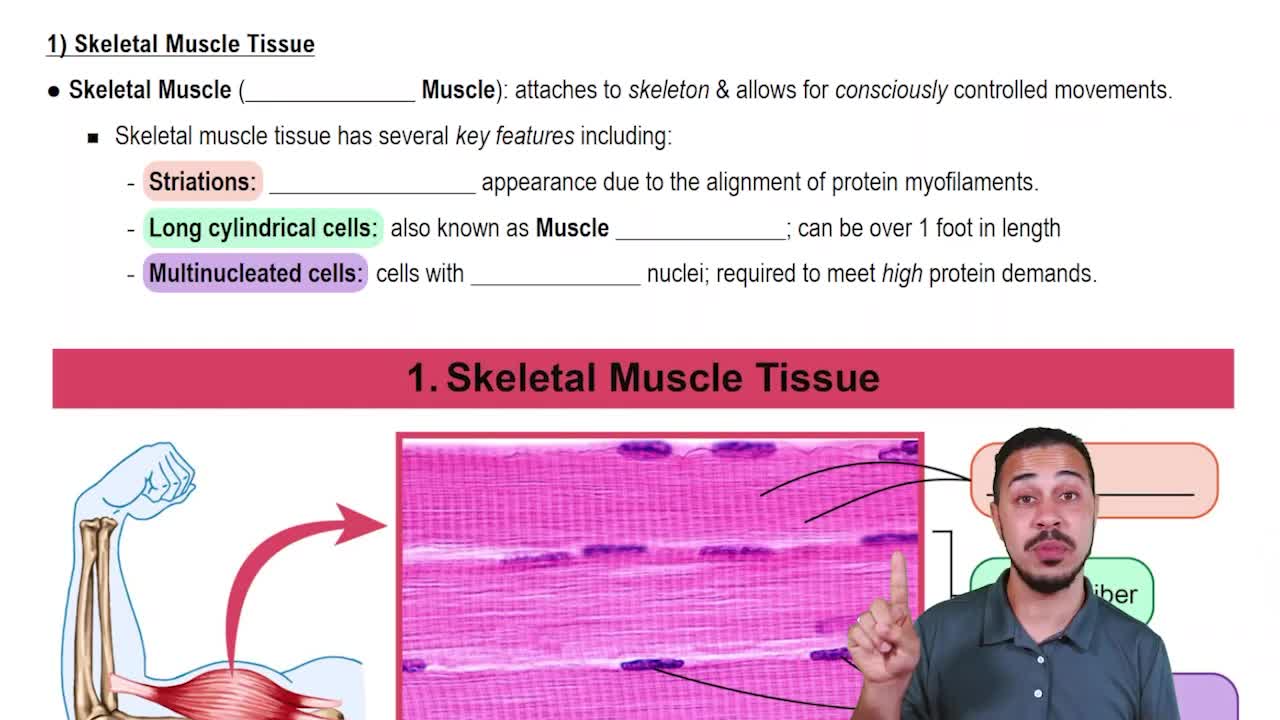
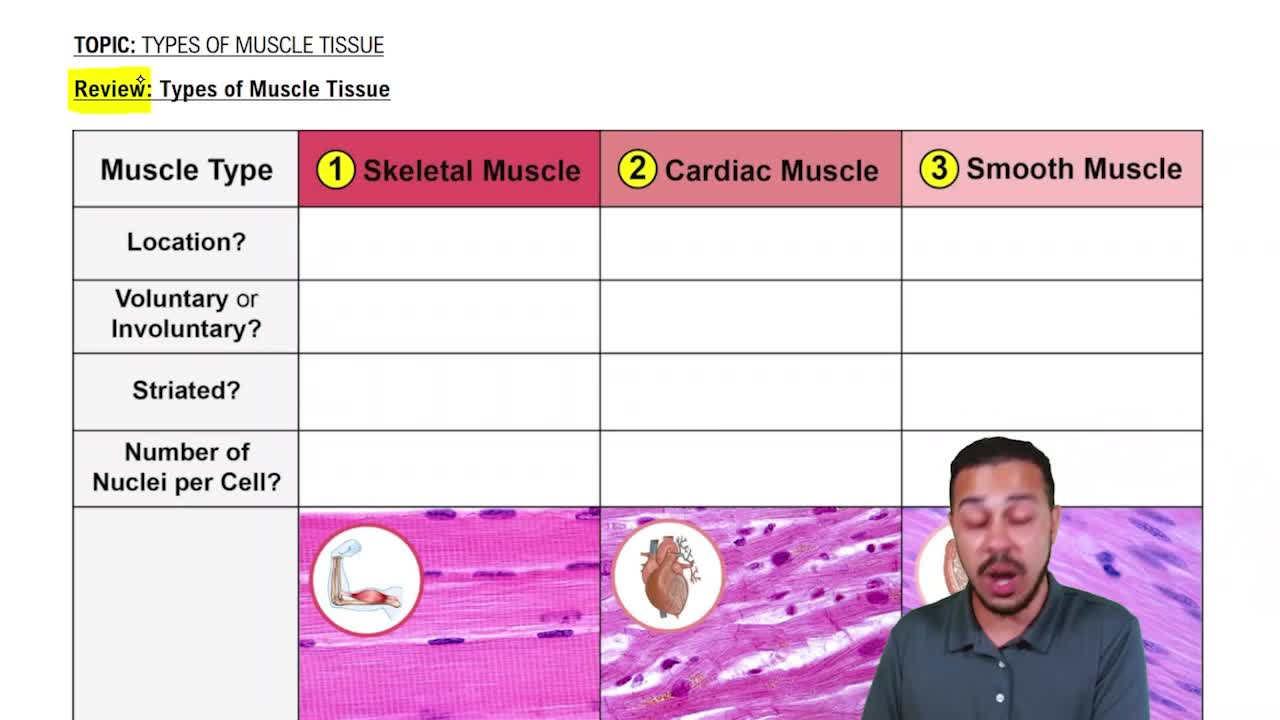
Three types: skeletal (voluntary, striated), cardiac (involuntary, striated), and smooth (involuntary, non-striated).
Synapse where a motor neuron communicates with a skeletal muscle fiber to trigger contraction via neurotransmitter release.
Include flexion, extension, abduction, adduction, rotation, and circumduction, depending on joint type and axis of movement.
Origin is the fixed attachment point; insertion is the movable attachment point of a muscle.
Include diaphysis (shaft), epiphyses (ends), metaphysis (growth plate area), periosteum, compact bone, spongy bone, and medullary cavity.
Osteoblasts build bone, osteocytes maintain bone, and osteoclasts break down bone.
Sensory input, integration, and motor output.
Divided into central nervous system (CNS) and peripheral nervous system (PNS).
Sensory (afferent) division carries signals to CNS; motor (efferent) division carries signals away from CNS.
Somatic (voluntary control of skeletal muscles) and autonomic (involuntary control of smooth, cardiac muscle, glands).
Support, protect, and nourish neurons; maintain homeostasis and form myelin.
Oligodendrocytes form myelin in CNS; Schwann cells form myelin in PNS.
Insulates axons and increases the speed of nerve impulse conduction.
Gaps in the myelin sheath that facilitate rapid impulse conduction via saltatory conduction.
Dendrites receive signals, axon hillock initiates impulses, axon transmits impulses, axon terminals release neurotransmitters.
Ganglia: PNS neuron clusters; nuclei: CNS neuron clusters; tracts: CNS axon bundles; nerves: PNS axon bundles; white matter: myelinated axons; gray matter: neuron cell bodies.
Sensory neurons carry impulses to CNS, motor neurons carry impulses from CNS, interneurons connect neurons within CNS.
Irritability: ability to respond to stimuli; conductivity: ability to transmit impulses.
Rapid change in membrane potential caused by ion movement, leading to nerve impulse propagation.
Neurotransmitters like acetylcholine, serotonin, dopamine transmit signals across synaptic cleft to next neuron.
Receptor → sensory neuron → integration center → motor neuron → effector.
Somatic reflexes involve skeletal muscles; autonomic reflexes involve smooth or cardiac muscles and glands.
Cerebral hemispheres, diencephalon, brain stem, cerebellum, corpus callosum, limbic system (hippocampus, amygdala).
Frontal (motor), parietal (sensory), temporal (auditory), occipital (visual), with association areas integrating information.
Includes thalamus, hypothalamus, epithalamus; hypothalamus regulates homeostasis.
Midbrain (visual/auditory relay), pons (respiratory control), medulla oblongata (cardiovascular, respiratory centers).
From outer to inner: dura mater, arachnoid mater, pia mater; protect CNS and contain cerebrospinal fluid.
Protects brain/spinal cord, circulates nutrients; formed by choroid plexus and flows through ventricles.
Dorsal horns process sensory input; ventral horns control motor output.