What are the main components of the lymphatic system?
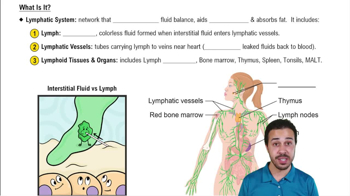
Lymph (fluid), lymphatic vessels (transport lymph), lymphatic tissue (lymphocytes in connective tissue), and lymphatic organs (organized masses of lymphatic tissue).
What are the three primary functions of the lymphatic system?
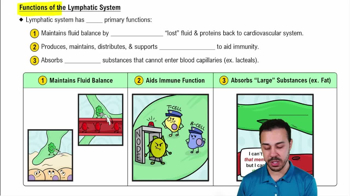
Fluid recovery, immunity, and lipid absorption.
How much fluid do blood capillaries reabsorb and how much is absorbed by the lymphatic system?
Blood capillaries reabsorb about 85% of fluid; the remaining 15% is absorbed by the lymphatic system.
What role does the lymphatic system play in immunity?
It checks recovered fluid for pathogens, guards openings to the environment, and mobilizes immune cells to fight detected pathogens.
What are lacteals and their function?
Lacteals are special lymph vessels in the small intestine that absorb dietary lipids and drain them into the bloodstream.
Describe the structure of lymphatic capillaries.
Closed at one end, with loosely connected overlapping cells forming valves and large gaps to allow passage of proteins, bacteria, and white blood cells.
What are the two main collecting ducts of the lymphatic system?
The right lymphatic duct and the thoracic duct.
How is lymph moved through lymphatic vessels without a pump?
By rhythmic contraction of vessel walls, skeletal muscle contractions, thoracic pressure changes during breathing, and blood flow at drainage points.
What is MALT in the lymphatic system?
Mucosa-associated lymphatic tissue, aggregates of lymphocytes in mucous membranes of respiratory, digestive, urinary, and reproductive tracts.
What is the function of the thymus?
Located above the heart, it contains T cells and secretes hormones that promote their development and activity.
What is the primary function of the spleen?
To filter blood, cleanse it of bacteria and foreign matter, and house monocytes; also known as the RBC graveyard.
How do lymph nodes function in immunity?
They filter and cleanse lymph, activate immune responses, and slow lymph flow to allow time for cleansing.
What are the three lines of defense in the immune system?
Surface barriers, innate internal defenses, and adaptive defense system.
What constitutes the first line of defense in immunity?
The intact skin and mucous membranes acting as physical barriers to keep invaders out.
What cells are involved in the innate internal defenses?
Five leukocytes: neutrophils, eosinophils, basophils, monocytes/macrophages, and natural killer cells.
What are interferons and their role?
Proteins secreted by infected cells that signal nearby cells to inhibit viral replication and activate natural killer cells.
What is the complement system?
A group of liver-made proteins in blood that activate a cascade leading to destruction of invading microbes and complement antibodies.
What are the four cardinal signs of acute inflammation?
Redness, heat, swelling, and pain.
What causes vasodilation and increased vascular permeability during inflammation?
Inflammatory chemicals released by injured tissue and immune cells dilate arterioles and make capillaries leakier.
Describe the four steps of phagocyte mobilization during inflammation.
 Back
 3:32