 Back
BackAnatomy & Physiology Muscle and Nervous System Study Guide (AI)
 6:31
6:31
Terms in this set (14)
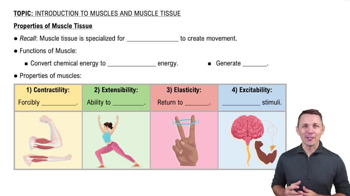
Movement, posture maintenance, joint stabilization, heat generation, protection of internal organs, and control of body openings.
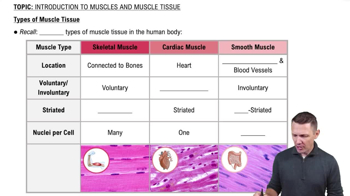
They are long, cylindrical, multinucleated, and have striations due to organized myofilaments.
Via the neuromuscular junction, where motor neurons release neurotransmitters to stimulate muscle contraction.
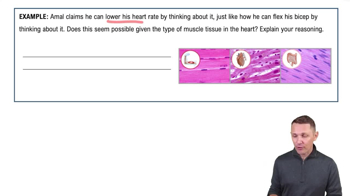
Cardiac muscle cells are branched, uninucleated, connected by intercalated discs, and have involuntary control.
Smooth muscle cells are spindle-shaped, uninucleated, lack striations, and are under involuntary control.
First-class, second-class, and third-class levers, differing by the relative positions of effort, load, and fulcrum.
Origin is the fixed attachment point; insertion is the movable attachment point of a muscle.
Muscles such as the quadriceps femoris, hamstrings, and gastrocnemius are key movers of the leg.
The central nervous system (CNS) and the peripheral nervous system (PNS).
Neurons are specialized for intercellular communication via electrical and chemical signals.
The brain and spinal cord.
The cranial nerves and spinal nerves.
Dura mater, arachnoid mater, and pia mater.
The spinal cord carries both sensory information to the brain and motor commands to muscles.