 Back
BackAnatomy & Physiology: Nervous System Structures
 0:50
0:50
Terms in this set (20)
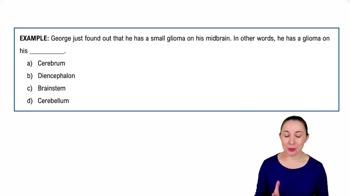
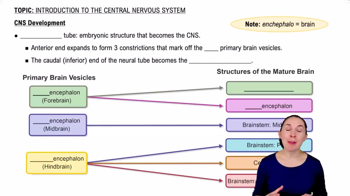
The cerebrum, diencephalon, brain stem, and cerebellum.
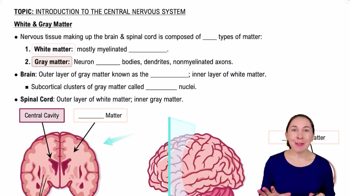
The cerebral cortex is composed of grey matter, which contains many neuron cell bodies and dendrites, responsible for higher cognitive functions.
Gyri are ridges that increase surface area; sulci are depressions between gyri.
The longitudinal fissure (cerebral fissure) divides the cerebrum into left and right hemispheres.
The corpus callosum is white matter that connects the two cerebral hemispheres, allowing communication between them.
Frontal lobe: decision making; parietal lobe: tactile senses; occipital lobe: visual processing; temporal lobe: auditory sensation and language comprehension.
The prefrontal cortex is involved in personality, intelligence, and higher cognitive functions.
Processing tactile senses like touch, pressure, pain, itch, vibration, proprioception, and visual perception.
The occipital lobe is the main visual processing region of the brain.
Primary auditory sensation and comprehension of written and spoken language.
The amygdala, hippocampus, and hypothalamus are part of the limbic system, which controls emotions and behavior.
Involved in fear, anxiety responses, and long-term memory formation.
It is involved in long-term memory formation.
Regulates homeostasis, body temperature, circadian rhythm, food and fluid intake, autonomic nervous system, and controls the endocrine system via the anterior pituitary gland.
The thalamus and hypothalamus compose the diencephalon, which connects the cerebrum with the rest of the nervous system.
The thalamus is the principal relay center for all sensory information except olfaction, processing and sending it to the cerebrum.
Inferior colliculi: auditory processing and reflexive head turning; superior colliculi: visual processing and ocular reflexes.
The oculomotor nerve (CN III) and trochlear nerve (CN IV), both motor nerves involved in eye movements.
The pons connects the cerebellum and brain stem and houses nuclei of cranial nerves V, VI, VII, and VIII.
Regulates heart rate, blood pressure (vasomotor center), and breathing (respiratory center).