Skip to main content
Anatomy & Physiology
My Course
Learn
Exam Prep
AI Tutor
Study Guides
Textbook Solutions
Flashcards
Explore
Try the app
My Course
Learn
Exam Prep
AI Tutor
Study Guides
Textbook Solutions
Flashcards
Explore
Try the app
Back
Anatomy & Physiology: Orientation to the Human Body
You can tap to flip the card.
What is the definition of anatomy?
You can tap to flip the card.
👆
What is the definition of anatomy?
Anatomy
is the study of
structure
. The word comes from Greek meaning 'to cut apart'.
Track progress
Control buttons has been changed to "navigation" mode.
1/25
Recommended videos
Guided course
02:29
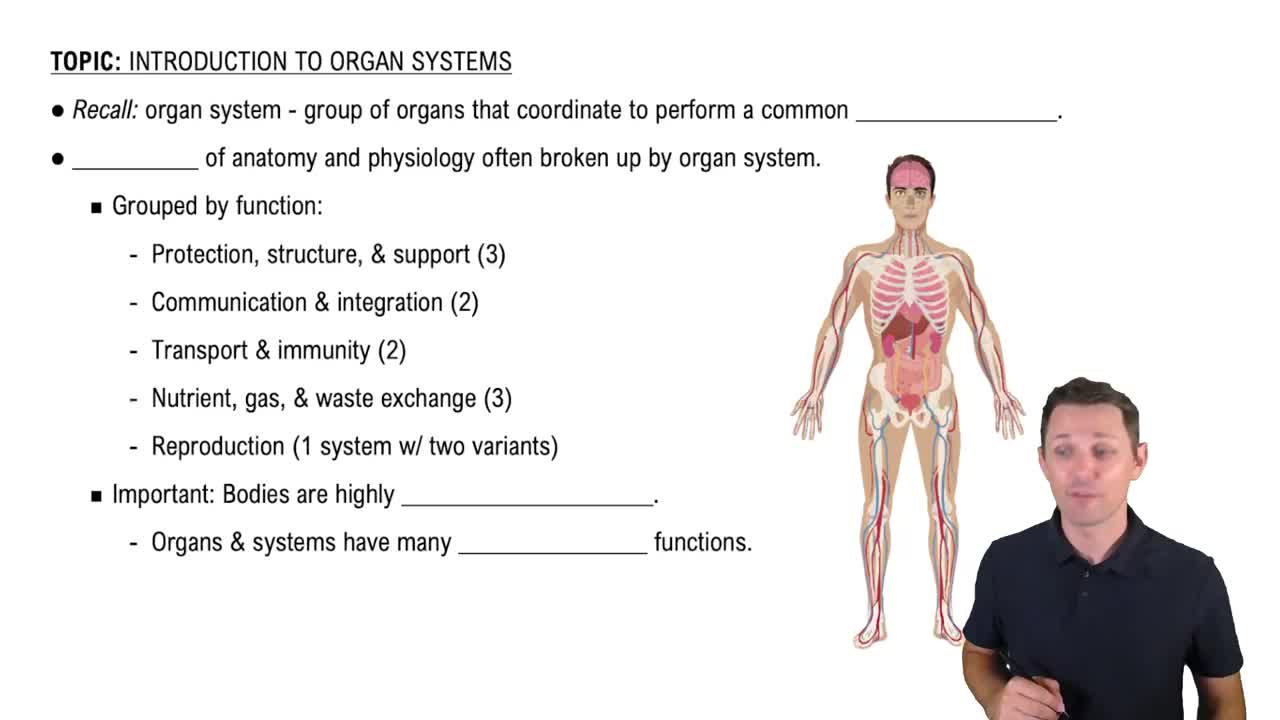
Introduction to Organ Systems
30140
views
762
rank
Guided course
02:18
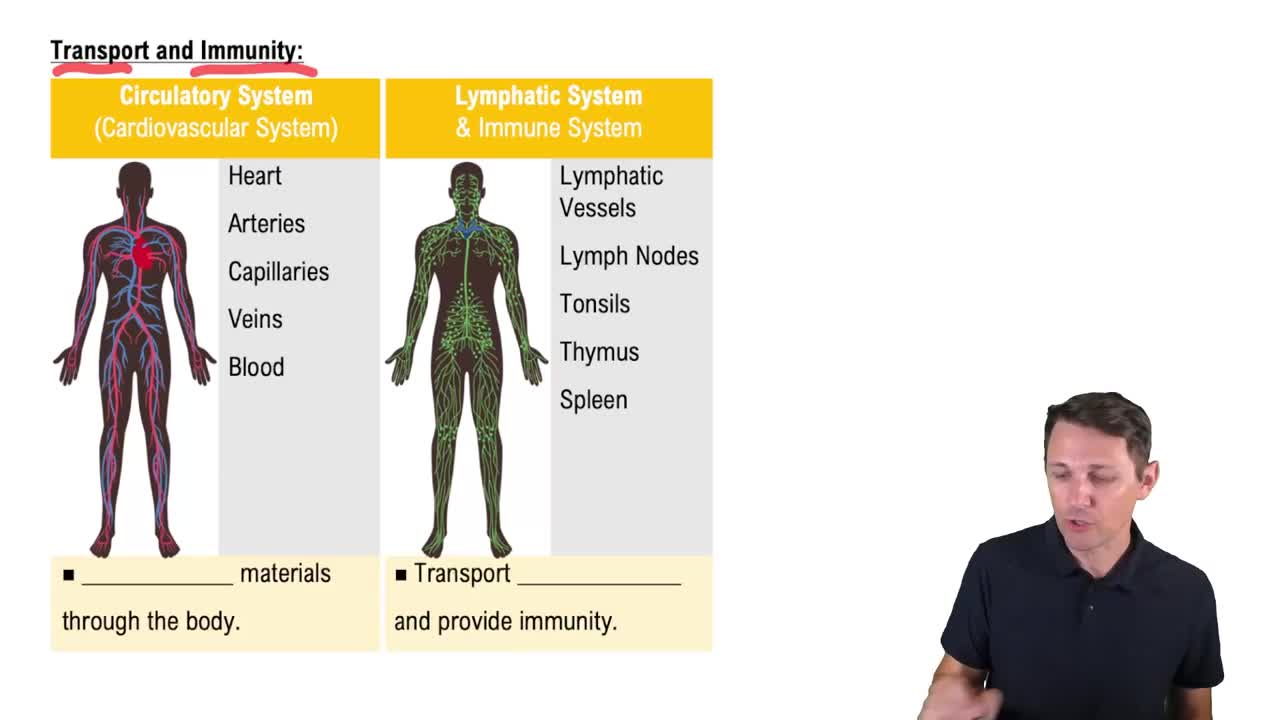
Transport and Immunity
17247
views
467
rank
1
comments
Guided course
02:12
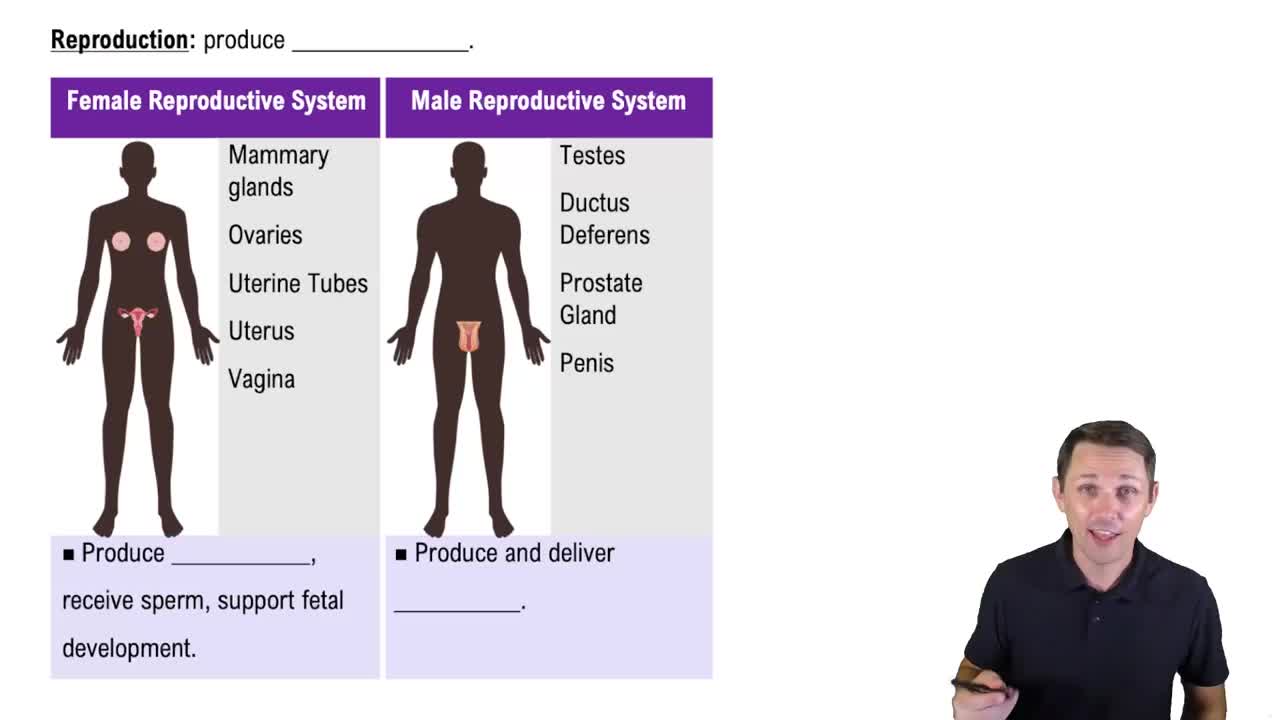
Reproduction
14449
views
386
rank
2
comments
Terms in this set (25)
Hide definitions
What is the definition of anatomy?
Anatomy
is the study of
structure
. The word comes from Greek meaning 'to cut apart'.
What is the definition of physiology?
Physiology
is the study of
function
, often based on organ systems like renal or cardiovascular physiology.
What does the Principle of Complementarity of Structure and Function state?
Function always reflects structure
, meaning the way something works depends on its form.
List the levels of structural organization in the human body.
Chemical, Cellular, Tissue, Organ, Organ system, Organismal levels.
Name the four basic tissue types.
Epithelial, connective, muscle, and nervous tissues.
What are the major components of the integumentary system?
Skin, sebaceous (oil) glands, sudoriferous (sweat) glands, hair, and nails.
What are the major functions of the integumentary system?
Protection, temperature regulation, waste elimination, and sensation.
What are the major components of the skeletal system?
Bones, cartilage, tendons, ligaments, and joints.
What are the major functions of the skeletal system?
Support, protection, leverage, hematopoiesis, mineral and energy storage.
What are the major components of the muscular system?
Skeletal muscle, cardiac muscle, and smooth muscle.
What are the major functions of the muscular system?
Movement and heat production (thermogenesis).
What are the major components of the nervous system?
Brain, spinal cord, and nerves.
What are the major functions of the nervous system?
Communication and homeostasis.
What are the three components of homeostatic control?
Receptor, control center, and effector.
What is the difference between negative and positive feedback in homeostasis?
Negative feedback decreases a function to stabilize the system; positive feedback increases a function until the stimulus is removed.
Give an example of a positive feedback loop.
Childbirth contractions and blood clotting are positive feedback loops.
What is the anatomical position?
Body standing upright, facing forward, arms at sides with palms facing forward.
What are the two major divisions of the body?
Axial (head, neck, trunk) and appendicular (limbs).
Name the two major regions of the upper limb.
Arm and forearm.
Name the two major regions of the lower limb.
Thigh and leg.
What are the major body planes?
Sagittal (divides left and right), frontal (divides front and back), and transverse (divides top and bottom).
What are the major body cavities?
Dorsal cavity (cranial and vertebral) and ventral cavity (thoracic and abdominopelvic).
What is the mediastinum?
Central compartment of the thoracic cavity containing the heart, trachea, esophagus, and major vessels.
What is a serous membrane?
A double-layered membrane covering organs and lining body cavities, with parietal and visceral layers separated by serous fluid.
Name the serous membranes associated with the heart, lungs, and abdominopelvic cavity.
Pericardium (heart), pleurae (lungs), and peritoneum (abdominopelvic cavity).
 BackBack
 02:29