 Back
Anatomy & Physiology Practical 1 Review
 02:59

Terms in this set (17)
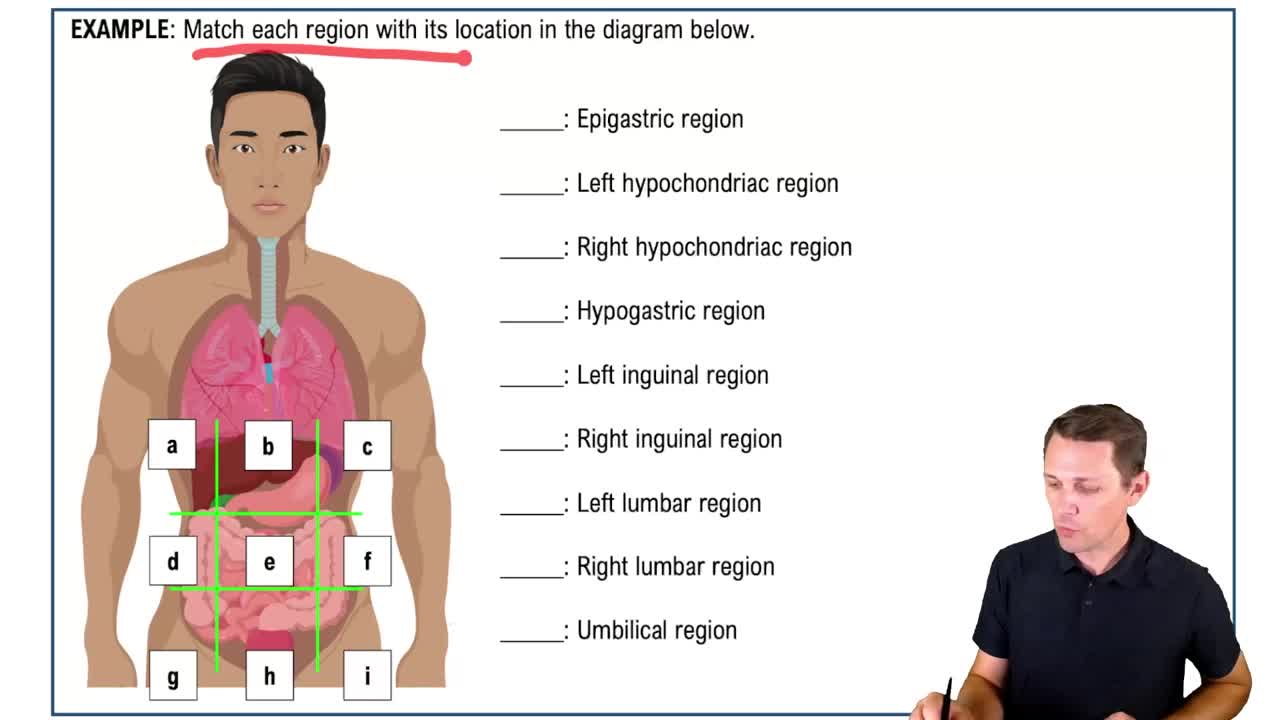
The nine regions are Right hypochondriac, Epigastric, Left hypochondriac, Right lumbar, Umbilical, Left lumbar, Right iliac, Hypogastric, and Left iliac regions.
Chromosomes align at the cell's equatorial plate, attached to spindle fibers from opposite poles.
Sister chromatids separate and move toward opposite poles of the cell.
Chromosomes decondense, nuclear envelopes reform, and the cell prepares to divide.
The physical division of the cytoplasm into two daughter cells following mitosis.
Simple columnar epithelium, often involved in absorption and secretion.
Osteons with central Haversian canals surrounded by concentric lamellae.
Dense connective tissue, providing strong attachment and support.
Transport oxygen from lungs to tissues and carbon dioxide back to lungs.
Protection, absorption, secretion, and sensation at body surfaces and cavities.
Epidermis, dermis, and hypodermis (subcutaneous layer).
Frontal, parietal, temporal, occipital, sphenoid, ethmoid, maxilla, and mandible bones.
The lower jawbone responsible for chewing and forming the lower facial structure.
Larger body, short thick spinous process, and absence of costal facets.
Protect thoracic organs and assist in respiration by expanding and contracting the chest cavity.
The ilium, ischium, and pubis bones fused together.
Support body weight and enable locomotion.