 Back
BackAnatomy & Physiology: Reproductive, Development, and Endocrine Systems
 1:07
1:07
Terms in this set (16)
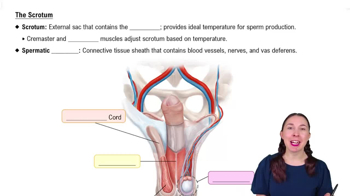
Testes are the primary male reproductive organs responsible for sperm production and testosterone secretion.
Ovaries are the primary female reproductive organs that produce oocytes and secrete estrogen and progesterone.
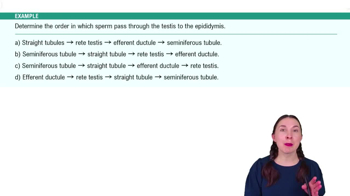
Spermatogenesis is the process of sperm cell development occurring in the seminiferous tubules of the testes.
Oogenesis is the process of egg (oocyte) development in the ovaries, beginning before birth and completing after puberty.
Testosterone regulates sperm production and secondary sexual characteristics; LH stimulates testosterone secretion; FSH supports spermatogenesis.
Estrogen and progesterone regulate the menstrual cycle and pregnancy; LH triggers ovulation; FSH stimulates follicle development.
Steps include corona radiata penetration, zona pellucida binding, acrosomal reaction, zona pellucida penetration, membrane fusion, and cortical reaction to prevent polyspermy.
Ectoderm forms skin and nervous system; mesoderm forms muscles, bones, and circulatory system; endoderm forms internal organs like the digestive tract.
The endoderm forms the lining of the digestive and respiratory tracts, liver, pancreas, and other internal organs.
Fetal circulation includes shunts like the foramen ovale and ductus arteriosus to bypass lungs; these close after birth to establish normal pulmonary circulation.
Includes rapid growth, organ maturation, development of body systems, and preparation for independent life after birth.
Includes hormonal changes, increased blood volume, altered metabolism, and physical changes to support fetal development.
Includes the pituitary gland, thyroid gland, adrenal glands, pancreas, ovaries, and testes.
Growth hormone (GH) stimulates growth; TSH stimulates thyroid; ACTH stimulates adrenal cortex; FSH and LH regulate gonads; Prolactin stimulates milk production.
Oxytocin stimulates uterine contractions and milk ejection; Antidiuretic hormone (ADH) regulates water balance by increasing kidney water reabsorption.
Adrenal cortex produces corticosteroids like cortisol (stress response) and aldosterone (salt balance); adrenal medulla produces epinephrine and norepinephrine (fight or flight response).