 Back
Anatomy & Physiology: Respiratory and Digestive Systems
 4:28

Terms in this set (20)
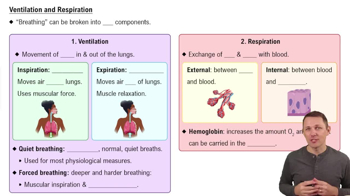
The respiratory system facilitates gas exchange, supplying oxygen to the blood and removing carbon dioxide.
Includes the nose, pharynx, larynx, trachea, bronchi, and lungs.
Alveoli are tiny air sacs where oxygen and carbon dioxide exchange occurs between air and blood.
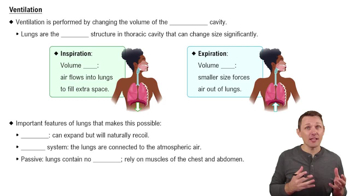
The diaphragm contracts to increase thoracic volume, causing inhalation, and relaxes for exhalation.
Air passes through the nose → pharynx → larynx → trachea → bronchi → lungs.
The digestive system breaks down food into nutrients for absorption and eliminates waste.
Includes the mouth, esophagus, stomach, small intestine, large intestine, liver, pancreas, and gallbladder.
The stomach mechanically and chemically breaks down food using acid and enzymes.
The small intestine absorbs most nutrients through its lining into the bloodstream.
The large intestine absorbs water and forms feces from indigestible material.
The liver produces bile to emulsify fats and detoxifies substances.
The pancreas secretes digestive enzymes and bicarbonate to neutralize stomach acid.
Peristalsis is the wave-like muscle contractions that move food through the digestive tract.
Mechanical digestion physically breaks down food; chemical digestion uses enzymes to break down molecules.
Oxygen binds to hemoglobin in red blood cells for transport to tissues.
Carbon dioxide is a waste product transported from tissues to lungs for exhalation.
Mucous membranes trap particles and pathogens, protecting the respiratory tract.
Villi increase surface area to enhance nutrient absorption in the small intestine.
Enzymes catalyze the breakdown of carbohydrates, proteins, and fats into absorbable units.
Breathing rate is controlled by the medulla oblongata responding to carbon dioxide levels in the blood.