How many bones are in the human skeleton and what percentage of body weight do they make up?
There are 206 bones in the human skeleton, making up about 20% of body weight.
What are the two main groups of bones in the skeleton?
The skeleton is divided into the axial skeleton (skull, vertebral column, rib cage) and the appendicular skeleton (upper & lower limbs, pectoral and pelvic girdles).
What bones make up the axial skeleton?
The axial skeleton consists of 80 bones including the skull, vertebral column, and rib cage.
What are the two sets of bones in the skull?
The skull has cranial bones and facial bones, totaling 22 bones.
What is the function of the cranium?
The cranium surrounds and protects the brain and organs of hearing and balance.
What are the three distinct areas of the cranial base?
The cranial base is divided into the anterior fossa (highest), middle fossa, and posterior fossa (lowest).
Name the 8 cranial bones.
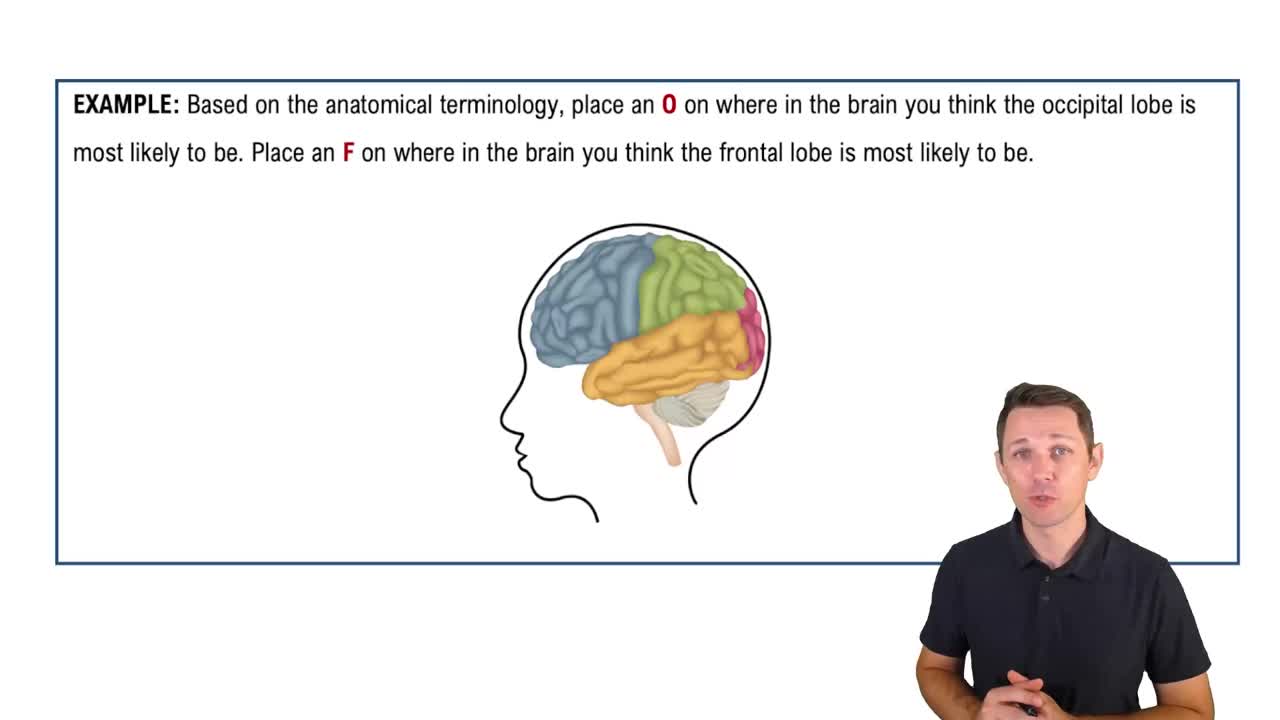
The cranial bones include paired parietal and temporal bones, and unpaired frontal, occipital, sphenoid, and ethmoid bones.
What is the significance of the foramen magnum in the occipital bone?
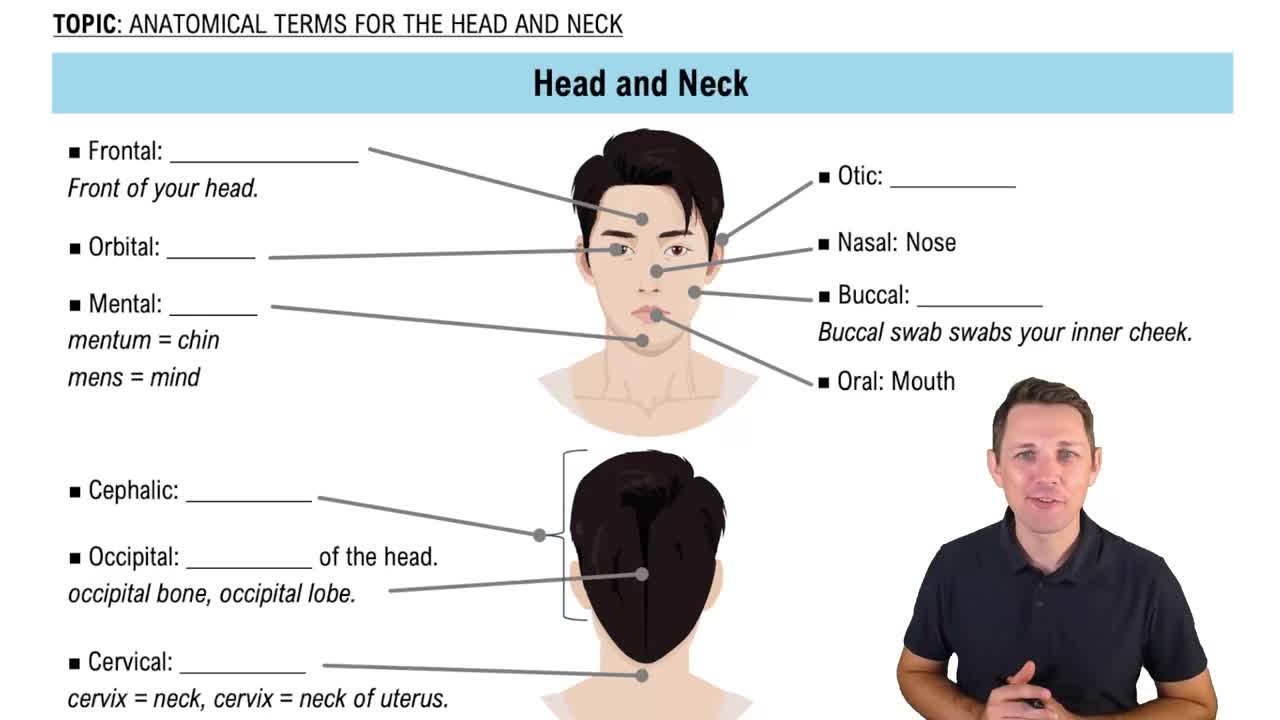
The foramen magnum is a large hole at the base of the occipital bone allowing passage of the spinal cord.
What are the three parts of the temporal bone?
The temporal bone has the squamous part, tympanic part, and petrous part.
What is the function of the sphenoid bone?
The sphenoid bone is complex, articulates with all other cranial bones, forms the base of the middle cranial fossa, and contains the sphenoid sinuses.
What are the key features of the ethmoid bone?
The ethmoid bone forms part of the nasal cavity roof, contains olfactory foramina for olfactory nerves, and contributes to the nasal septum and medial orbital walls.
What are the four major cranial sutures?
The major sutures are the coronal, squamous, lambdoid, and sagittal sutures.
How many facial bones are there and which are unpaired?
There are 14 facial bones; the mandible and vomer are unpaired.
What is the mandible and its key features?
The mandible is the lower jawbone, strongest and largest facial bone, with features like the body, rami, mandibular notch, coronoid process, and mandibular condyle.
What bones form the hard palate?
The hard palate is formed by the palatine processes of the maxillae and the horizontal plates of the palatine bones.
What are paranasal sinuses and their functions?
Paranasal sinuses are mucosa-lined, air-filled cavities in frontal, maxillary, sphenoid, and ethmoid bones that lighten the skull and enhance voice resonance.
What is unique about the hyoid bone?
The hyoid bone does not articulate with any other bone and supports the tongue, aiding in swallowing and speech.
What bones form the orbit of the eye?
The orbit is formed by the frontal, sphenoid, zygomatic, maxilla, palatine, lacrimal, and ethmoid bones.
What is the function of the crista galli on the ethmoid bone?
The crista galli projects superiorly to attach the dura mater of the brain.
What is the role of sutural bones?
Sutural bones are tiny irregular bones that can occur within cranial sutures as additional ossification centers during fetal development.
 Back
 04:19