 Back
BackAnatomy & Physiology: Tissue and Integumentary System Key Concepts
 07:25
07:25
Terms in this set (29)
Endothelium is a type of simple squamous epithelial tissue lining blood vessels and the heart.
Exocrine glands secrete substances through ducts to surfaces; endocrine glands release hormones directly into the bloodstream.
The apical surface is the free, exposed surface of an epithelial cell facing the lumen or outside environment.
The basal lamina is a thin extracellular layer supporting epithelial cells; together with connective tissue, it forms the basement membrane.
Holocrine secretion involves the entire cell disintegrating to release its product, as seen in sebaceous glands.
Merocrine (eccrine) secretion releases products by exocytosis without cell damage, typical of sweat glands.
Apocrine secretion involves release of product along with part of the cell's cytoplasm, found in some sweat glands.
Keratinocytes are the primary cells in the epidermis producing keratin, a protective protein.
Melanocytes produce melanin, the pigment responsible for skin color and UV protection.
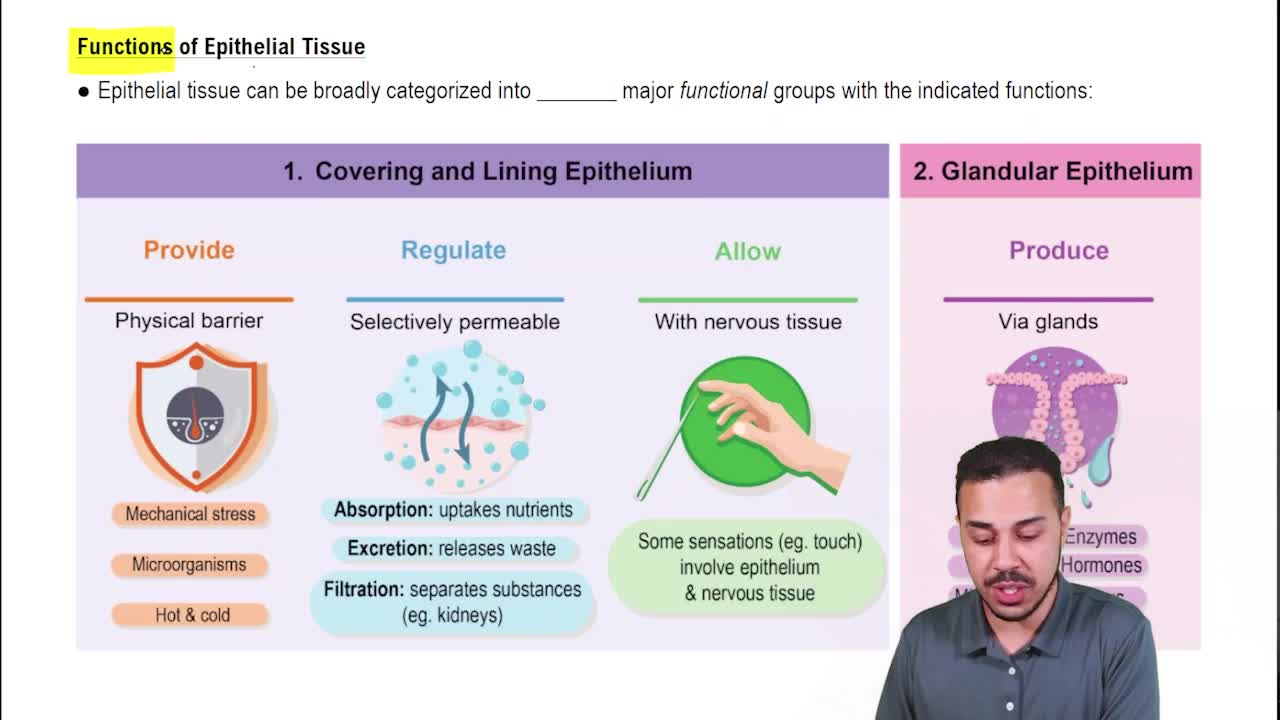
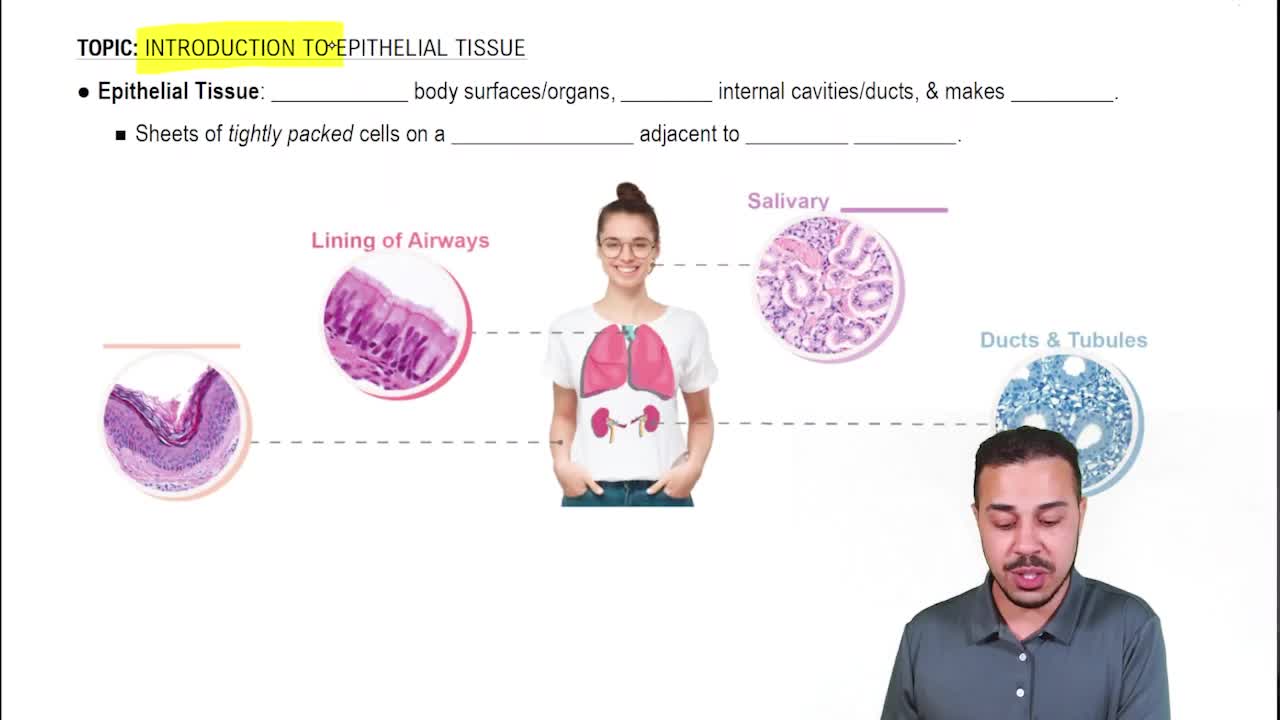
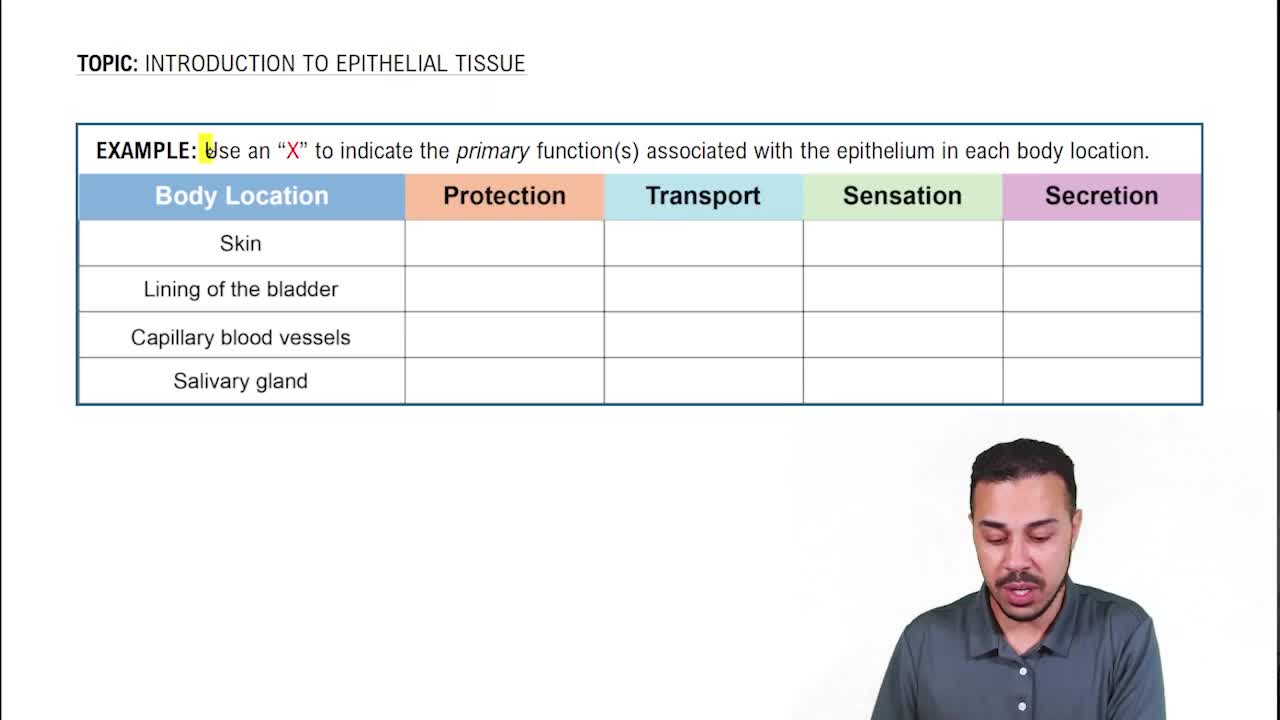
Epithelial tissue protects, absorbs, secretes, and filters substances across its surfaces.
Includes tight junctions, gap junctions, desmosomes, hemidesmosomes, and intercalated discs.
Connective tissue supports, binds, protects, insulates, and transports substances in the body.
Connective Tissue Proper, Fluid Connective Tissue, and Supporting Connective Tissue.
Appositional growth adds new layers on the surface; interstitial growth expands tissue from within.
Mucous, serous, cutaneous, and synovial membranes.
From surface to deep: stratum corneum, lucidum, granulosum, spinosum, and basale.
Protection, sensation, thermoregulation, vitamin D synthesis, and excretion.
Thick skin has all epidermal layers including lucidum and is found on palms and soles; thin skin lacks lucidum and covers most of the body.
Includes hair, nails, glands, and touch receptors.
Papillary layer is superficial and contains dermal papillae; reticular layer is deeper and denser.
Include Meissner's corpuscles, Pacinian corpuscles, Merkel cells, Ruffini endings, and free nerve endings.
Composed of shaft, root, cuticle, and controlled by the arrector pili muscle.
Includes basal cell carcinoma, squamous cell carcinoma, and melanoma.
UV light converts 7-dehydrocholesterol in skin to vitamin D3, essential for calcium absorption.
New connective tissue and microscopic blood vessels that form during wound healing.
Excessive scar tissue growth beyond the original wound boundaries.
Muscle tissue enables movement, maintains posture, and generates heat.
Neurons transmit signals; glial cells support and protect neurons.
Dendrites receive signals; axon transmits signals away from the cell body.