 Back
Anatomy & Physiology: Tissue Types and Functions
 07:25

Terms in this set (18)
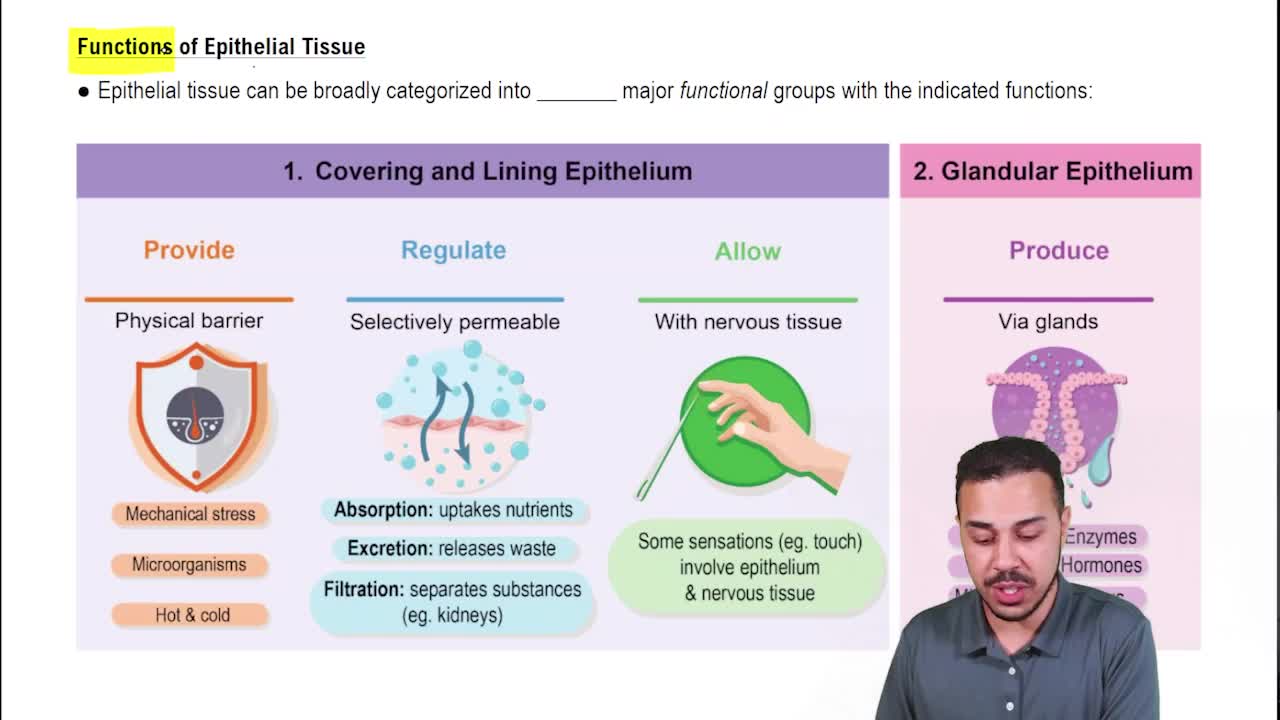
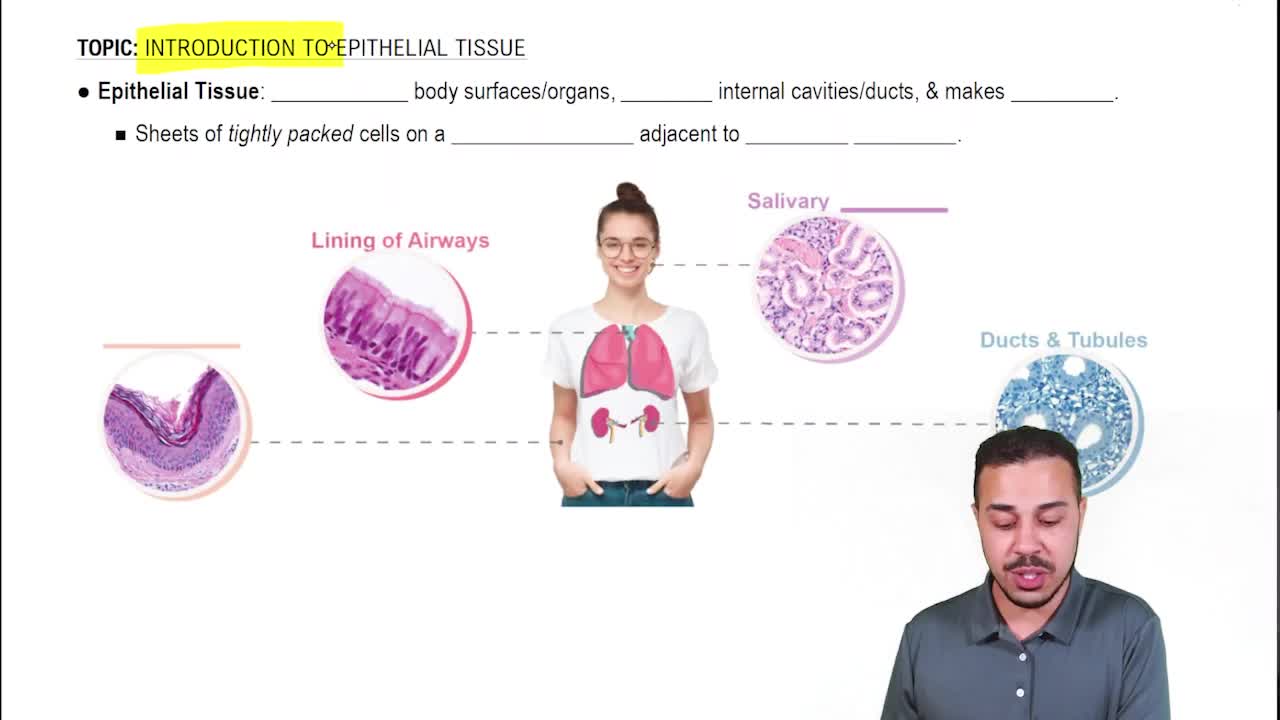
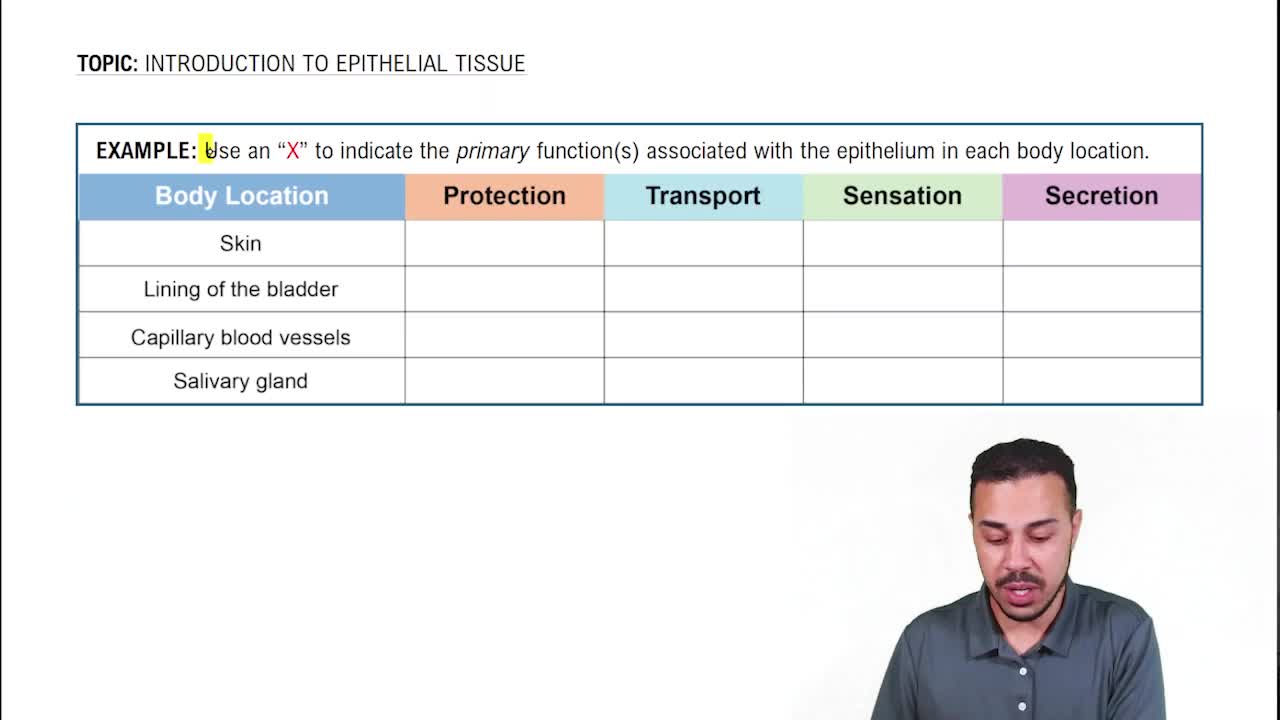
Epithelial tissue covers body surfaces, lines cavities, and forms glands, providing protection, absorption, secretion, and filtration.
Characteristics include cellularity, polarity, attachment to basement membrane, avascularity, and regeneration.
Epithelia are classified by cell layers (simple, stratified) and cell shape (squamous, cuboidal, columnar), with functions like protection, absorption, and secretion.
A gland is an epithelial structure that produces and secretes substances such as hormones, enzymes, or mucus.
Exocrine glands secrete onto body surfaces or cavities via ducts; endocrine glands secrete hormones directly into the bloodstream.
Unicellular glands consist of a single secretory cell; multicellular glands are composed of multiple cells forming a structure.
They are classified by duct structure (simple or compound) and secretory unit shape (tubular, alveolar, or tubuloalveolar).
Based on secretion type: merocrine (exocytosis), apocrine (part of cell pinches off), and holocrine (whole cell disintegrates).
Connective tissue has cells, extracellular matrix (fibers and ground substance), and is highly vascularized except cartilage.
Elements include cells (fibroblasts, macrophages), fibers (collagen, elastic, reticular), and ground substance.
Types include loose (support), dense (strength), cartilage (flexibility), bone (support), and blood (transport).
Muscle tissue is responsible for producing body movement through contraction.
Skeletal muscle: striated, voluntary, attached to bones.
Cardiac muscle: striated, involuntary, heart walls.
Smooth muscle: non-striated, involuntary, walls of hollow organs.
Nervous tissue consists of neurons and neuroglia, specialized for rapid communication via electrical impulses.
The cutaneous membrane is the dry skin covering the body, composed of epidermis and dermis, providing protection.
Mucous membranes line body cavities open to the exterior, secrete mucus for lubrication and protection.
Serous membranes line closed body cavities, secrete serous fluid to reduce friction between organs.
Tissue repair involves inflammation, organization (restoring blood supply), and regeneration (replacement of damaged cells).