 Back
BackAnatomy & Physiology: Tissues Flashcards
 03:32
03:32
Terms in this set (72)
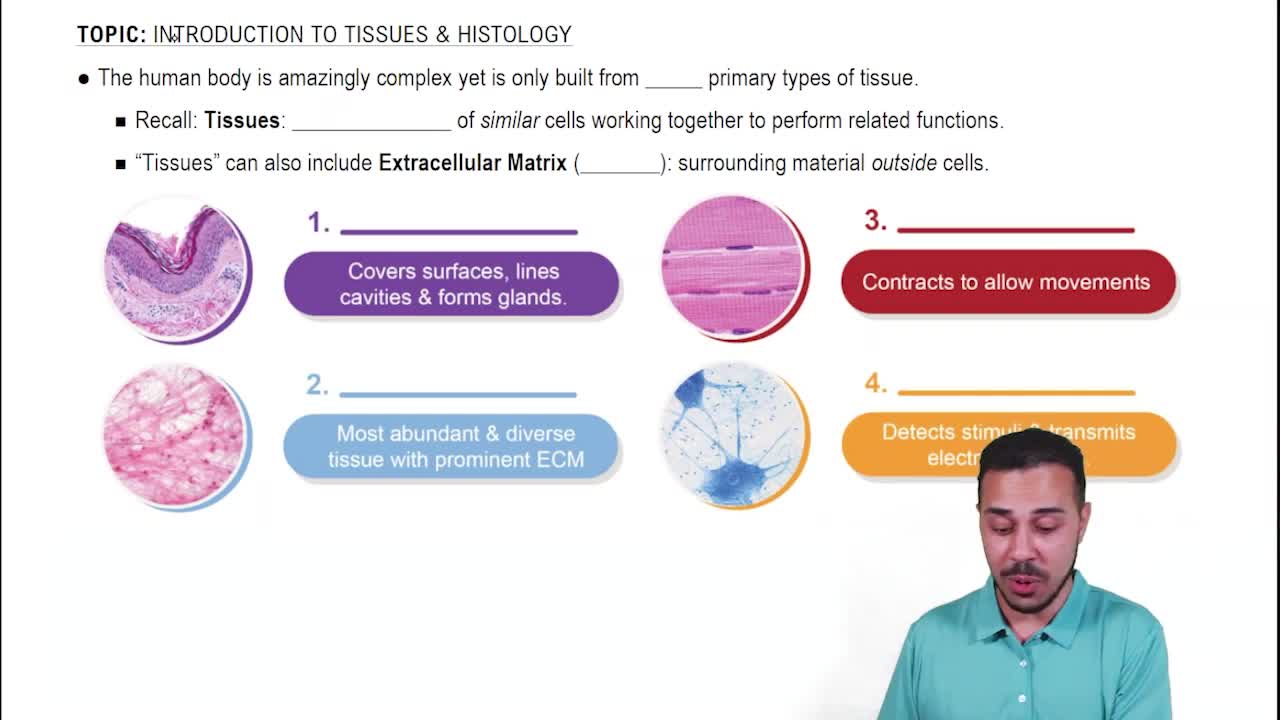
Groups of cells that perform specific functions.
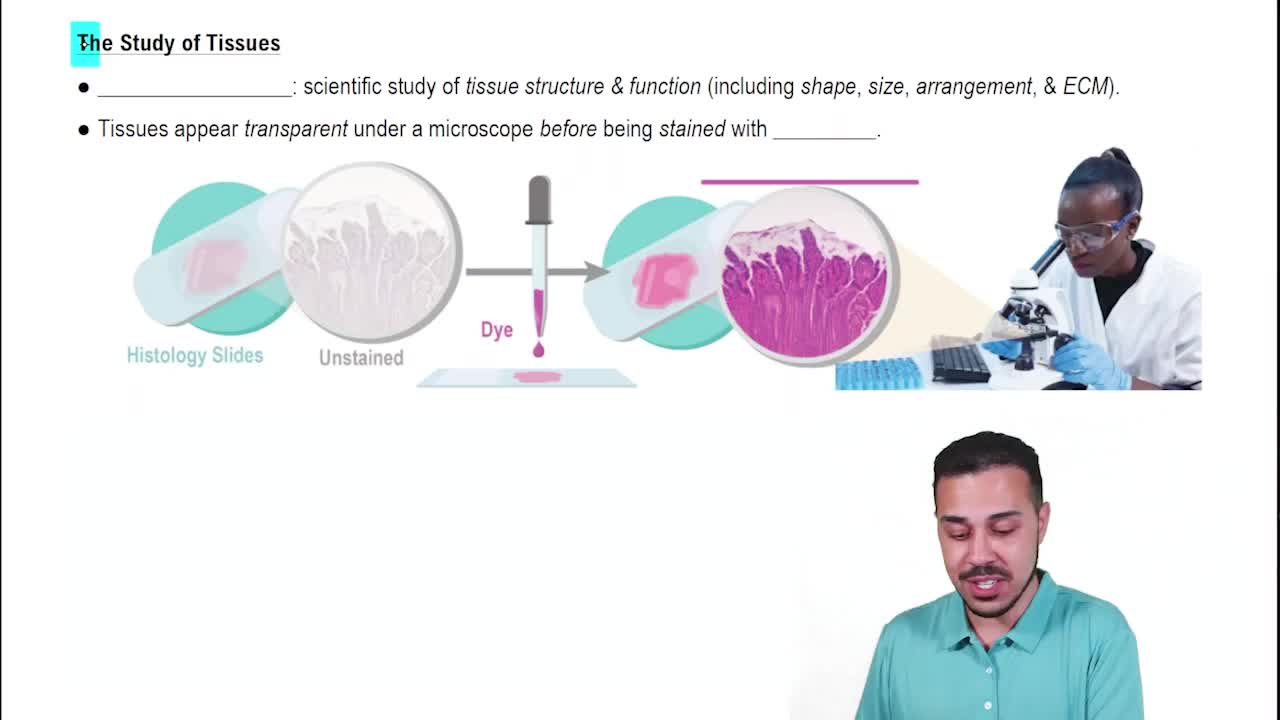
The study of tissues.
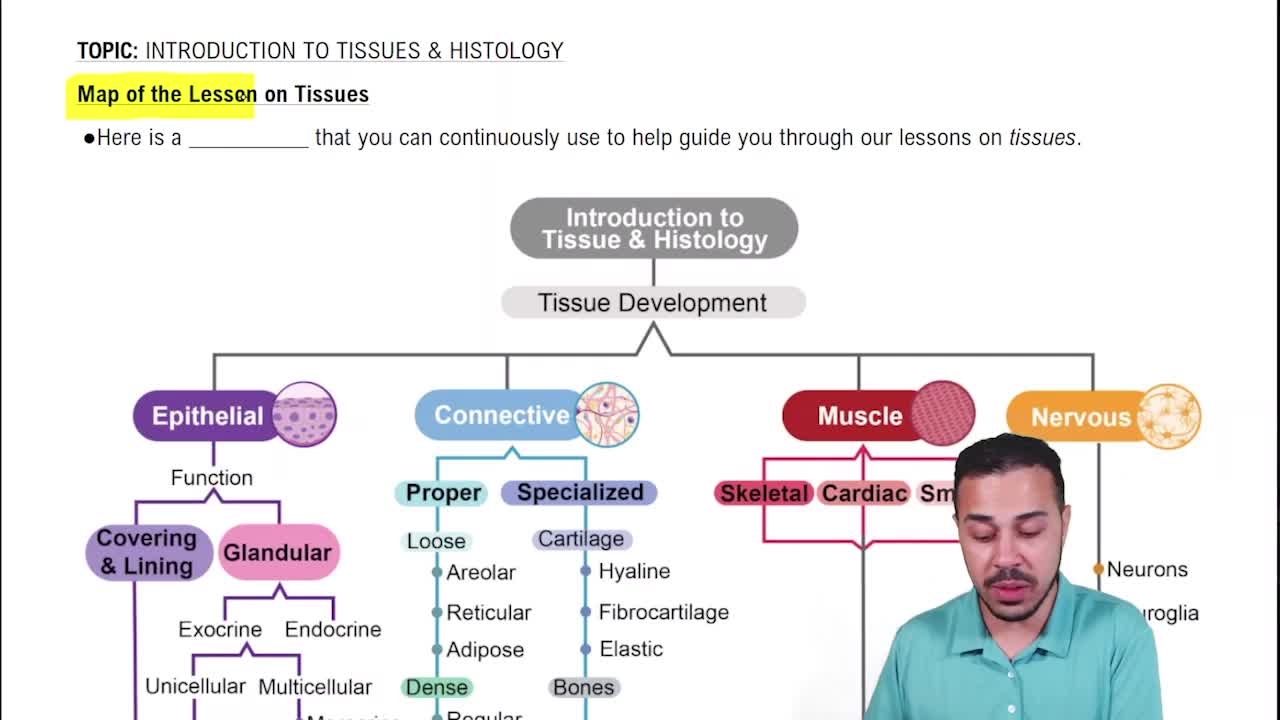
Epithelial, connective, muscle, neural.
Epithelia (cover surfaces) and glands (secrete substances).
Cells tightly packed together.
Apical (top) and basal (bottom) surfaces are different.
No, it is avascular (no blood vessels).
Limited repair but high regeneration rate.
Protection, absorption, secretion, sensation.
Prevent leakage between cells.
Allow communication between cells.
Hold cells together like rivets.
Attach cells to the basement membrane.
Basal lamina and reticular lamina.
Flat shaped cells.
Cube-shaped cells.
Tall cells.
One layer of cells.
Multiple layers of cells.
Diffusion and reduces friction.
Mesothelium lines body cavities; endothelium lines blood vessels.
Protection.
Skin, mouth, esophagus.
Secretion and absorption.
Kidney tubules.
Stretching.
Bladder.
Absorption and secretion.
Moves mucus using cilia.
Glands that secrete into the blood.
Glands that secrete into ducts.
Exocytosis of secretions.
Cell membrane pinches off to release secretion.
Cell bursts to release secretion.
Glands that produce watery secretions.
Glands that produce thick mucus.
Support, protect, connect tissues and organs.
Ground substance plus fibers.
Proper, fluid, supporting connective tissue.
Make fibers in connective tissue.
Store fat.
Eat pathogens and debris.
Release histamine during inflammation.
Strong fibers that resist pulling.
Stretch and recoil fibers.
Support framework fibers.
Loose connective tissue that supports and cushions.
Fat storage and insulation.
Supports organs with a network of fibers.
Found in tendons and ligaments.
Found in the dermis of skin.
Allows stretching, found in spine ligaments.
Carry oxygen in the blood.
Fight infection.
Clotting to stop bleeding.
Smooth support cartilage.
Flexible cartilage.
Strong cartilage that acts as a shock absorber.
Osteocytes.
Support and calcium storage.
Membranes that line open systems like the digestive tract.
Membranes that reduce friction between organs.
Skin.
Membranes found in joints.
Voluntary muscle attached to bones.
Muscle of the heart.
Muscle found in organs.
Electrical signaling in the body.
Cells that conduct signals.
Support cells for neurons.
Muscle and neural tissues.
Can carry electrical signals.