 Back
BackAnatomy Of The Respiratory System
 4:28
4:28
Terms in this set (19)
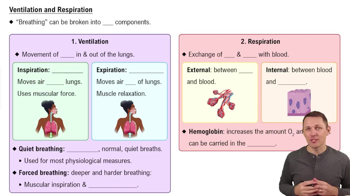
The respiratory system facilitates gas exchange, supplying oxygen to the blood and removing carbon dioxide. It also helps regulate blood pH, enables vocalization, and provides olfaction.
The respiratory system is divided into the upper respiratory tract (nose, nasal cavity, pharynx) and the lower respiratory tract (larynx, trachea, bronchi, lungs).
The nose consists of an external portion supported by bone and cartilage, and an internal nasal cavity lined with mucosa that warms, moistens, and filters air.
The nasal mucosa is a mucous membrane lining the nasal cavity, containing ciliated epithelium and mucus-producing cells to trap particles and move them toward the pharynx.
Paranasal sinuses are air-filled cavities in the skull bones that lighten the skull, produce mucus, and help warm and humidify inhaled air.
The nose filters, warms, and humidifies air, detects odors, and serves as a resonating chamber for speech.
The pharynx is a muscular tube divided into the nasopharynx, oropharynx, and laryngopharynx, serving as a passageway for air and food.
The pharynx conducts air to the larynx and food to the esophagus, and plays a role in vocalization and immune defense.
The larynx is located below the pharynx and above the trachea, composed of cartilage and muscles, housing the vocal cords.
The larynx protects the airway during swallowing, produces sound for speech, and regulates airflow to the lungs.
The trachea is a flexible tube supported by C-shaped cartilage rings, lined with ciliated mucosa to trap and expel debris.
The trachea conducts air to the bronchi and clears mucus and particles via ciliary movement.
Bronchi are branching airways from the trachea into each lung, supported by cartilage and lined with mucosa, dividing into smaller bronchioles.
Alveoli are tiny, thin-walled air sacs surrounded by capillaries where gas exchange occurs between air and blood.
Bronchi conduct air to alveoli; alveoli facilitate oxygen and carbon dioxide exchange with the bloodstream.
The lungs are paired organs divided into lobes, containing bronchi, bronchioles, alveoli, blood vessels, and connective tissue.
The lungs perform gas exchange, oxygenating blood and removing carbon dioxide, and help regulate blood pH.
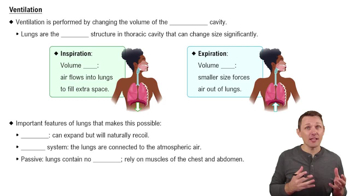
The thorax is the chest cavity enclosed by ribs, sternum, and vertebrae, containing the lungs and heart.
The thorax protects vital organs, supports respiration by enabling lung expansion and contraction.