 Back
CH 4: (part 1) Epithelial Tissue + Intercellular Connections
 07:25

Terms in this set (54)
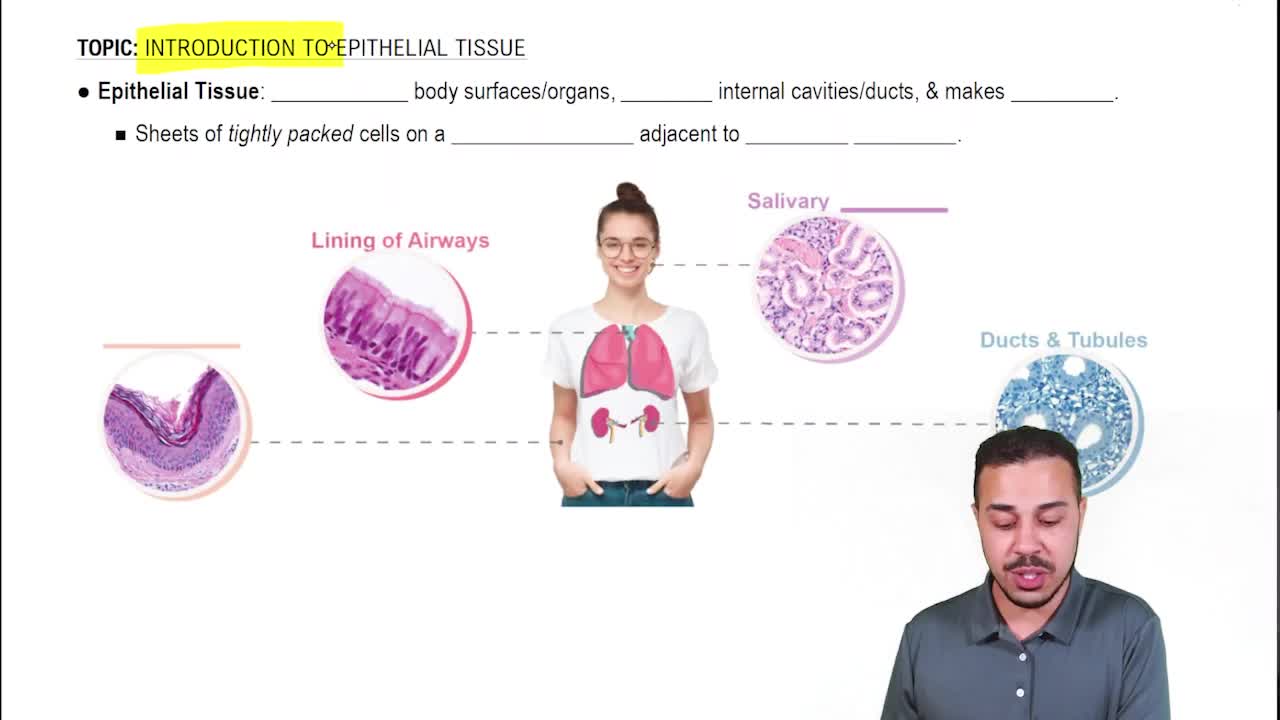
Epithelial Tissue contain both Epithelia and...
Glands!
Epithelia are layers of cells that cover...
external or line internal surfaces.
What tissue if found in all areas that are exposed to substances from EXTERNAL environment?
Epithelial tissue.
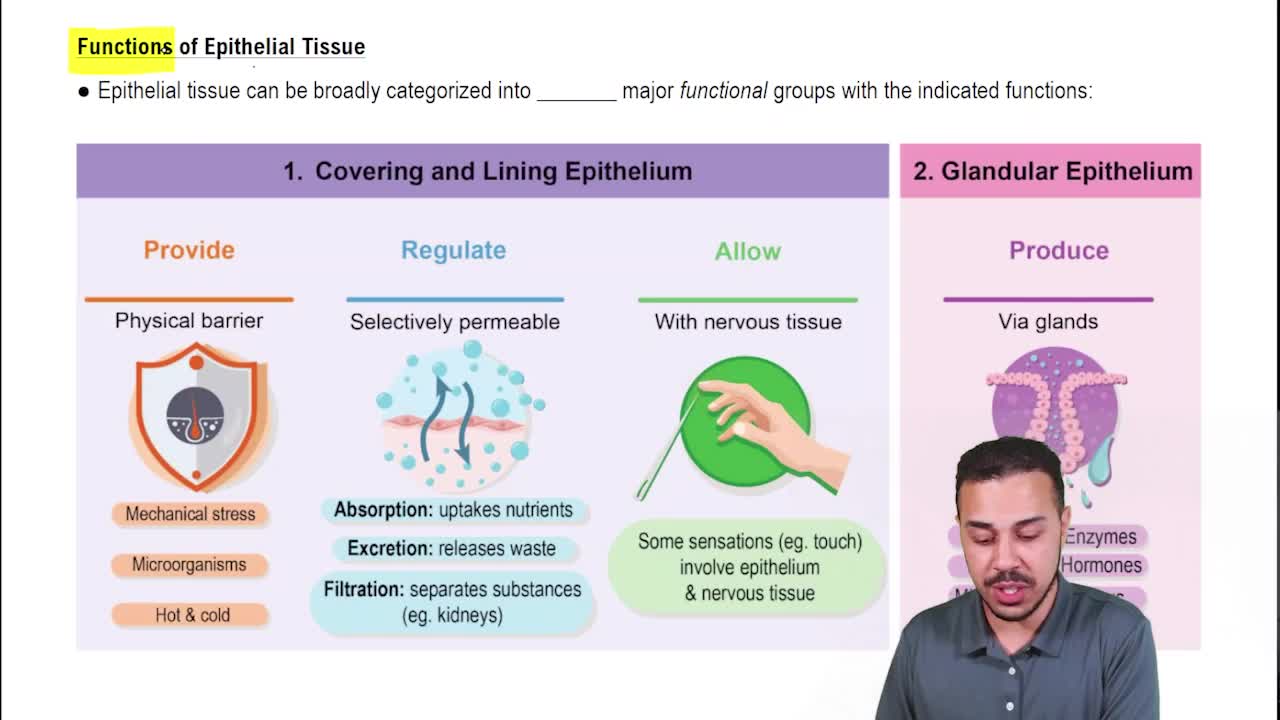
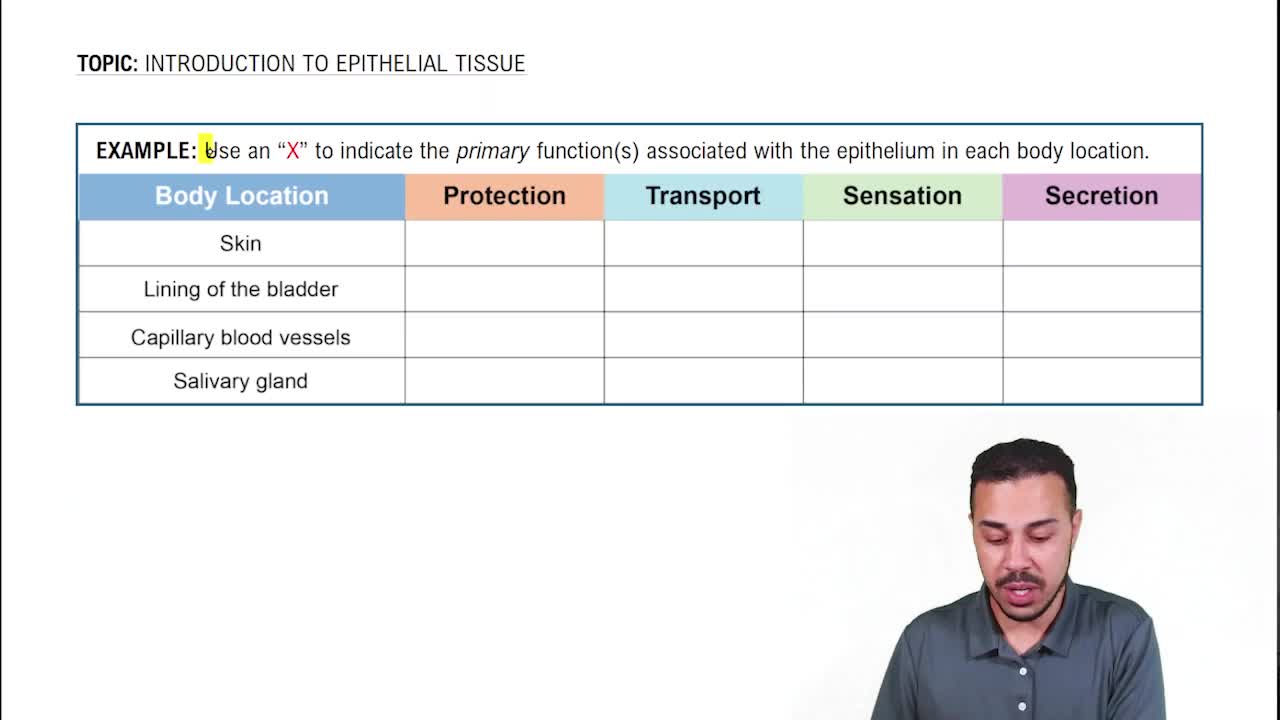
the functions of epithelial tissues are...
physical protection
controlling permeability
sensation
specialized secretions through GLANDS
glands in epithelial tissues that discharge secretions into epithelial surfaces are called...
EXOCRINE glands.
glands in epithelial tissues that discharge secretions into surrounding fluid are called...
ENDOCRINE glands.
the EXPOSED surface of epithelial tissues is called...
APICAL.
The attached surface of epithelial tissues is called...
BASAL.
The BASAL of epithelial tissues is attached to...
noncellular basement membrane (made of alot of protein fibers).
Cellularity is when cells are...
tightly bound together via cell junctions.
epithelial cells contain cellularity TRUE or FALSE:
TRUE
Avascularity is when a tissue has no...
BLOOD VESSELS, therefore, no direct blood supply.
Epithelia contain avascularity so they obtain nutrients through...
diffusion or absorption across apical or basal surfaces.
TRUE or FALSE:
epithelial tissues go through reincarnation and are constantly being replaced...
TRUE
epithelial cells that line internal passageways contain small finger-shaped projections form the plasma membrane that are called...
MICROVILLI
MICROVILLI are abundant in...
APICAL surfaces where absorption + secretion take place.
CILLIA on epithelium cells are long slender extensions made of...
MICROTUBULES
MOTILE CILLIA are cilia capable of...
MOTION that moves fluids/secretion (ex: mucus)
TRUE or FALSE:
cells in epithelial tissue are isolated...
FALSE
cells in epithelial tissue are attached to each other.
every cell in epithelial tissue is attached to...
basement membrane (noncellular substance)
transmembrane proteins that attach plasma membranes and plasma membranes to extracellular materials are called....
Cell Adhesion Molecules (CAMs)
______ proteins span the whole membrane of a cell
transmembrane proteins
proteoglycans in cell adhesion molecules are made of what chains
amino acid (proteins) chains + carbohydrate chains
proteoglycans also known as "intercellular cement" is a substance that prevents...
dehydration.
The 3 kinds of cell junctions are...
Gap Junctions
Tight Junctions
Desmosomes
Gap Junctions hold cells together via...
Connexons
Connexons are...
proteins that interlock cell membranes together and allow small molecules + ions to move between cells.
Gap Junctions with connexons are mostly found in ________ tissue and _______ Muscle tissue.
epithelial
cardiac muscle
LIPID portions of two plasma membranes that are tightly bound together via interlocking is called...
Tight Junctions
______ cellular junctions are found where water/solutes are problematic when entering the cell.
Tight
Inferior to tight junctions is...
adhesion belt
the adhesion belt...
("water-tight seal")
encircles cells and binds them to adjacent cells -> preventing water/solutes from passing in between cells.
(Ex: in small intestine keeping waste IN)
______ is the space inside of a tubular structure
lumen
Desmosomes...
CAMs + proteoglycans link plasma membranes
transmembrane proteins "Intercellular cement" amino acid chain + carbohydrate chains
Epithelia are classified upon _________ and __________
Cell shape and Cell Layers.
Shapes include...
squamous (thin/flat)
cuboidal (squares)
columnar (tall/slim)
If a tissue has one layer of cells, thin and fragile it is called...
simple.
If a tissue has more than one layer of cells it is called...
stratified.
Simple Squamous Epithelia are found where...
absorption or secretion occurs
there is need for a slick/slippery surface
ex: lungs -> must be frictionless
a type of simple squamous epithelia that lines pleural, pericardial, and peritoneal cavities is called...
mesothelium.
a type of simple squamous epithelium that lines inner surface of the HEART and BLOOD VESSELS
endothelium
Stratified squamous epithelium is found in locations where...
mechanical stresses are severe.
ex: surface of the skin, lining of the mouth
a type of stratified squamous epithelium that contains superficial layers of epithelial cells packed with keratin and are WATER RESISTANT is called...
Keratinized stratified squamous epithelium
ex: epidermis (surface) of the skin
A type of stratified squamous epithelium that resists abrasion and is CONSTANTLY kept MOIST is called...
nonkeratinized stratified squamous epithelium
Cuboidal epithelial cells provide_______ and allow secretions and absorption to occur.
They are mainly found in....
limited protection.
ex: kidney tubules and glands
Stratified cuboidal epithelium contain _____ which are "tunnels" that allow secretion of
(more than one layer) (square shape)
substances.
Ducts.
TRUE or FALSE:
stratified squamous epithelium is considered rare.
TRUE
Cells that appear cuboidal unstretched, and squamous when stretched are called...
Transitional epithelium
transitional epithelium is __________ and tolerates repeated cycles of stretching.
Stratified. (2 layers = thick)
ex: lining of urinary bladder (changes in size)
Simple Columnar epithelial cells allow... and are mainly found in the ______ trac.
absorption or secretion
ex: stomach. large, and small intestine (digestive)
columnar epithelia that LOOK stratified (has 2 layers) but is only made of ONE layer is called...
pseudostratified columnar epithelium.
epithelial cells specialized for secretion are called...
Glandular Epithelium.
These glands make hormones that are released into the bloodstream...
ENDORCINE GLANDS.
these glands release secretions that EXit directly on epithelium surfaces through DUCTS...
EXOCRINE GLANDS