 Back
Connective tissues
 06:37

Terms in this set (14)
For learning
Variations in blood supply
Some tissue types are well vascularized others or poor
Some are poor vascularized or are avascular
Extracellular matrix
Non-living material that surrounds living cells
Ground substance—mostly water along with adhesion proteins and polysaccharide molecules
Connective tissue
Builders
It synthesizes and secretes collagen, elastin, and the extracellular matrix, This forms the structural framework that holds your organs, skin, and muscles.
Fiberblasts
Demoliton
It breaks down and reabsorbs old damaged collagen fibers and matrix material using specialized enzymes ( like gollagenase)
Fibroclasts
For learning
A non-living meterial made of fibers and fluid that surrounds, holds, and supports living cells.
Matrix
Composed of
Bone cells in lacunae (cavities)
Hard matrix of calcium salts
Large numbers of collagen fibers
well vascularized
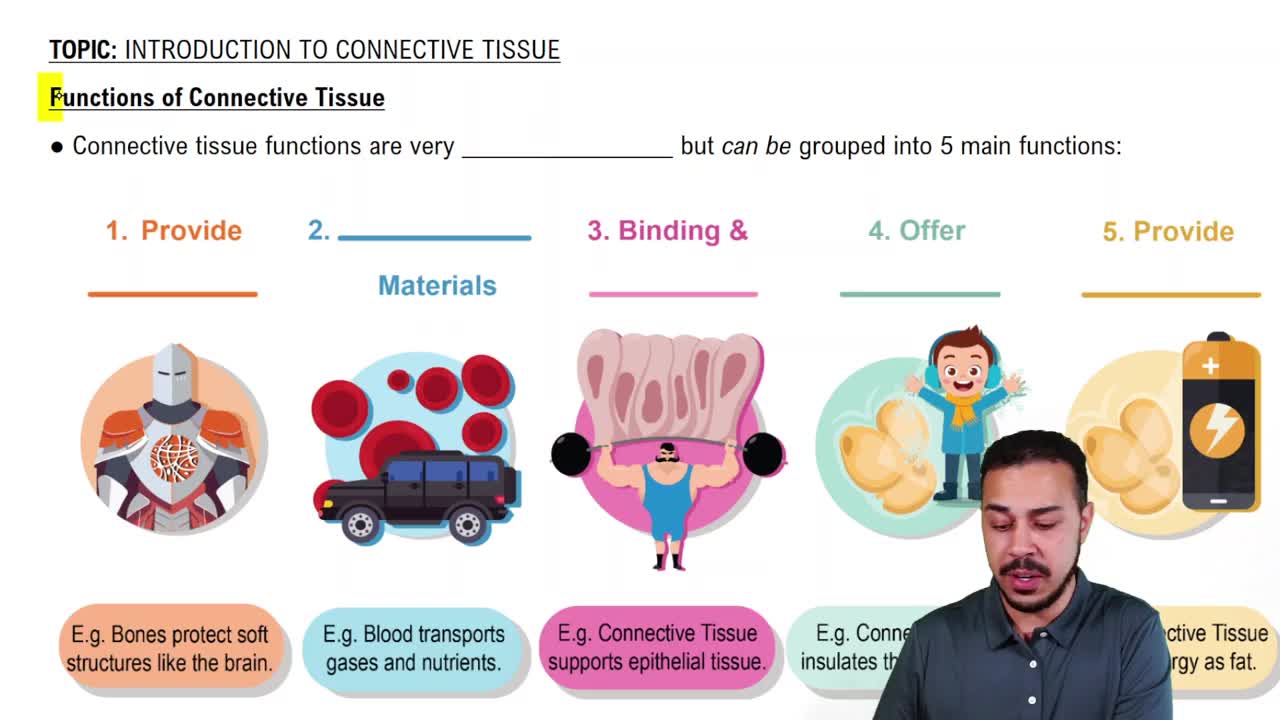
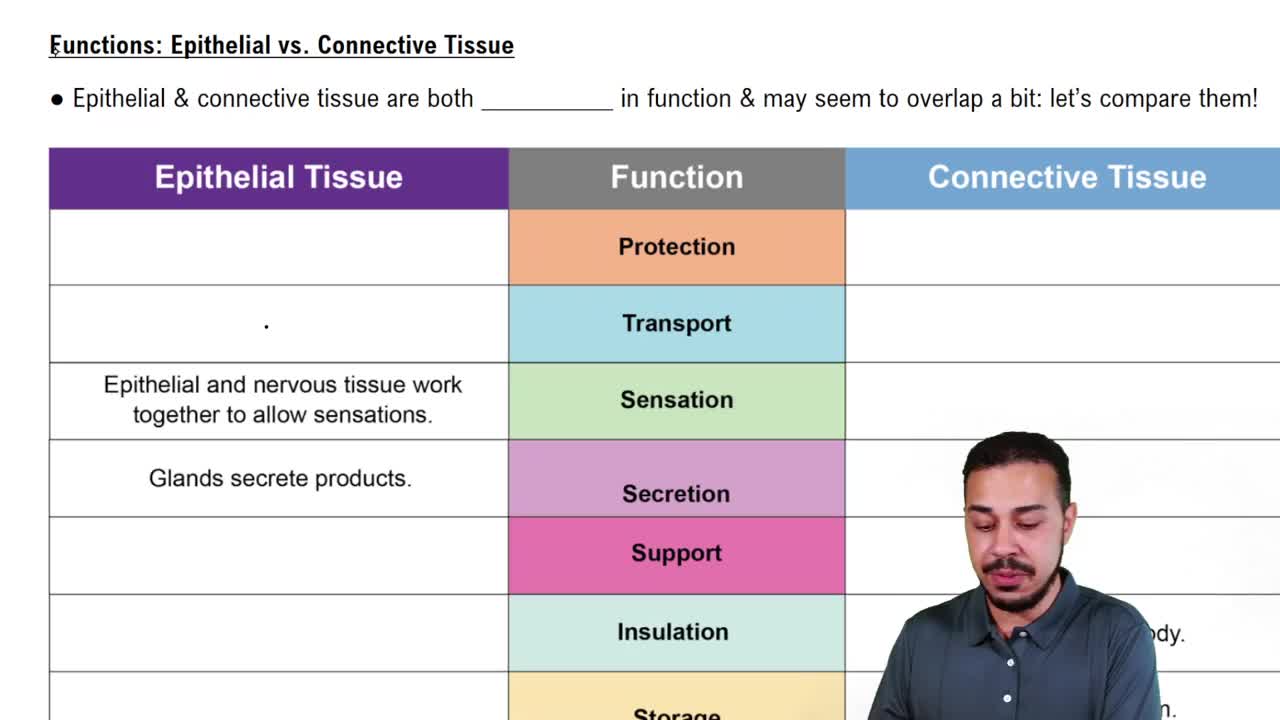
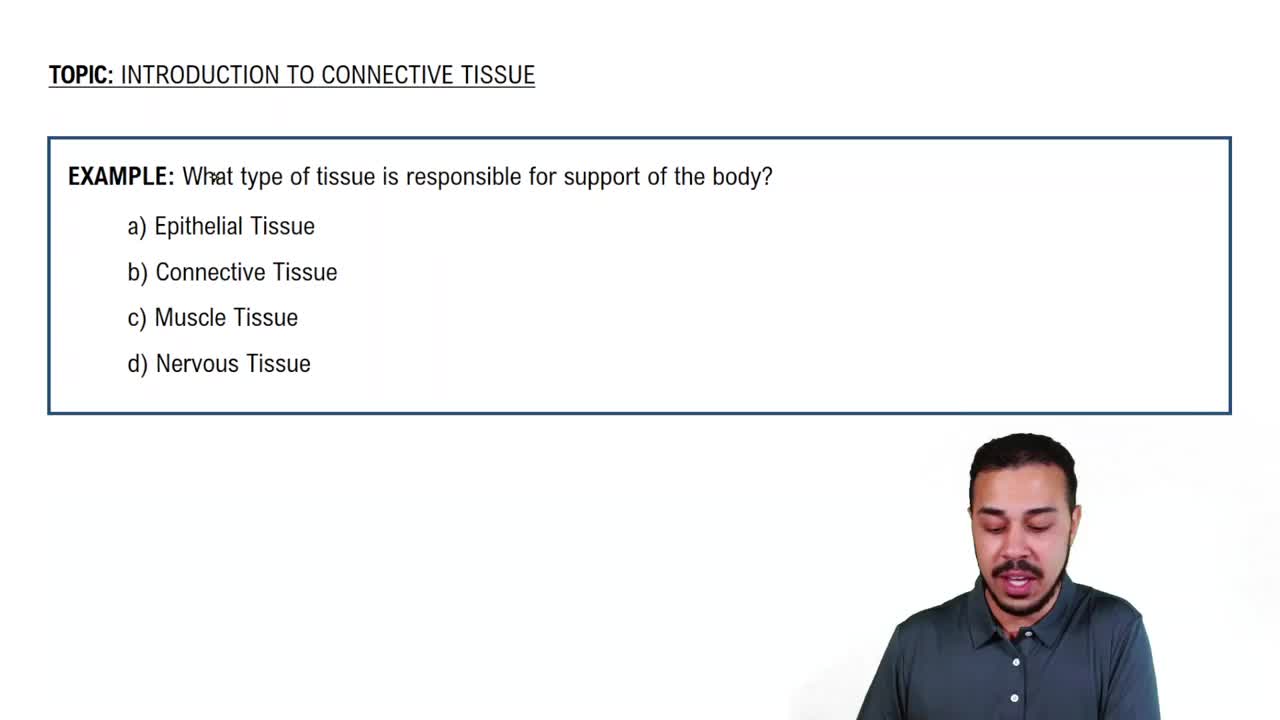
Functions to protect and support the body; support leverage for the muscles to act on.
Bone (osseous tissue)
Most common type of cartilage
Composed of: Abundant collagen fibers and a Rubbery matrix
Locations:
Larynx, trachea, cartalage of the nose, and the costal cartalage of the ribs.
Entire fetal skeleton prior to birth
Functions as a more flexible skeletal element than bone anc reinforces
Hyaline cartilage
simular to hyaline cartalage, but more elastic fibers in matrix
Provides elasticity
Location
Supports the external ear
Function: Maintains the shape of a structure while allowing great flexability
Elastic cartilage
Matrix simular but less firm then in hyaline cartilage; thick collagen fibers predominate
Highly compressible
Location
Forms cushion-like discs between vertebrae
Function: Tensile strength with the ability to absorb compressive shock
Fibrocartilage
Main matrix element is collagen fiber
Fibroblasts are cells that make fibers
Locations
Tendons—attach skeletal muscle to bone
Ligaments—attach bone to bone at joints
Dermis—lower layers of the skin
Function: Attach muscles to bone or to other muscles; Attaches bone to bone:.
Dense connective tissue (dense fibrous tissue)
Areolar tissue
Adipose tissue
Reticular connective tissue
Loose connective tissue types
Has a gel-like matrix with all three fiber types
Most widely distributed connective tissue
Soft, pliable tissue like “cobwebs”
Functions as a packing tissue
Contains all fiber types
Can soak up excess fluid (causes edema)
Ariolar Tissue
Matrix is an areolar tissue in which fat globules predominate, but very sparse, closely packed adipocytes, or fat cells
Many cells contain large lipid deposits
Location: Under skin, around kidneys, eyeballs, in bones
Functions
Insulates the body
Protects some organs
Serves as a site of fuel storage
Adipose Tissue
Delicate network of interwoven fibers
network of rectangular fibers in a sypical loose ground substance
Locations
Forms stroma (internal supporting network) of lymphoid organs
Lymph nodes
Spleen
Bone marrow
Function: fibers form a soft internal skeleton that supports other cell types
Reticular connective tissue
Red and white blood cells surrounded by fluid matrix called blood plasma
Fibers are visible during clotting
Location: in blood vessels
Functions as the transport vehicle for materials
Function: transport of respiratory gases, nutrians, wastes, and other substances
Blood (vascular tissue)