What are the main functions of the digestive system?
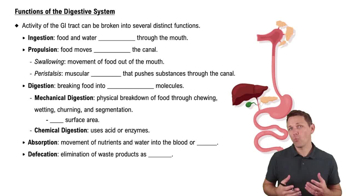
Acquisition of nutrients, anabolism (synthesis of essential compounds), and catabolism (energy production).
What structures make up the digestive tract?
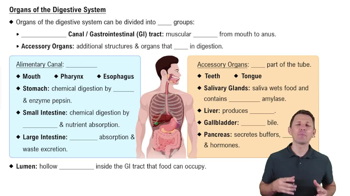
A muscular tube extending from the oral cavity to the anus, also called the gastrointestinal (GI) tract or alimentary canal.
Name the accessory organs of the digestive system.
Teeth, tongue, salivary glands, liver, gallbladder, and pancreas.
List the major organs of the digestive tract in order from mouth to anus.
Oral cavity, pharynx, esophagus, stomach, small intestine, large intestine, anus.
What are the integrated processes of the digestive system?
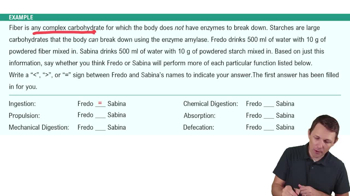
Ingestion, mechanical digestion and propulsion, chemical digestion, secretion, absorption, and defecation.
What is the role of the peritoneum in the digestive system?
A serous membrane lining the peritoneal cavity; it reduces friction and supports digestive organs.
What is the function of mesenteries?
Double sheets of peritoneal membrane that suspend digestive organs, provide routes for vessels and nerves, and stabilize organ positions.
Name the four major layers of the digestive tract wall.
Mucosa, submucosa, muscular layer, and serosa (or adventitia).
What is the mucosa composed of?
Epithelium, lamina propria (areolar tissue), and muscularis mucosae (smooth muscle).
Describe the muscular layer of the digestive tract.
Two layers of smooth muscle: inner circular and outer longitudinal, responsible for mechanical digestion and propulsion.
What is peristalsis?
Waves of muscular contractions that move a bolus along the digestive tract by coordinated contraction and relaxation of circular and longitudinal muscles.
What is segmentation in the digestive tract?
Cycles of contraction that churn and fragment the bolus, mixing contents with intestinal secretions without directional movement.
How is digestive activity regulated?
By local factors (pH, stretch), neural mechanisms (short and long reflexes), and hormonal mechanisms (peptide hormones from enteroendocrine cells).
What are the functions of the oral cavity in digestion?
Sensory analysis, mechanical digestion (chewing), lubrication, and limited chemical digestion of carbohydrates and lipids.
What are the four types of teeth and their functions?
Incisors (cutting), canines (tearing), premolars (crushing and grinding), molars (crushing and grinding).
What are the three major pairs of salivary glands and their secretions?
What is the structure and function of the liver in digestion?
Largest visceral organ; produces bile for lipid emulsification, regulates metabolism, stores nutrients, and detoxifies blood.
Describe the bile duct system.
Bile canaliculi collect bile from hepatocytes; bile flows through hepatic ducts, common hepatic duct, cystic duct (to gallbladder), and bile duct to duodenum.
What is the role of the gallbladder?
Stores and concentrates bile; releases bile into duodenum when stimulated by cholecystokinin (CCK).
What are the three segments of the small intestine and their functions?
Duodenum (mixing chyme with secretions), jejunum (most digestion and absorption), ileum (absorption and ileocecal valve control).
What structural adaptations increase absorption in the small intestine?
Circular folds, villi, and microvilli increase surface area for nutrient absorption.
Name the major hormones secreted by the small intestine and their effects.
Cecum, colon (ascending, transverse, descending, sigmoid), rectum, and anal canal.
What are the functions of the large intestine?
Absorption of water, vitamins, and organic wastes; compaction of feces; storage of fecal material before defecation.
How is defecation controlled?
By intrinsic myenteric reflex (short reflex) and parasympathetic defecation reflex (long reflex), requiring relaxation of internal and external anal sphincters.
 Back
 4:06