 Back
Digestive System Anatomy & Physiology
 4:06

Terms in this set (24)
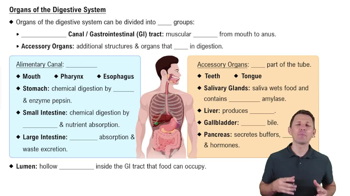
Oral cavity, pharynx, esophagus, stomach, small intestine, large intestine.
Teeth, tongue, salivary glands, liver, gallbladder, pancreas.
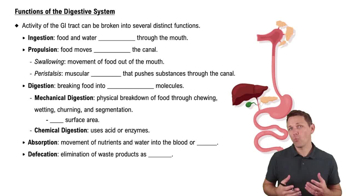
Ingestion, propulsion, mechanical breakdown, chemical digestion, absorption, defecation.
Coordinated contractions of muscularis externa that move bolus along the digestive tract by contracting circular muscles behind and relaxing in front of the bolus.
Cycles of contraction that churn and fragment the bolus, mixing contents with intestinal secretions, mainly in the small intestine.
Mucosa, submucosa, muscularis externa, serosa (visceral peritoneum).
Secretion of mucus, digestive enzymes, hormones; absorption; protection.
Smooth muscle with inner circular and outer longitudinal layers; responsible for mechanical processing and movement of materials via peristalsis and segmentation.
Protective outer covering of muscularis externa within the peritoneal cavity; absent in oral cavity, pharynx, esophagus, and rectum where adventitia attaches tract to adjacent structures.
Produce saliva containing water, electrolytes, buffers, mucins, enzymes (like salivary amylase), and antibodies to lubricate, digest carbohydrates, and protect oral cavity.
Buccal phase (voluntary), pharyngeal phase, esophageal phase (both involuntary).
Prevents reflux of stomach contents back into the esophagus by maintaining resting muscle tone.
Storage of ingested food, mechanical breakdown, chemical digestion by acid and enzymes, production of intrinsic factor for vitamin B12 absorption.
Parietal cells secrete HCl and intrinsic factor; chief cells secrete pepsinogen; mucous cells secrete mucus to protect stomach lining.
Mucosal barrier with bicarbonate-rich mucus, tight junctions between epithelial cells, and rapid epithelial cell replacement every 3-6 days.
Hormone produced by G-cells that stimulates secretion of HCl and gastric enzymes and promotes gastric motility.
Triggered by sight, smell, taste of food; brain stimulates vagus nerve to increase gastric secretions before food enters stomach.
Stomach distension, presence of peptides, and low acidity stimulate local neural and hormonal mechanisms to increase gastric juice production.
Chyme entering small intestine inhibits gastric secretion and motility to control gastric emptying and protect intestinal lining.
Stabilize digestive organs, connect visceral and parietal peritoneum, and provide routes for blood vessels, nerves, and lymphatics.
Lesser omentum (between stomach and liver) and falciform ligament (between liver and abdominal wall).
Large dorsal mesentery hanging from stomach; contains adipose tissue for padding, insulation, and energy storage.
Stratified squamous epithelium, keratinized in areas exposed to abrasion, non-keratinized elsewhere.
Simple columnar epithelium rich in mucus-secreting cells and enteroendocrine cells.