 Back
Digestive System Anatomy & Physiology
 4:06

Terms in this set (31)
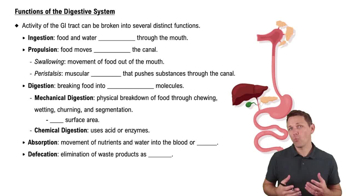
The digestive system ingests, propels, digests, absorbs, and defecates food and waste.
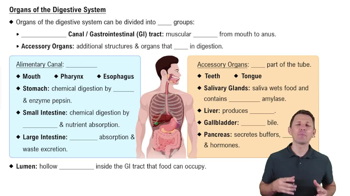
The alimentary canal is a continuous tube from mouth to anus; accessory organs assist digestion but are not part of the tube (e.g., liver, pancreas).
Ingestion, propulsion, mechanical digestion, chemical digestion, absorption, and defecation.
The peritoneum is a serous membrane lining the abdominal cavity and covering abdominal organs, providing support and reducing friction.
Retroperitoneal organs lie behind the peritoneum; examples include the pancreas, kidneys, and parts of the duodenum and colon.
Splanchnic circulation supplies digestive organs; the hepatic portal system directs nutrient-rich blood from the gut to the liver for processing.
Mucosa (secretion, absorption), submucosa (blood vessels, nerves), muscularis externa (movement), serosa (protection).
Mechanical and chemical stimuli activate receptors; control via neural (enteric and autonomic) and hormonal mechanisms.
The mouth includes lips, cheeks, tongue, palate, teeth, and salivary glands; lined by mucosa with stratified squamous epithelium.
Saliva contains water, enzymes (amylase), mucus, and antibacterial agents; it moistens food, begins starch digestion, and cleanses the mouth.
Controlled mainly by the parasympathetic nervous system in response to food stimuli and reflexes.
The dental formula shows number/type of teeth; deciduous (20) are baby teeth, permanent (32) replace them with additional molars.
The pharynx connects mouth to esophagus; the esophagus transports food to the stomach via peristalsis.
Swallowing involves voluntary oral phase, involuntary pharyngeal phase, and esophageal phase controlled by brainstem reflexes.
The stomach has an extra oblique muscle layer and gastric pits with glands to churn food and secrete acid and enzymes.
Parietal cells secrete HCl and intrinsic factor; chief cells secrete pepsinogen; mucous cells secrete mucus.
Regulated by neural (vagus nerve), hormonal (gastrin), and local mechanisms responding to food presence.
Alkaline tide is the rise in blood pH after a meal due to HCO3- secretion into blood during gastric acid production.
The liver has lobules with hepatocytes; the pancreas has exocrine acini producing digestive enzymes and endocrine islets producing hormones.
Bile emulsifies fats; pancreatic juice contains enzymes that digest carbohydrates, proteins, fats, and nucleic acids.
The gallbladder stores and concentrates bile, releasing it into the small intestine during digestion.
Secretions are regulated by hormones (secretin, cholecystokinin) and neural signals in response to chyme in the small intestine.
Includes circular folds, villi, and microvilli to increase surface area for absorption.
Enterocytes absorb nutrients; goblet cells secrete mucus; enteroendocrine cells release hormones; Paneth cells secrete antimicrobial agents.
Hormones like secretin and CCK regulate digestive secretions and motility; paracrines modulate local digestive activity.
Absorbs water and electrolytes, forms and stores feces, and houses gut microbiota.
Defecation is controlled by spinal reflexes and voluntary relaxation of the external anal sphincter.
Digestion breaks down food into absorbable molecules; absorption moves nutrients into blood or lymph.
Amylase (carbohydrates), proteases (proteins), lipases (fats), nucleases (nucleic acids).
Proteins → amino acids; fats → fatty acids and glycerol; carbohydrates → monosaccharides; nucleic acids → nucleotides.
Includes active transport, facilitated diffusion, and endocytosis to move nutrients across enterocytes into blood or lymph.