 Back
BackDigestive System and Metabolism - Anatomy & Physiology
 4:06
4:06
Terms in this set (44)
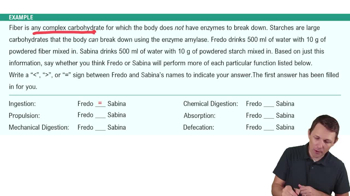
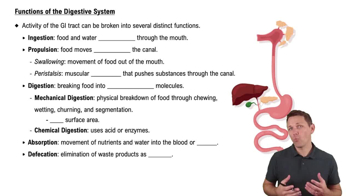
Ingestion - taking in food
Digestion - breaking food into nutrient molecules
Absorption - movement of nutrients into the bloodstream
Defecation - excretion of indigestible waste
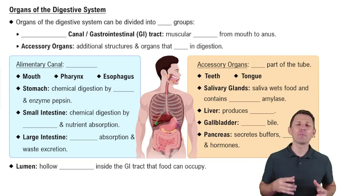
Alimentary canal - continuous, coiled, hollow tube for ingestion, digestion, absorption, defecation
Accessory digestive organs - teeth, tongue, and large digestive organs that assist digestion
Mouth, Pharynx, Esophagus, Stomach, Small intestine, Large intestine, Anus
Mouth lined by mucous membrane, lips (labia), cheeks, hard palate (anterior roof), soft palate (posterior roof), and uvula (projection of soft palate)
Vestibule - space between lips and teeth/gums
Oral cavity proper - area contained by the teeth
Palatine tonsils - pair at posterior oral cavity
Lingual tonsil - single tonsil at base of tongue
Mastication (chewing), mixing food with saliva, initiating swallowing, and taste via taste buds on the tongue
Passageway for food, fluids, and air; food passes through oropharynx and laryngopharynx to esophagus; propels food by peristalsis using two skeletal muscle layers
About 10 inches long, runs from pharynx to stomach through diaphragm; conducts food by peristalsis; passageway for food only
1. Mucosa
2. Submucosa
3. Muscularis externa
4. Serosa
Innermost moist membrane with surface epithelium (mostly simple columnar except esophagus), lamina propria connective tissue, and scant smooth muscle; lines the lumen
Soft connective tissue with blood vessels, nerve endings, mucosa-associated lymphoid tissue (MALT), and lymphatic vessels
Smooth muscle with inner circular and outer longitudinal layers
Outermost layer containing fluid-producing cells; visceral peritoneum (innermost) and parietal peritoneum (outermost lining abdominopelvic cavity)
Submucosal nerve plexus and myenteric nerve plexus; regulate mobility and secretory activity of GI tract organs
Cardia (near heart), Fundus (expanded lateral portion), Body (midportion), Pylorus (funnel-shaped terminal end)
Internal folds of mucosa that allow the stomach to stretch and hold up to 4 liters of food when full
Chief cells - produce pepsinogen (protein-digesting enzyme)
Parietal cells - produce hydrochloric acid
Mucous neck cells - produce thin acidic mucus
Enteroendocrine cells - produce hormones like gastrin
Duodenum, Jejunum, Ileum (ends at ileocecal valve)
Villi (fingerlike projections), microvilli (brush border), and circular folds (plicae circulares)
Absorbs water, vitamins, ions; eliminates feces; houses bacteria that produce vitamin K and some B vitamins
Teeth, Salivary glands, Pancreas, Liver, Gallbladder
Deciduous (baby) teeth - 20 teeth by age 2
Permanent teeth - 32 teeth replacing deciduous between ages 6-12
Incisors - cutting
Canines - tearing/piercing
Premolars (bicuspids) - crushing/grinding
Molars - crushing/grinding
Crown (exposed part covered by enamel), Root (covered by cement and anchored by periodontal membrane), Dentin, Pulp cavity (connective tissue, blood vessels, nerves)
Salivary amylase (begins starch digestion), mucus (moistens and binds food), lysozymes and antibodies (inhibit bacteria)
Produces digestive enzymes for all food categories; secretes alkaline fluid to neutralize chyme; produces insulin and glucagon hormones
Produces bile which emulsifies fats; detoxifies drugs and alcohol; produces cholesterol and blood proteins; plays central role in metabolism
Yellow-green watery solution with bile salts, bile pigments (bilirubin), cholesterol, phospholipids, electrolytes; emulsifies fats for digestion
Stores and concentrates bile; releases bile into duodenum when fatty food enters
1. Ingestion
2. Propulsion (peristalsis)
3. Mechanical breakdown
4. Chemical digestion
5. Absorption
6. Defecation
Buccal phase - voluntary, food formed into bolus and pushed to pharynx
Pharyngeal-esophageal phase - involuntary, peristalsis moves bolus to stomach
Neural and hormonal factors; hormone gastrin released by rising pH or food presence stimulates secretion of enzymes, mucus, and hydrochloric acid
Pepsin (active enzyme from pepsinogen) and rennin (digests milk protein in infants)
Pancreatic amylase (starch), trypsin/chymotrypsin/carboxypeptidase (proteins), lipases (fats), nucleases (nucleic acids)
Secretin and cholecystokinin (CCK) stimulate pancreas, liver, and gallbladder
Most by active transport through mucosal cells into blood or lymph; lipids absorbed by diffusion
No digestive enzymes produced; bacteria digest remaining nutrients and produce vitamins; absorbs water, vitamins, ions; eliminates feces
All chemical reactions to maintain life; catabolism breaks down substances releasing energy; anabolism builds larger molecules from smaller ones
Glycolysis (cytosol), Citric acid cycle (mitochondria), Electron transport chain (mitochondria)
Glycogenesis (stores glucose as glycogen), Glycogenolysis (releases glucose), Gluconeogenesis (makes glucose from fats and proteins)
LDLs (low-density lipoproteins) transport cholesterol to body cells (bad lipoproteins)
HDLs (high-density lipoproteins) transport cholesterol from cells to liver for breakdown (good lipoproteins)
Surface area, gender, age, thyroxine production, emotions, infections
Initiates heat loss (radiation, sweating) or heat-promoting (vasoconstriction, shivering) mechanisms to maintain homeostasis