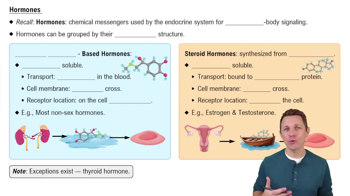
To regulate cellular activity throughout the body using chemical messengers called hormones, facilitating growth, development, reproduction, and homeostasis.
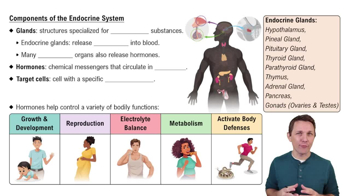
What are hormones?
Chemical messengers secreted by endocrine glands that cause ongoing and long-term changes in target tissues.
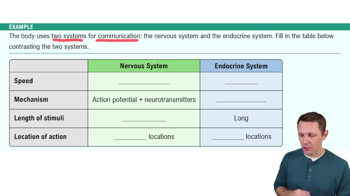
How do the nervous and endocrine systems work together?
They collaborate to maintain homeostasis by monitoring and regulating cell activity throughout the body.
What stimulates endocrine glands to produce hormones?
Various signals including neural input, chemical changes in the blood, and other hormones trigger hormone secretion.
What stops endocrine glands from producing hormones?
Negative feedback mechanisms where the presence of sufficient hormone levels inhibits further secretion.
What are the main components of blood?
Blood consists of formed elements (erythrocytes, leukocytes, platelets) and plasma.
What is the function of erythrocytes?
Carry oxygen from the lungs to body tissues using hemoglobin.
What are leukocytes and their general role?
White blood cells that defend the body against infection and foreign substances.
What are platelets and their function?
Also called thrombocytes, they are involved in blood clotting to prevent bleeding.
What physical characteristics of blood are important?
Blood's viscosity, color, pH, and temperature affect its function and flow.
What are the four ABO blood groups?
Blood types A, B, AB, and O classified by the presence or absence of antigens on erythrocytes.
What causes a transfusion reaction?
Agglutination and hemolysis occur when incompatible blood types are mixed, causing immune response symptoms.
What are the two main parts of the lymphatic system?
The lymphatic vessels and the lymphoid tissues and organs.
What is the role of the lymphatic system?
To return excess tissue fluid to the bloodstream and provide immune defense.
What are nonspecific immune defenses?
General defenses like fever and inflammation that hinder pathogen entry and spread.
What distinguishes specific immune responses?
Targeted immune reactions involving lymphocytes that recognize specific pathogens.
How does blood transport hormones?
Blood carries hormones from endocrine glands to target cells and organs throughout the body.
What is homeostasis?
The body's ability to maintain a stable internal environment despite external changes.
What is the function of plasma in blood?
Plasma transports nutrients, wastes, hormones, and gases and helps maintain blood pressure and volume.
What is agglutination in blood typing?
The clumping of red blood cells caused by antigen-antibody reactions during incompatible transfusions.
 Back
 7:06